Traditional jewelry making depends on manual precision and patience, two resources that are scarce in the 21st-century workshop. 3D technology offers a more direct path between design and the final piece. Imagine an engagement ring with filigree that would be impossible to carve by hand. With digital modeling, that complex design is materialized in wax or resin in hours, not weeks. The result: fewer errors and more room for creativity without relying on the artisan's steady hand.
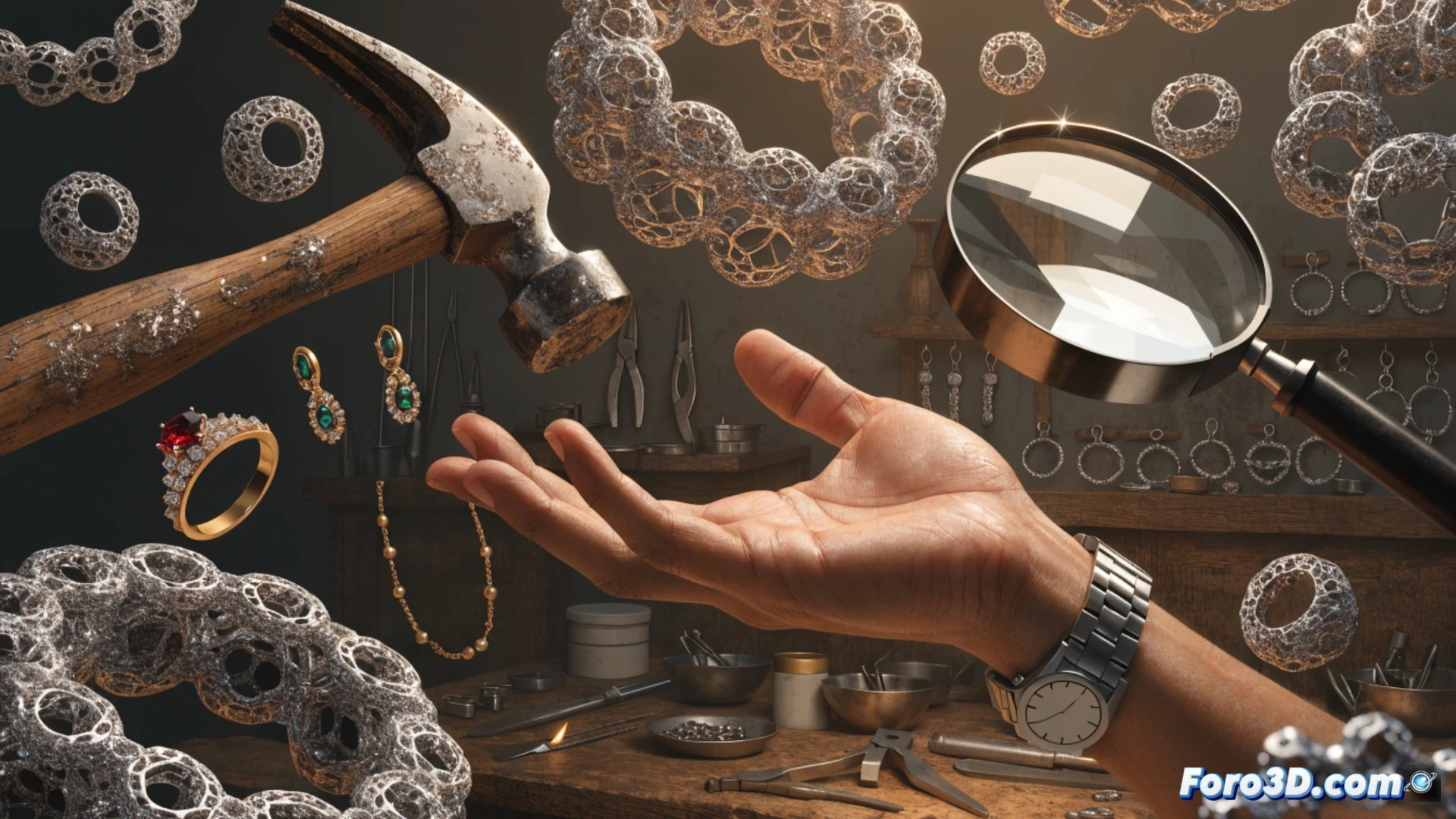
From sketch to mold: programs and processes for the digital jeweler 💍
The workflow starts with parametric modeling software like Rhinoceros 3D, accompanied by the Grasshopper plugin for complex geometries. MatrixGold is another specific option for jewelry, with tools for settings and gauges. For printing, you need a slicer like PreForm (for resin) or Chitubox (for more generic models). The piece is printed on a high-resolution SLA or DLP printer, invested in plaster, and cast in a kiln. The result is an exact mold that saves polishing and corrections. The jeweler saves time, the client pays less, and no one cries over a broken piece.
The day the goldsmith asked a printer for advice 🤖
At first, the jeweler looked at the 3D printer like someone seeing a robot that wants to steal their sandwich. But after the first commission for a ring with impossible openwork, the master changed his mind. Now the machine does the dirty work of the wax, and he dedicates himself to what really matters: spending more hours at the bar and less time filing burrs. The only downside is that the printer doesn't know how to make silver filigree, but that's what apprentices are for—they still have a steady hand and patience.