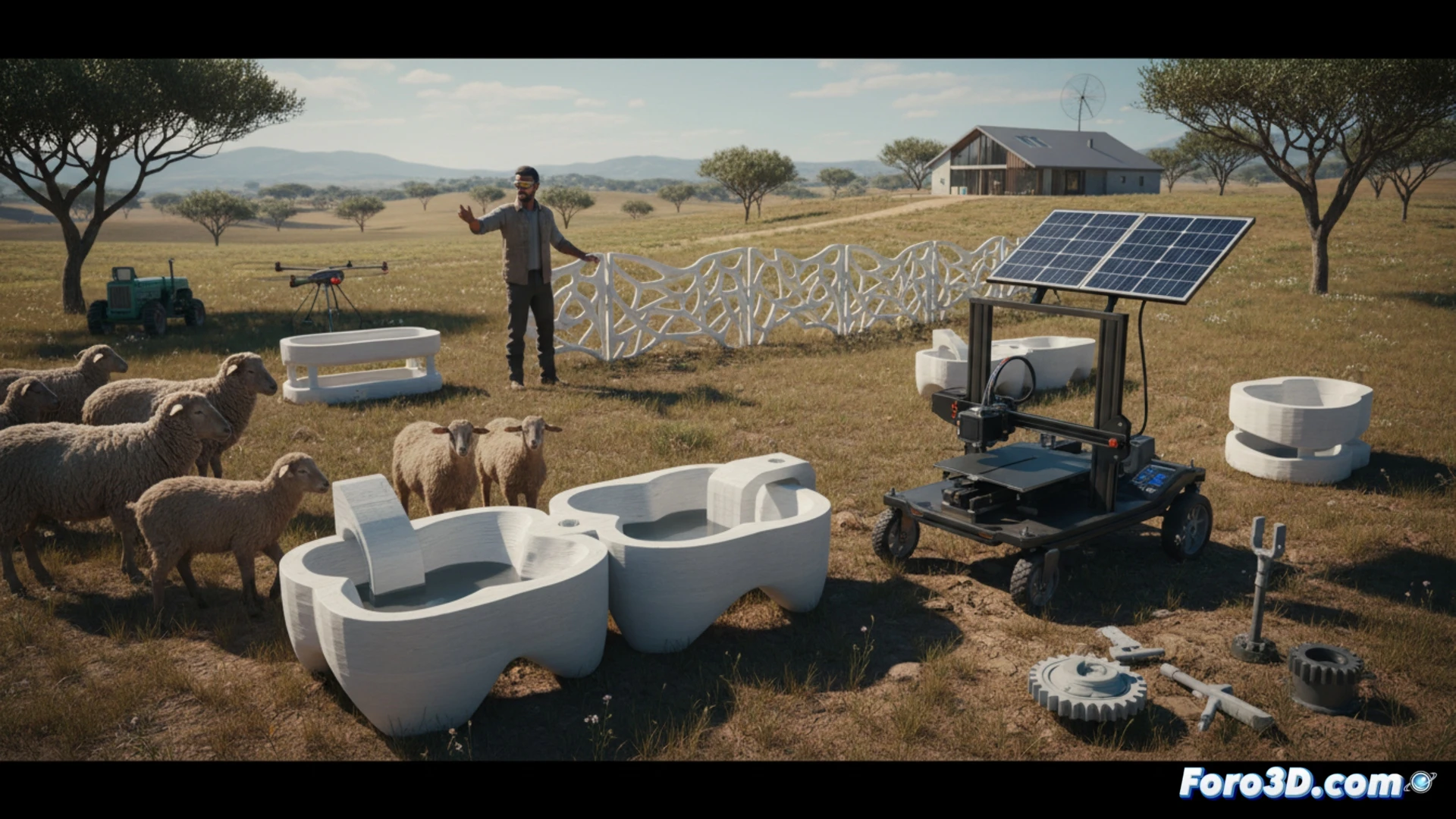
The profession of shepherd, one of the oldest in the world, is not immune to the digital revolution. 3D technology can provide practical solutions to improve livestock management in rural areas. From manufacturing custom fences to designing feeders adapted to difficult terrain, additive printing allows for the creation of spare parts for agricultural machinery without relying on long supply chains. A concrete example is the creation of a portable water trough printed in PLA, lightweight and resistant, which can be replicated in the field with a printer powered by a solar generator.
Key software and workflow for the digital shepherd 🖥️
To design these parts, the 21st-century shepherd needs accessible software. Fusion 360 is useful for modeling mechanical parts like electric fence gears, while Blender allows for creating organic shapes for feeders or GPS collar mounts. The workflow begins by measuring the original part or the available space, modeling it in the program, and exporting it in STL format. Then, a slicer like Cura or PrusaSlicer is used to configure the printing parameters. Filaments like PETG or ASA are recommended for their resistance to weather and UV rays.
Goodbye to the shepherd's crook, hello to PLA filament 🐑
Of course, don't expect a 3D printer to help you find the lost sheep in the ravine. For that, the sheepdog is still more reliable than any sensor. But if your problem is that the handle of the pen door broke and the village blacksmith is on vacation, a portable printer saves the day. However, make sure to bring enough filament, because if it runs out mid-print, the only balm will be a good swig of wine and the resignation of a shepherd who knows that technology, in the end, also fails.