3D technology is transforming artisan cheesemaking. With the design and printing of custom molds, a cheesemaker can create complex shapes or engrave logos on each piece. This allows for standardizing production without losing the handmade touch, saving time in manufacturing tooling that previously required weeks of carpentry or metalwork.
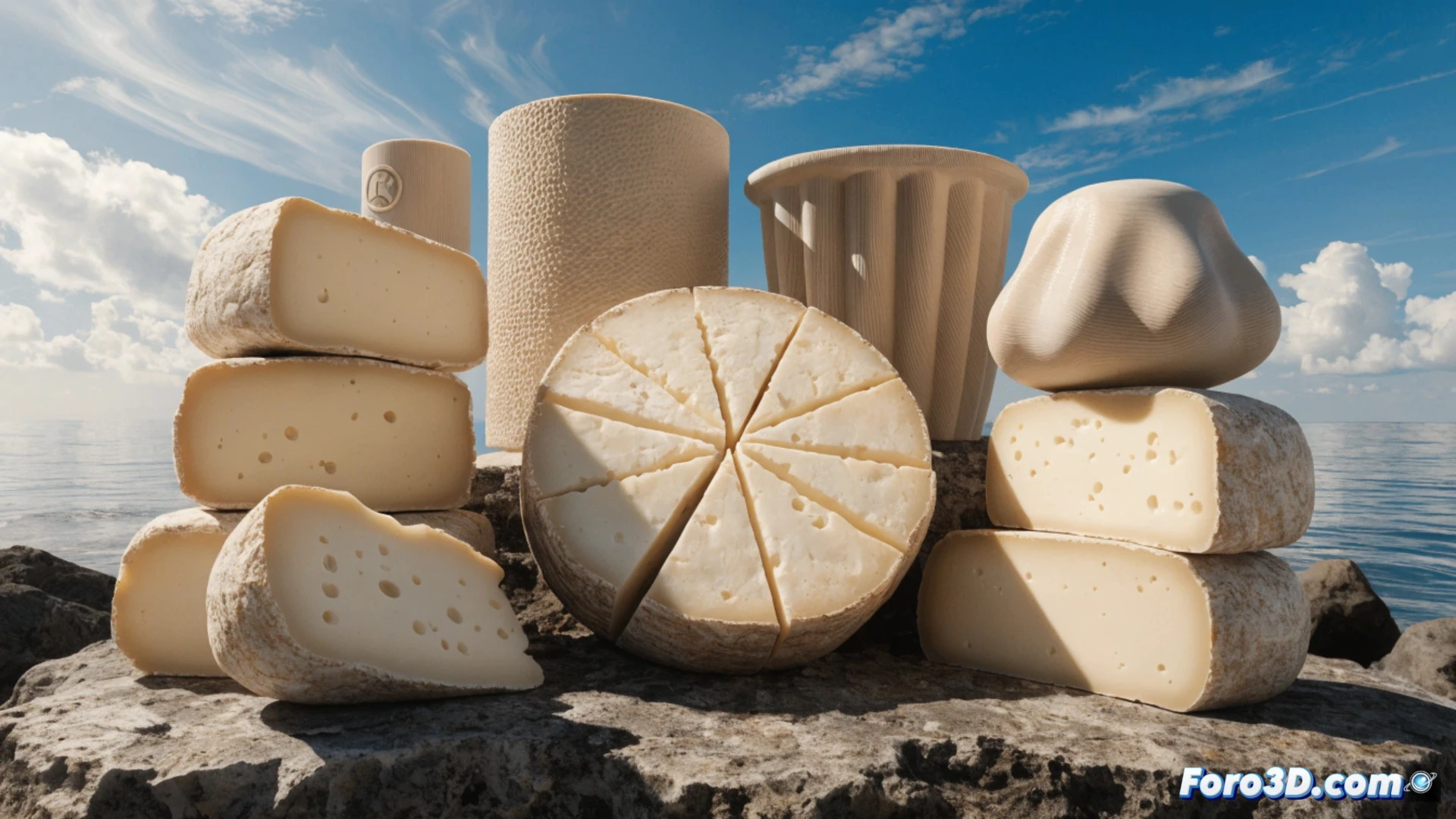
Digital modeling and materials for food-grade molds 🧀
To design a cheese mold, software like Fusion 360 or Blender is used, allowing for precise geometries with drainage and textures. It is then printed with food-grade filaments such as PETG or molding silicone. A practical example: a mold for goat cheese in the shape of a cube with a raised seal that previously cost 80 euros per piece is now manufactured for 5 euros in filament. Programs like Cura or PrusaSlicer adjust printing parameters to ensure smooth surfaces suitable for food contact.
The cheese you don't eat... because it's plastic 🎃
Of course, there's always a colleague who prints a skull-shaped mold, fills it with curd, and then discovers the design has a 45-degree angle that prevents unmolding the cheese. Result: an abstract art piece that only serves to decorate the fridge. But hey, at least the failure was cheaper than a stainless steel mold. That said, if your cheese tastes like filament, check the printer temperature.