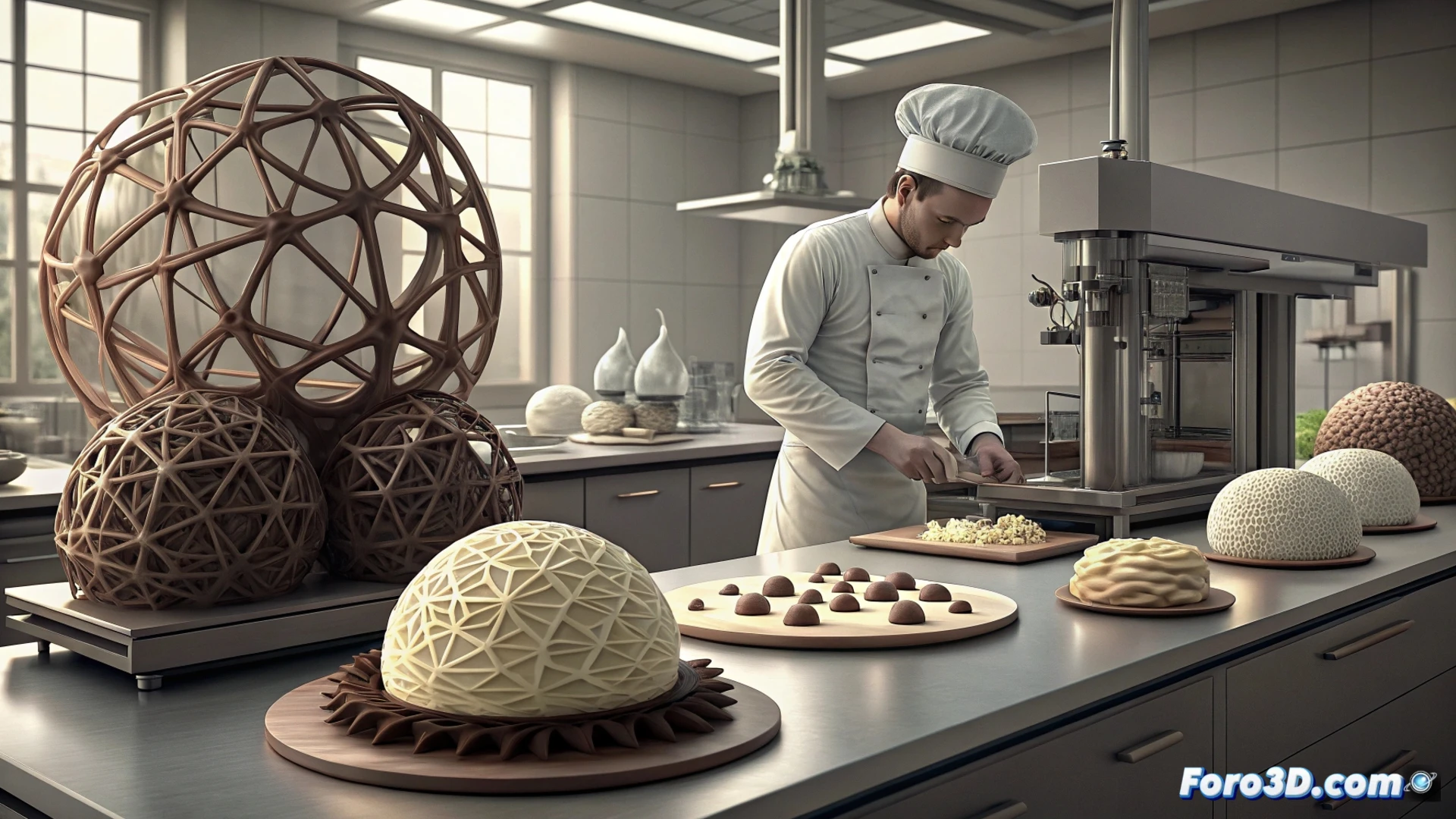
3D technology is transforming professional kitchens, and the sous chef is no exception. Beyond plate presentation, it allows for creating textures and shapes impossible with traditional methods. A clear example is the preparation of complex garnishes, such as purée spheres or chocolate structures, which require millimeter precision and repeatability. This frees the sous chef from tedious tasks to focus on supervision and flavor.
Software and hardware for quality control 🛠️
To implement this technology, a 3D modeler like Blender or Fusion 360 is needed to design the molds and parts. Then, slicing software like PrusaSlicer or Cura translates those designs into instructions for the printer. The key machine is a food 3D printer, such as the Procusini or a modified one with an extruder for purées and doughs. The sous chef must learn to calibrate the temperature and viscosity of the ingredients, a process similar to adjusting a sauce, but with G-code in between.
The day the robot chef asked for a raise 🤖
Of course, now your human sous chef will have to compete with a machine that never complains about the heat of the kitchen or asks for days off. The 3D printer doesn't get drunk on New Year's Eve or forget to order the olive oil. But beware, because when the extruder gets clogged with a too-thick parsnip purée, the machine falls silent, without the typical grunt of a frustrated assistant. In the end, the robot doesn't know how to improvise a dish with what's in the fridge, so the flesh-and-blood sous chef is still needed to save the service.