3D technology provides the laboratory technician with tools to manufacture custom parts, such as test tube holders or microscope adapters. This reduces reliance on catalogs and speeds up equipment repair. A 3D scanner is needed to capture geometries, along with modeling software to design the parts.
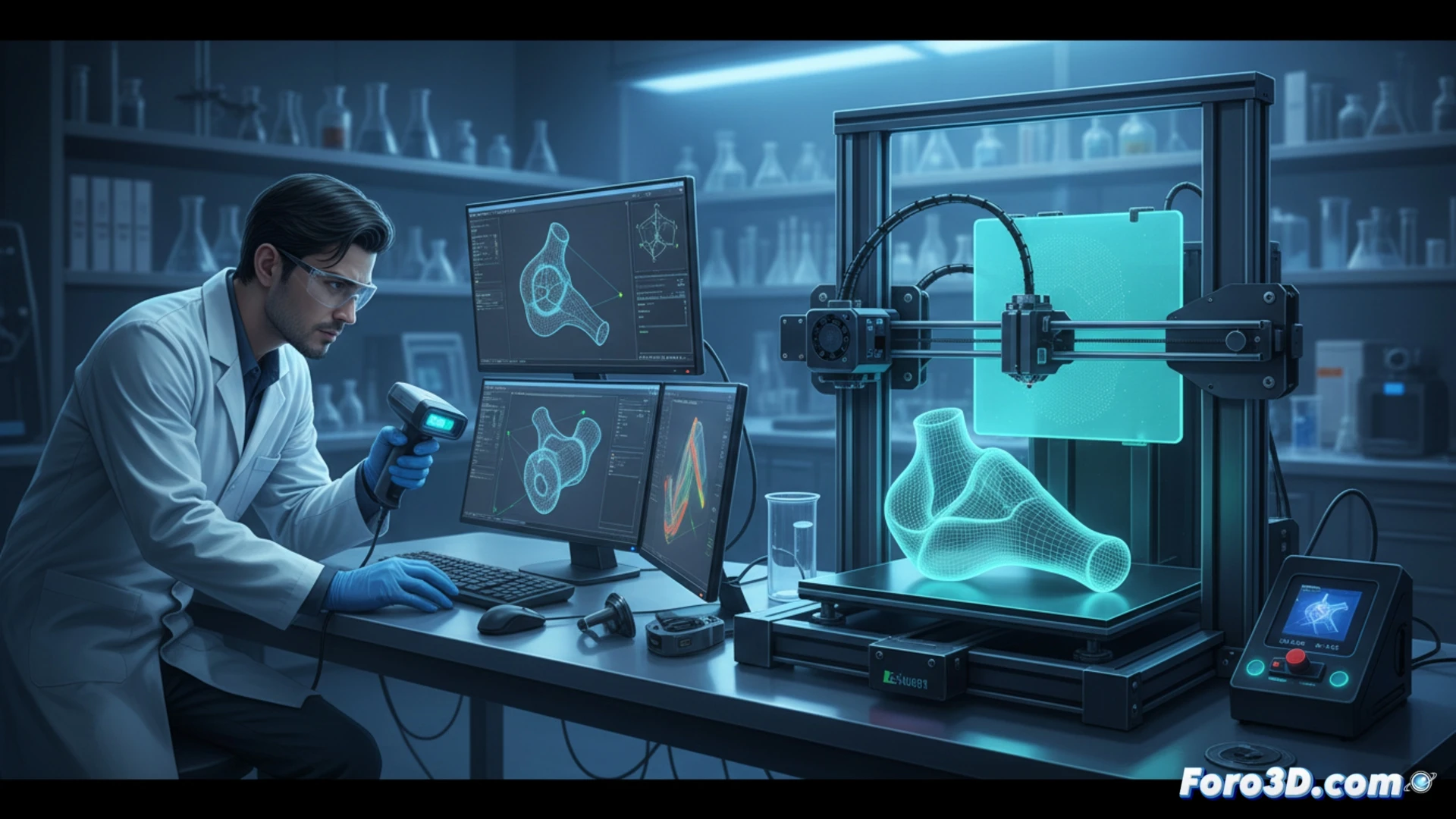
Essential software for the laboratory technician 🛠️
To get started, programs like Blender or FreeCAD allow you to design everything from racks to connectors for chromatography. A practical example: designing a holder for a pipette that fits inside a fume hood. With an FDM printer using PLA filament, the technician can print the prototype in hours, test its fit, and modify it without the high costs of external manufacturing.
When the technician becomes a 3D designer out of necessity 😅
Because, of course, nothing beats printing a part for the centrifuge on a Friday afternoon and having your boss look at you as if you had invented the microscope. Then it turns out the PLA deforms in the autoclave, and you have to redesign with PETG. But hey, in the meantime, you've saved Monday's experiment and earned the honorary title of bench-top MacGyver.