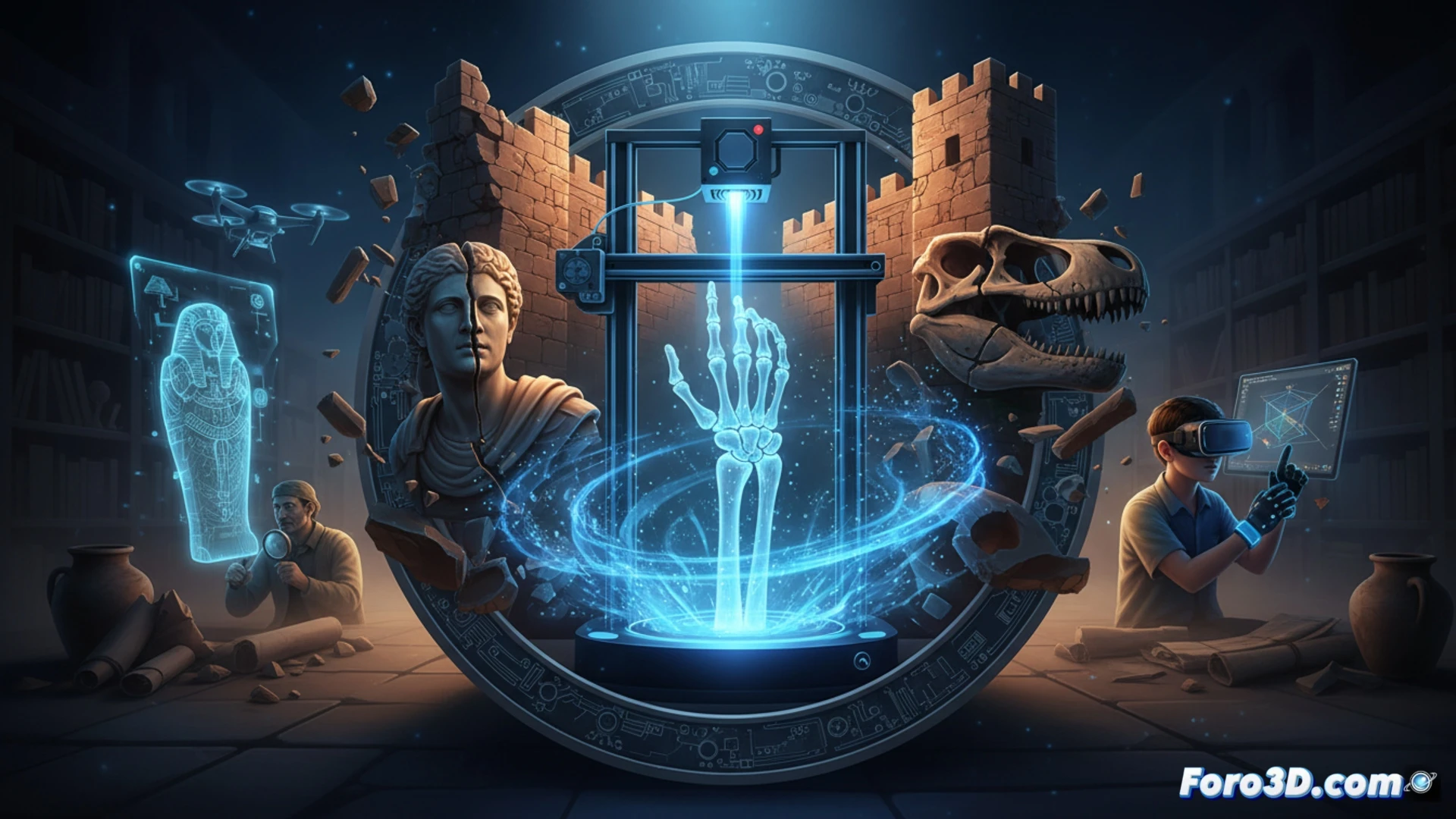
Historians no longer rely solely on manuscripts and brushes. 3D technology allows for the reconstruction of lost objects, ruins, or bones from scans. A clear example is the digitization of an ancient skull to print a replica and study its morphology without damaging the original. Tools like Blender, MeshLab, or an FDM printer are enough to get started.
Scanning and modeling for digital archaeologists 🏺
The process begins with a 3D scanner (like the Einscan or even photogrammetry with a DSLR camera and RealityCapture software). Then the mesh is refined in Blender or ZBrush, correcting fractures or gaps. Finally, it is exported to STL format for printing in resin or PLA. Free programs like CloudCompare allow aligning fragments and measuring precise distances, facilitating the virtual restoration of vessels or statues.
Another museum piece the cat won't break 🐱
Of course, the printed replica has an advantage: if the historian's cat knocks it off the shelf, only filament is lost, not a century of history. Plus, you can print a copy for every colleague who asks to see the fossil, without fear of them staining it with coffee. 3D technology turns the historian into a minor god: creating objects from the past, but without the dust or weight of the originals.