Lutherie, the centuries-old craft of building and repairing musical instruments, finds an ally in 3D technology for complex tasks. From manufacturing precision parts to restoring hard-to-find components, digital modeling allows the artisan to save time and material. A clear example is the creation of custom nuts or bridges for vintage guitars.
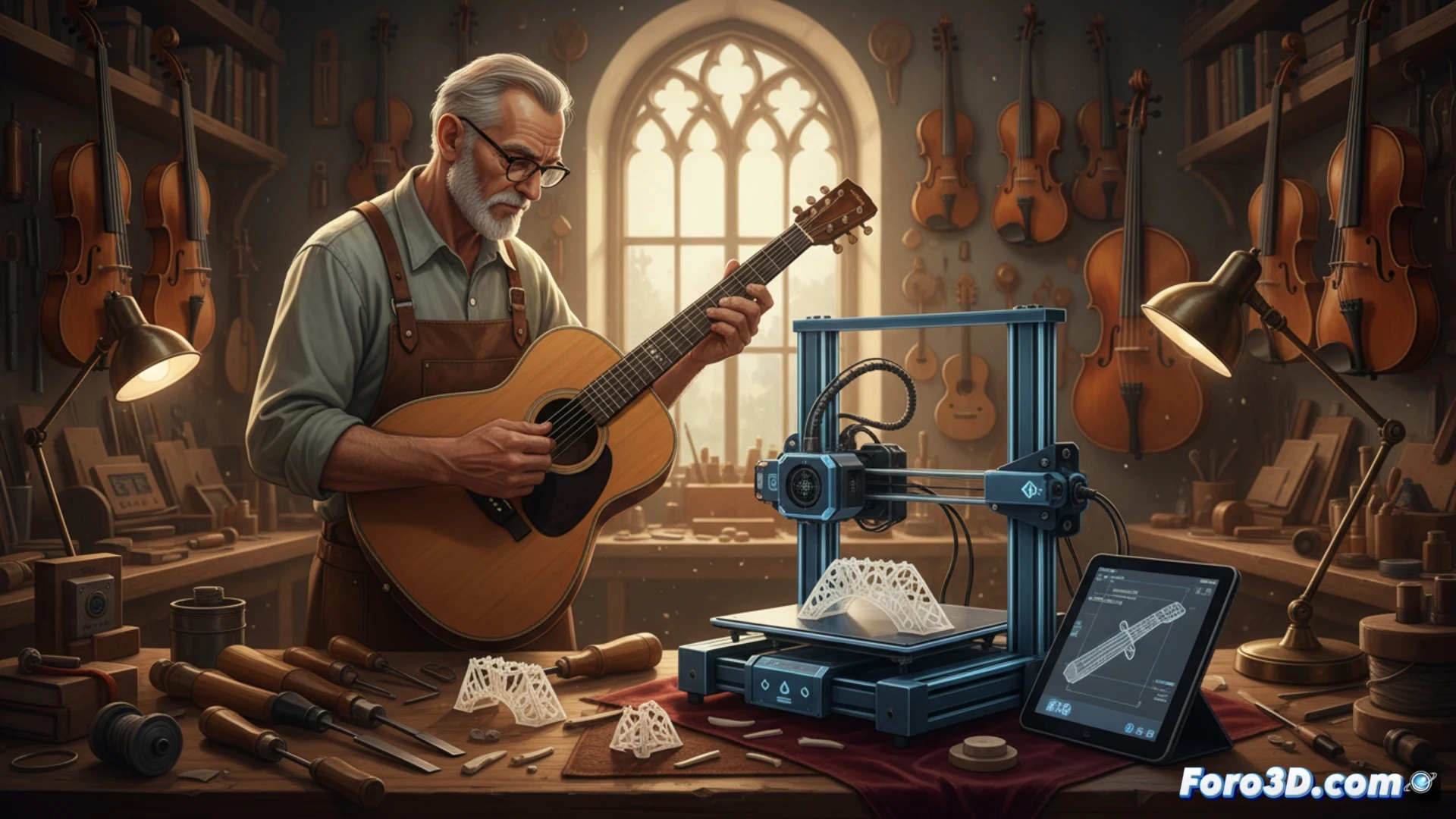
Scanner, modeling, and manufacturing: the luthier's digital trio 🎻
To digitize a damaged part, a 3D scanner such as the Einscan SE or the Revopoint POP 3 is used. Then, the model is refined with parametric design software like Fusion 360 or the free FreeCAD. Finally, printing is done in resin (for fine details) or filament like PETG, using machines such as the Elegoo Mars or a Prusa MK4. The process reduces the margin of error in curved parts and improves replicability.
Goodbye to sandpaper: the modern luthier just prints and prays 🎸
Before, when a piece of a 19th-century violin broke, the luthier spent hours sanding wood and cursing their cat. Today, they scan the fragment, model it, and print it in resin while having a coffee. The problem comes when the printed part sounds like cheap plastic and the customer asks if they can return it. Technology advances, but the ear remains that of the artisan.