The military profession demands quick and adaptable solutions in hostile environments. 3D technology allows for the manufacturing of spare parts, lightweight drones, or specific hardware on-site without relying on long supply chains. A clear example is printing mounts for night vision scopes on standard rifles, reducing wait times from weeks to hours.
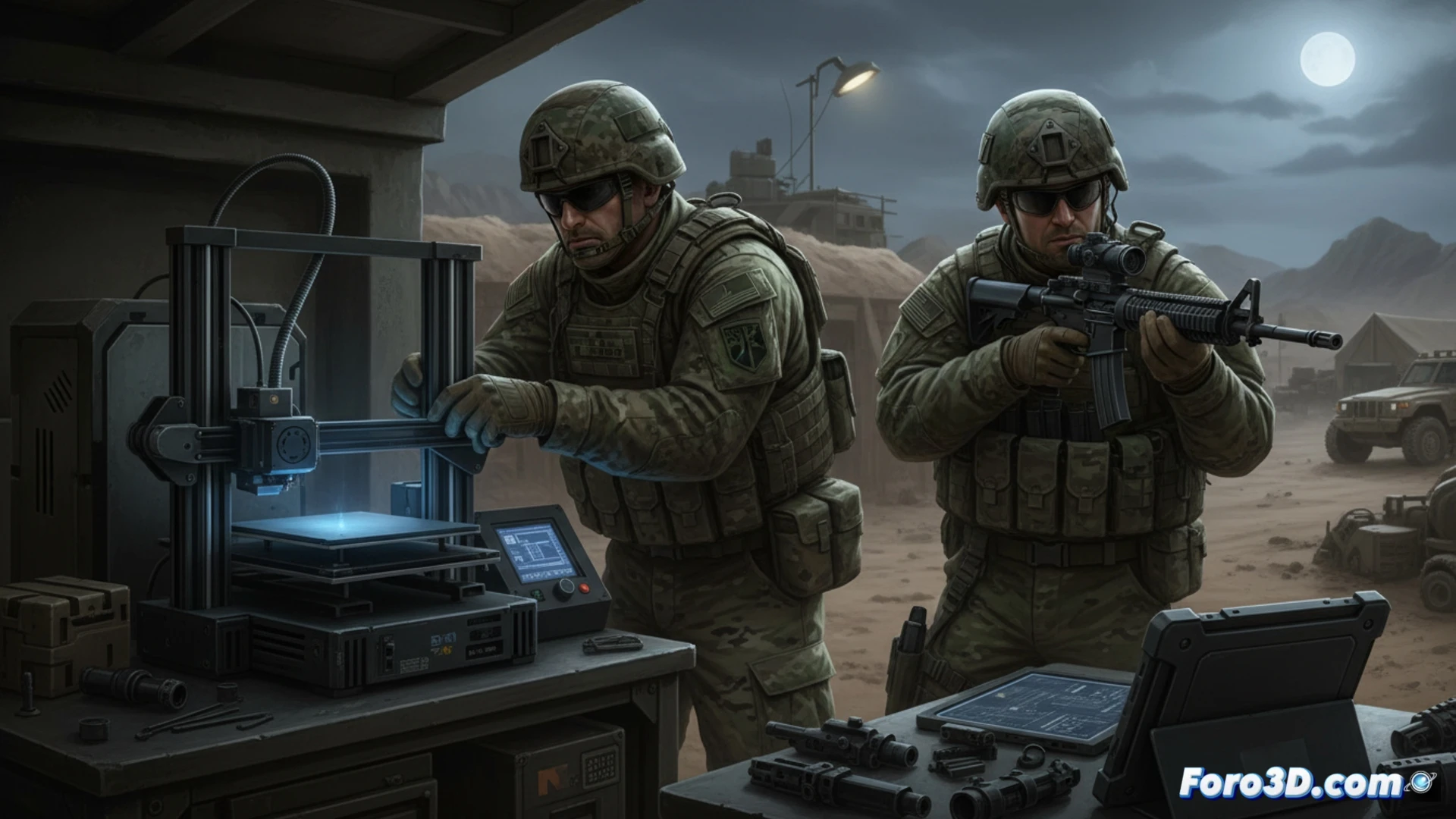
On-demand printing of tactical components 🛠️
To produce these parts, a 3D scanner like the Einscan Pro is needed to capture original geometries, CAD software like Fusion 360 to redesign adapters, and a robust FDM printer like the Creality CR-10 Max, capable of working with resistant filaments such as nylon or PETG. The process includes stress simulation in Autodesk Nastran before manufacturing. This allows standard equipment to be modified for specific missions without relying on external manufacturers.
When the sergeant becomes an industrial designer 😅
The downside is that now any recruit with a 3D printer can design a mount for their canteen, and the sergeant ends up reviewing STL files instead of war reports. Not to mention that the filament runs out just when a part is most needed, forcing improvisation with duct tape and prayers. Technology is useful, but it doesn't replace a good pair of pliers.