The social educator works with vulnerable groups, seeking their integration. 3D technology allows for creating personalized teaching materials, low-cost prosthetics, or visual aids. A clear example is manufacturing tactile objects to teach complex concepts to people with visual impairments, facilitating their autonomous learning and participation in group activities.
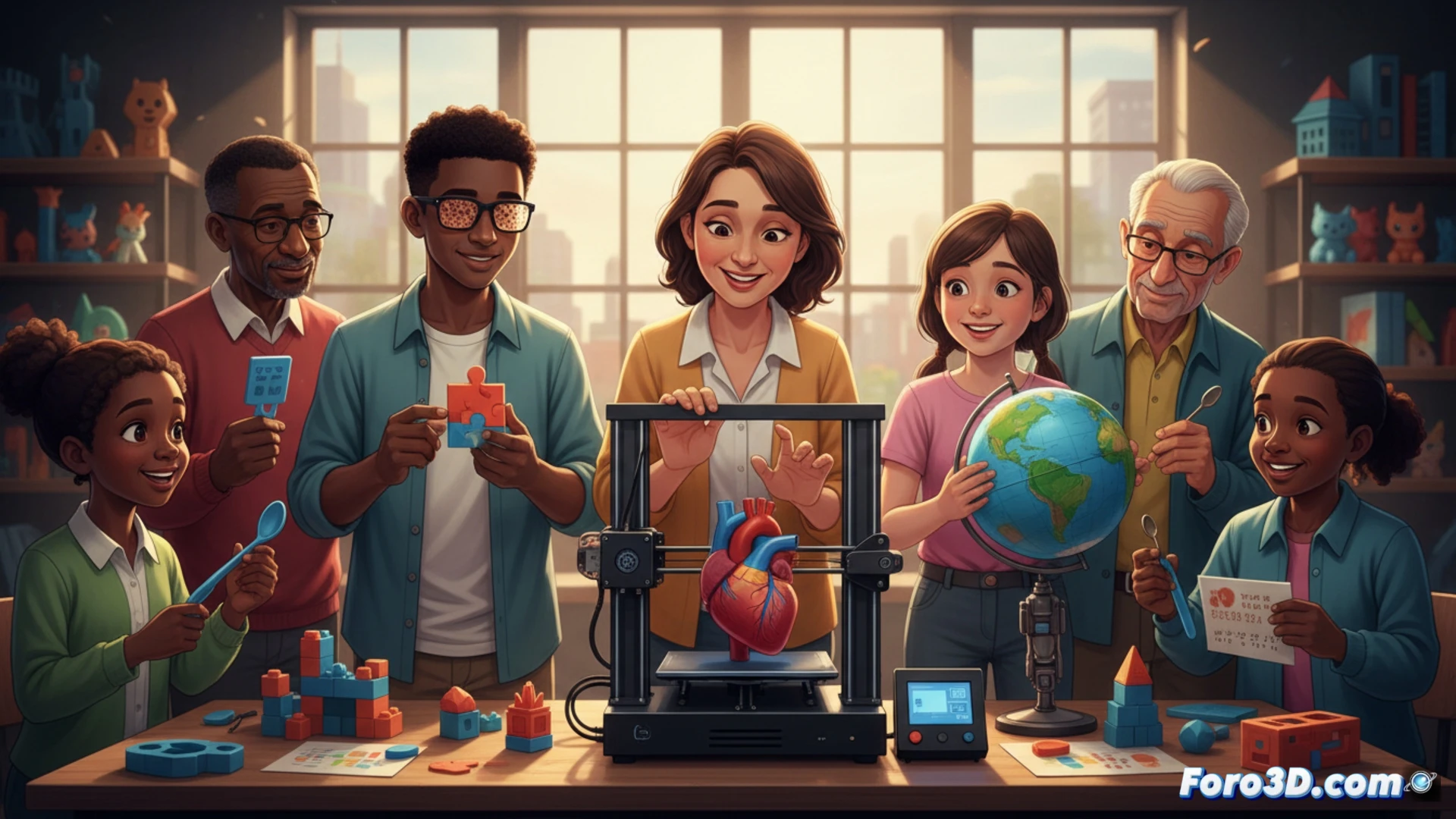
Programs and workflow for the social educator 🛠️
To design objects, Tinkercad or Fusion 360 is used due to their accessible learning curve. Then, a slicer like Cura or PrusaSlicer converts the model into instructions for the printer. The process allows adapting each piece: from a relief map for orientation to modified board games to integrate users with reduced mobility. A basic FDM printer and PLA filament, which is economical and safe for workshops, are required.
When the printer decides to do group therapy 😅
Everything goes well until the nozzle clogs mid-workshop. Then, the social educator discovers that fixing a 3D printer is like mediating a teenage fight: it requires patience, tweezers, and not throwing anything out the window. In the end, the group comes together to save the failed piece, turning a technical error into a lesson in resilience. But yes, buy extra filament.