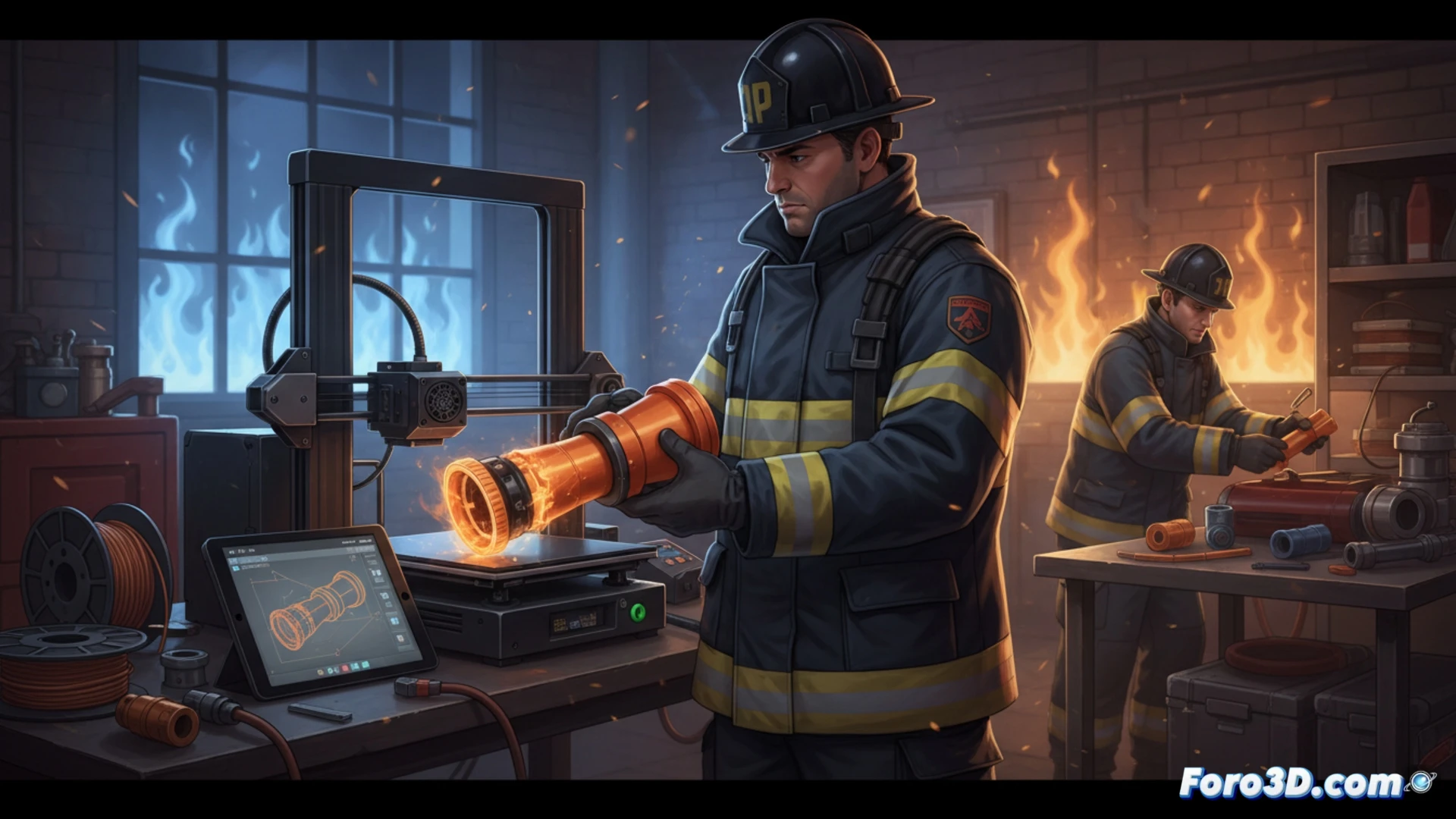
3D technology allows fire departments to create spare parts and custom tools in minutes. A clear example is hose nozzles with non-standard threads, which are difficult to find in warehouses. With a 3D printer and a CAD file, they are manufactured at the fire station without relying on external suppliers, saving critical time in emergencies.
Programs and workflow for rapid prototyping 🛠️
To design these parts, programs like Fusion 360 or Blender are used, which allow modeling complex geometries. The file is exported in STL format and processed with Cura or PrusaSlicer to generate the G-code for the 3D printer. The most commonly used materials are PETG and ASA, due to their resistance to heat and impact. With a 200-euro printer and 20-euro-per-kilo filament, any station can equip itself with couplings, brackets for breathing apparatus, or protectors for thermal cameras.
What cannot be printed (and what can) 🔥
3D printing does not manufacture human value, nor does it replace the decision to enter a burning building. But if a firefighter loses the clip that holds the mask, they can print another in 45 minutes while having a coffee. Of course, as long as the coffee isn't as hot as the fire. And watch out: printing a functional helmet is a bad idea—better leave that to certified manufacturers. 3D technology is a support, not a substitute for the craft.