3D technology provides the bodyguard with tools to customize and manufacture protective equipment or support pieces in record time. For example, a communication headset with active noise cancellation, designed to the exact fit of the professional's ear, improves discretion and safety in covert operations. With a 3D scanner, the ear's geometry is captured and printed in flexible TPU.
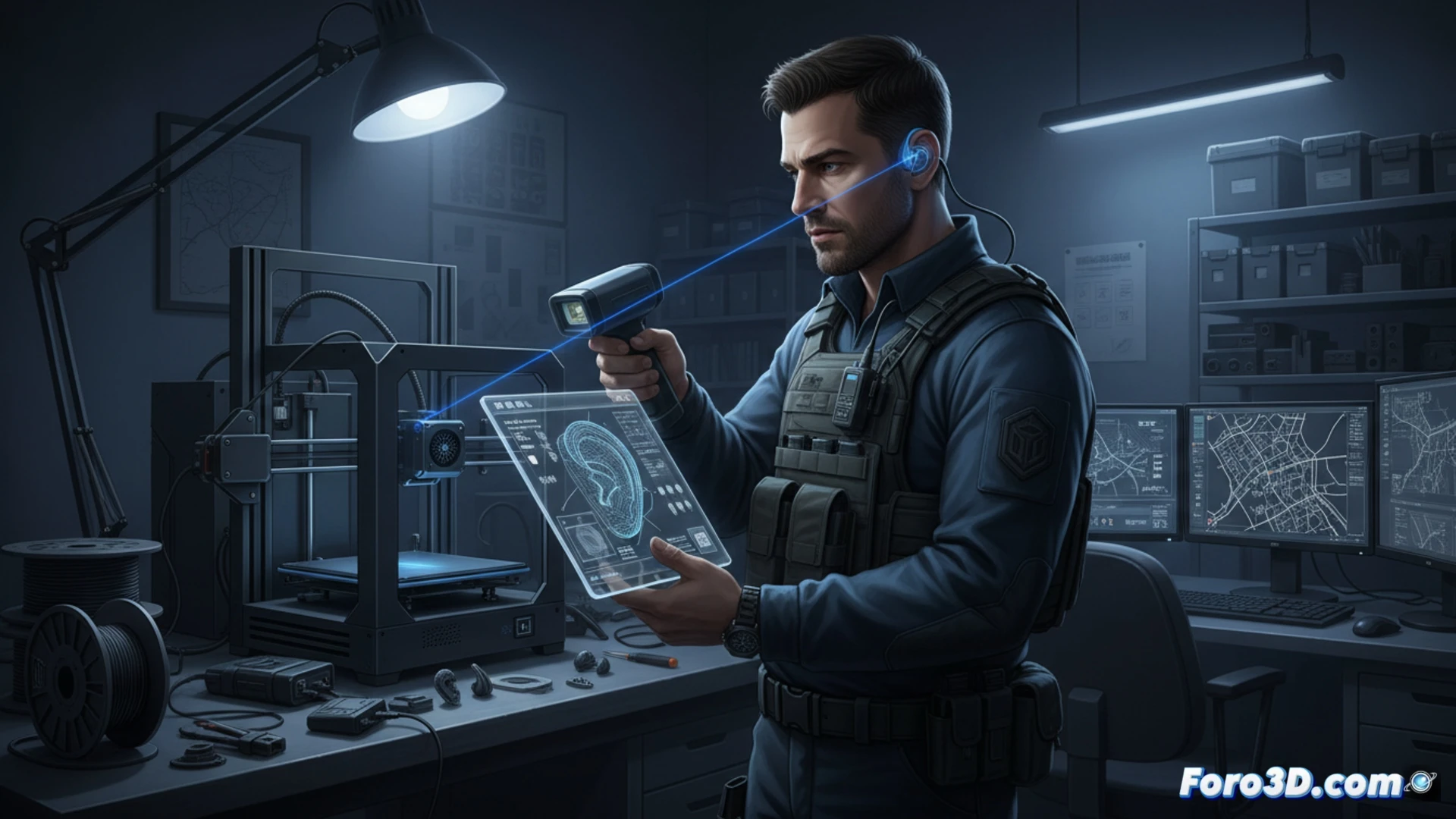
Digitization and additive manufacturing for tactical kits 🛡️
To implement this solution, a handheld 3D scanner like the Revopoint POP 3, modeling software such as Blender or Fusion 360 to adjust the design, and a resin or FDM printer like the Bambu Lab A1 Mini are required. The process is straightforward: scan the outer ear, clean the mesh in the software, add the housing for the microphone and battery, and export to STL for printing. This allows for a functional replacement part in less than four hours.
When the bodyguard has more 3D parts than the principal 😅
The funny thing is that while the client shows off their limited-edition watch, the bodyguard wears a headset printed at home that costs less than a latte. But careful, don't let that coffee get cold in their hand: if the design fails and the microphone doesn't fit, the bodyguard will end up shouting instructions like a lost tourist in a market. Good thing there's enough filament left over to print an emergency plug.