The job of an agricultural technician demands quick solutions in the field, from repairing an irrigation part to designing a feeder for livestock. 3D technology makes it possible to manufacture low-cost spare parts and prototypes directly on the farm, reducing wait times and dependence on external suppliers. A clear example is creating a custom adapter to connect a 2-inch hose to a 3-inch tank, a part not available at local hardware stores.
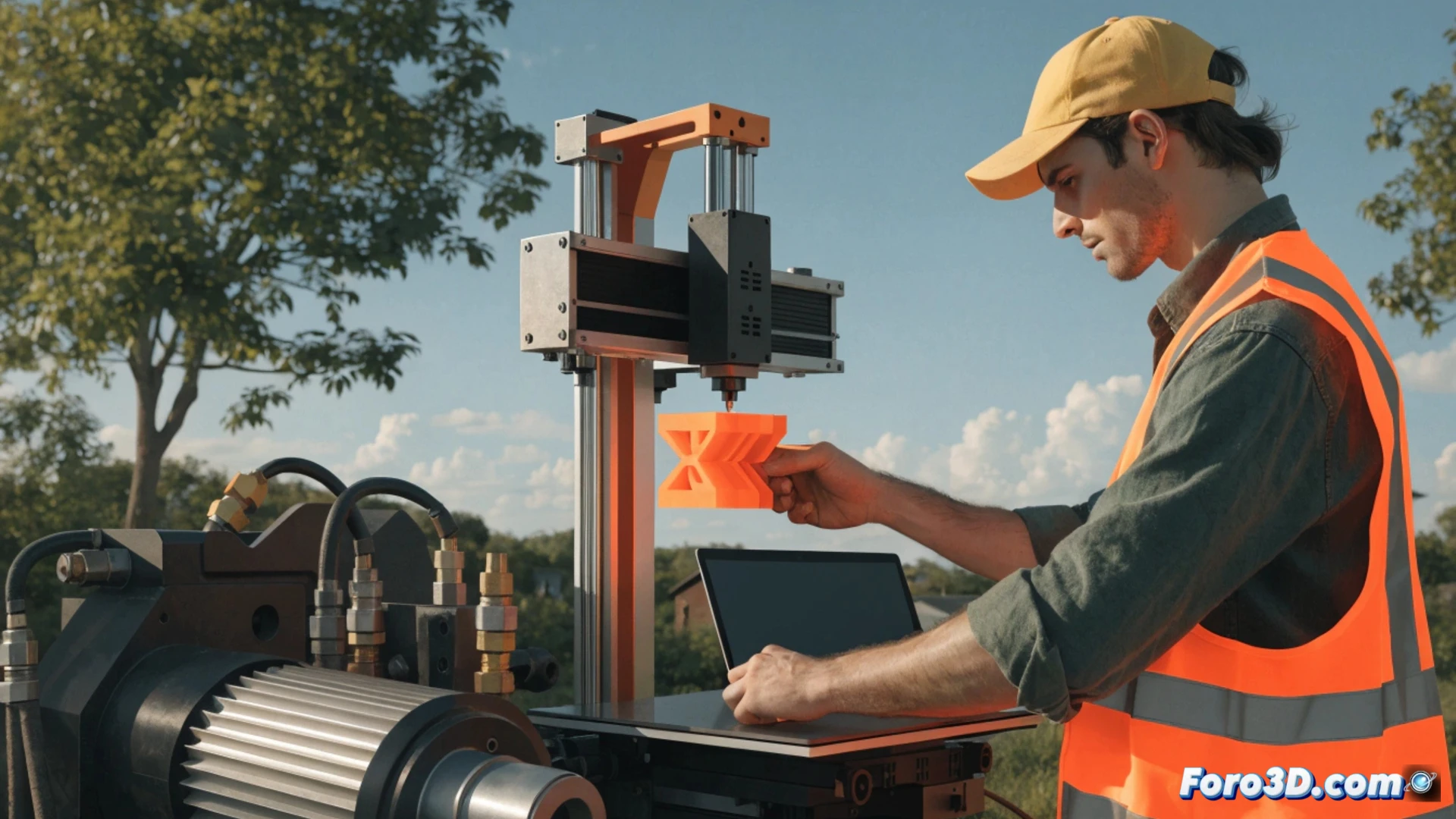
Design and Modeling: The Software You Need 🛠️
To start, you need a 3D modeling program like Fusion 360 or FreeCAD, both with free versions for non-commercial users. With them, you design the desired part, for example, a bracket for soil moisture sensors. Then, a slicer like Cura or PrusaSlicer converts the design into instructions for the printer. A PLA or PETG filament machine, such as the Creality Ender 3, is sufficient for functional prototypes. The process is straightforward: measure, model, slice, and print. You don't need to be an engineer, just have patience and a digital caliper.
When the Tractor Refuses to Cooperate 🚜
Of course, there's always the day the tractor decides to go on strike just when you need it most. That's where the 3D printer shows its most useful side: while you wait for the official spare part that takes three weeks, you can print a temporary piece that holds up just enough to finish the harvest. Sure, you'll avoid the tractor glaring at you from the shed. PLA isn't as strong as steel, but for a quick fix, it does the job. And along the way, you save yourself the supplier's lecture.