The job of a refinery operator demands precision, speed, and knowledge of complex equipment. 3D technology allows for the creation of exact replicas of critical parts such as valves or pump seals. This facilitates training and maintenance planning without shutting down the plant. A clear example: printing a scale model of a heat exchanger to practice its disassembly before the actual shutdown. Necessary programs include SolidWorks for design, Cura for slicing, and an industrial printer like the Ultimaker S5.
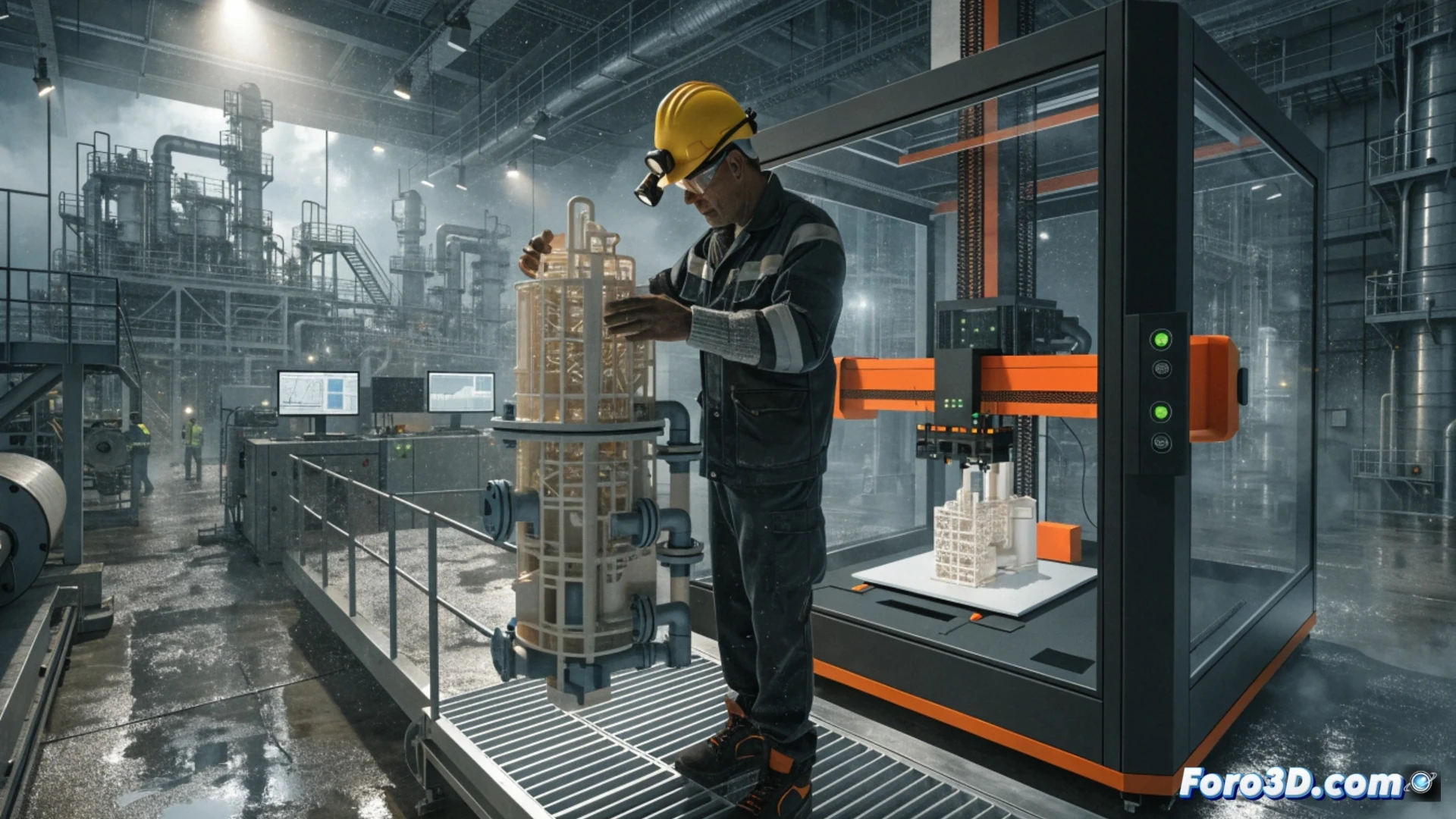
3D Simulations to Anticipate Plant Failures 🛠️
Beyond physical parts, 3D simulation allows the operator to visualize internal pipe flows and detect points of corrosion or erosion. With software like ANSYS or Autodesk CFD, pressure and temperature conditions are recreated. The operator can rotate, zoom in, and virtually section a reactor without approaching hazardous areas. This reduces unplanned shutdowns and improves safety. Additionally, augmented reality with HoloLens overlays live data onto real equipment, guiding valve adjustments or pressure gauge readings.
When the Operator Prints Their Own Spare Part 🔧
Imagine a crude oil pump gasket breaks on a Friday at 3 PM. The operator, instead of calling three suppliers and waiting until Monday, goes to the workshop's 3D printer, selects the file, and has the part ready in two hours. Of course, the shift supervisor will say that it's cheating and that the official procedure requires an order with three signatures. But while he's looking for the stamp, the refinery is already running again. Technology doesn't replace experience, but it does prevent the operator from cursing the supplier.