The job of a heavy machinery operator demands precision and speed, but also deals with parts that break or are discontinued. 3D technology allows for manufacturing spare parts on demand, creating custom cutting templates, or simulating complex terrains before moving a single cubic meter of earth. A clear example: designing an excavator bucket with optimized geometry for a specific type of clay, printing it in engineering plastic, and testing it without wasting steel or workshop hours.
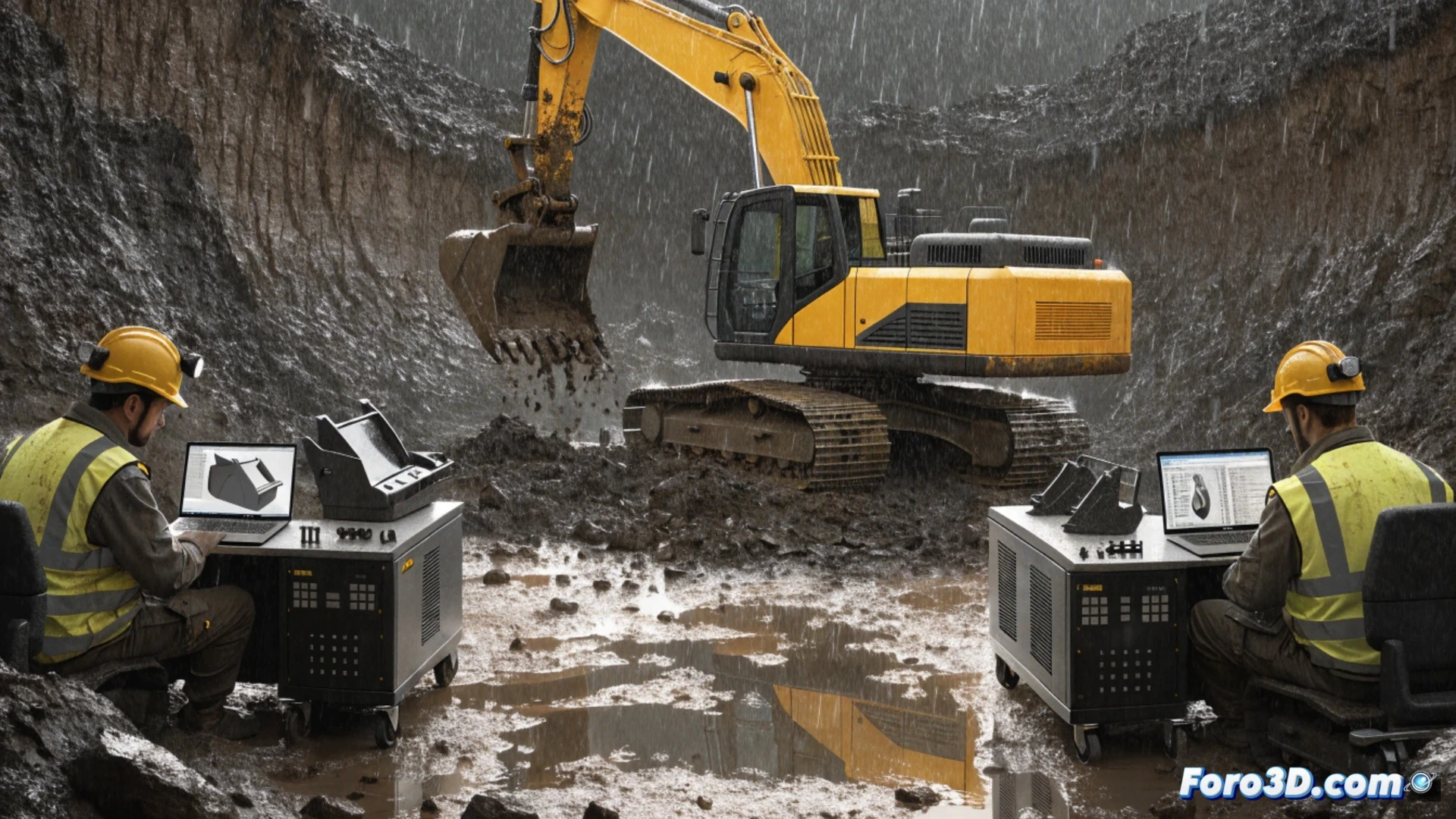
3D Modeling and Simulation to Avoid On-Site Errors 🚜
To create these spare parts or prototypes, parametric modeling software like Fusion 360 or SolidWorks is needed, which allows adjusting tolerances and simulating stresses. Then, a slicer like Simplify3D or Cura converts the design into instructions for the printer. In the field, 3D scanning tools like a handheld scanner (e.g., Einscan) capture the broken part to replicate it exactly. Simulation with programs like RoCSim (machinery simulator) trains the operator in complex maneuvers without moving a real bulldozer, saving fuel and wear and tear.
When Your Excavator Needs Parts That Nobody Makes Anymore 🔧
And then comes the day when the bucket joint breaks on a Friday at five o'clock. The veteran operator says that used to be fixed with wire and duct tape, but now you pull out an STL file, send it to the printer, and while you have a coffee, the part is ready. Of course, then you have to explain to the boss that it's not magic, that the filament costs money, and yes, the printer sometimes jams. But hey, that's better than spending the weekend welding with a flashlight and a bad attitude.