The trade of a gas installer demands precision and adaptation to complex spaces. 3D technology makes it possible to design custom connection pieces, optimize pipe routing, and verify interferences before cutting a single meter of pipe. This reduces on-site errors and downtime. A clear example: manufacturing a specific bracket for a boiler in an irregular cavity using prior digital models.
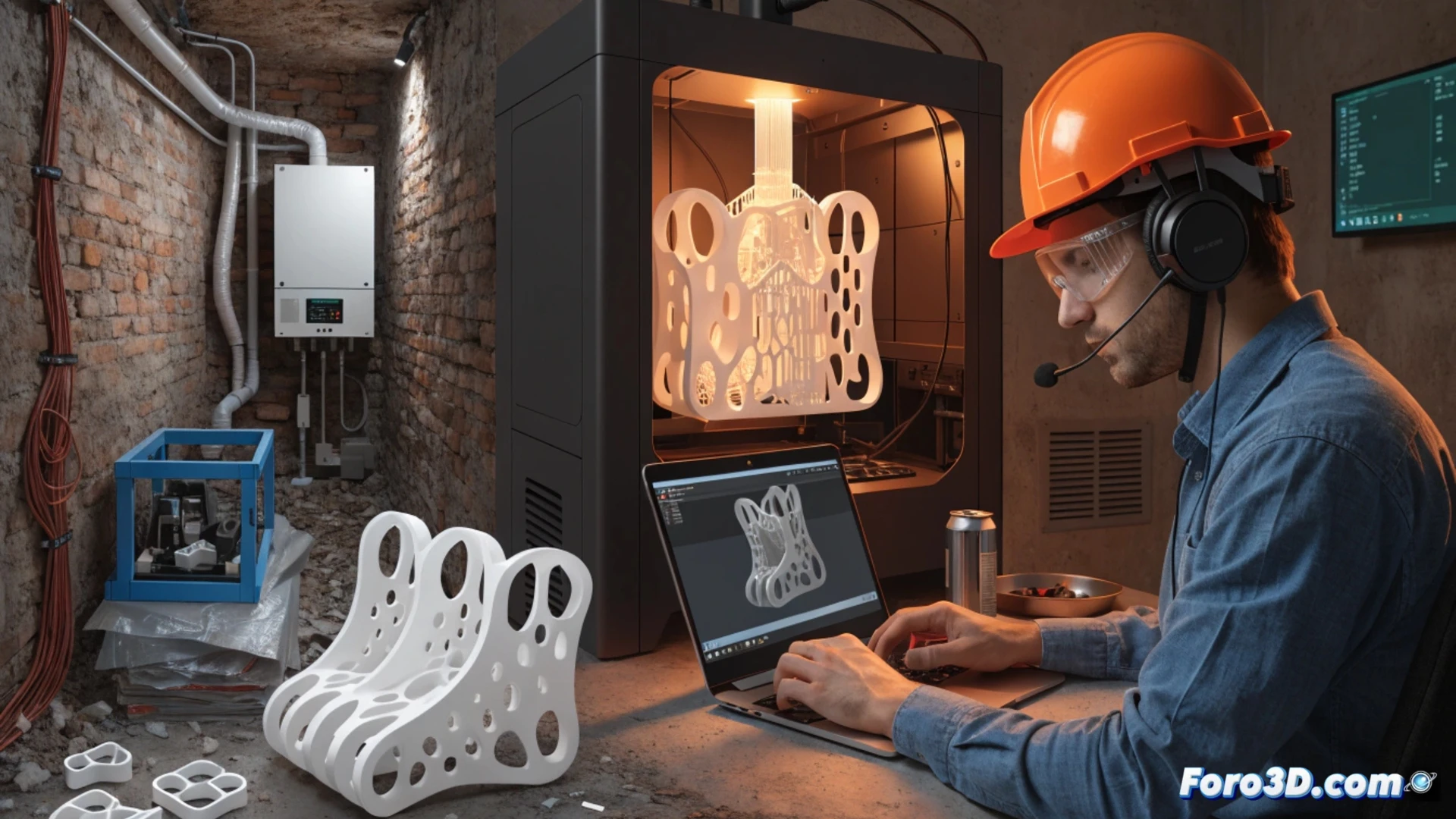
Workflow: from 3D scanning to the final part 🔧
To apply this technology, a 3D scanner like the Revopoint POP 3 is needed to capture the real environment. Then, software such as Fusion 360 or SolidWorks allows modeling the connection piece or adapter. Finally, a 3D printer using heat-resistant filament, like the Bambu Lab X1C with PETG or Nylon, materializes the component. Programs like Pipe Flow Expert help simulate gas pressure in the design, ensuring the part withstands working conditions without leaks.
When the plumber becomes a NASA engineer 🚀
Because yes, now an installer can spend the afternoon modeling a part in 3D that they previously fixed with Teflon tape and a bit of faith. Sure, the first printed prototype will come out crooked and have the texture of sandpaper. But after three attempts and a couple of curses at the software, they'll have a perfect adapter that even NASA would envy. The downside is that the client, upon seeing the printer, will think they're being charged double for using space-age technology.