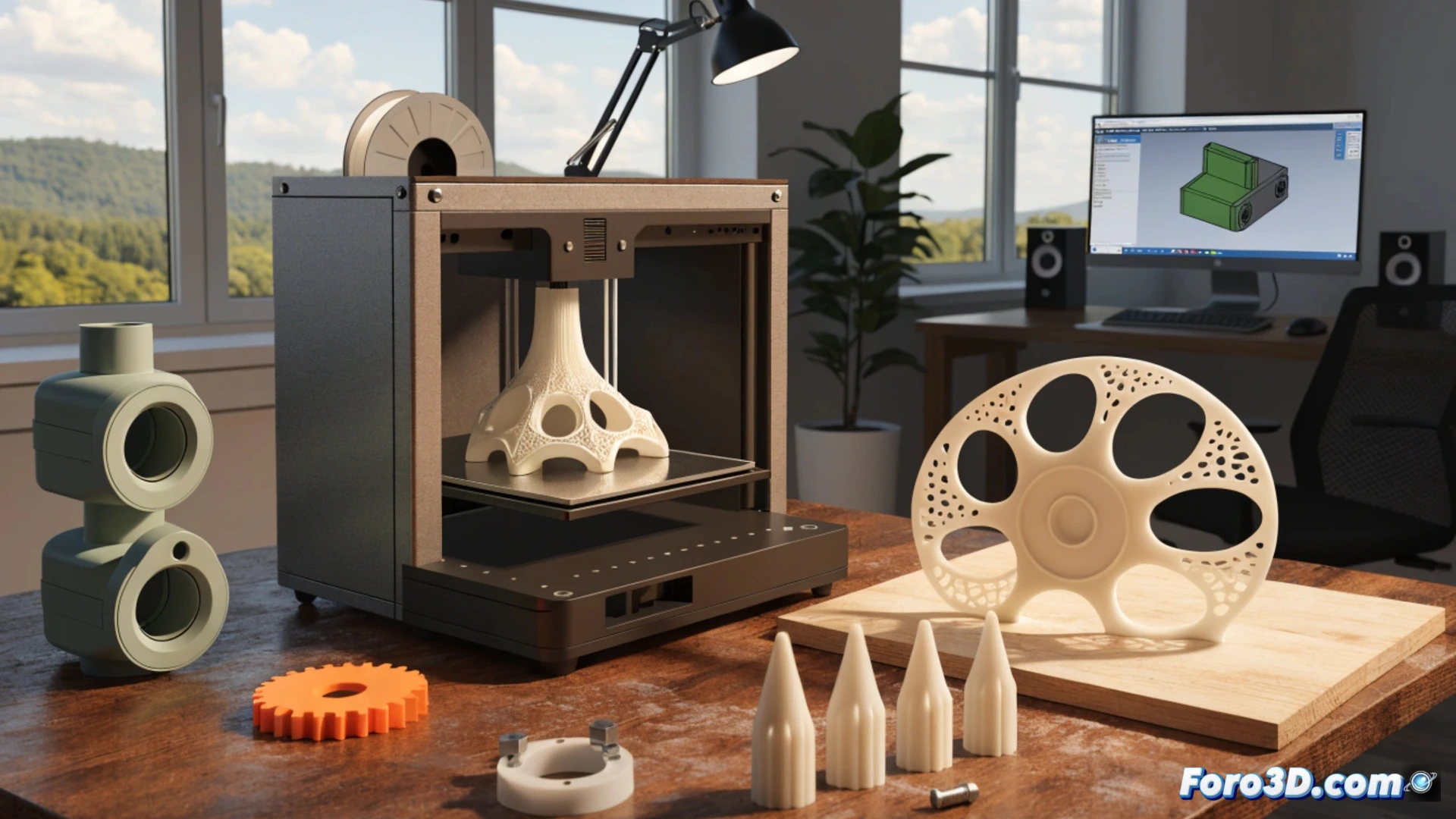
3D technology offers practical solutions for the agricultural engineer, from designing spare parts for machinery to creating prototypes of irrigation systems. A clear example is the manufacturing of customized soil moisture sensors, which allow for precise crop monitoring. This requires programs like Fusion 360 or Blender for design, and a printer like the Creality Ender 3 for manufacturing.
3D modeling applied to agricultural tool design 🌱
3D modeling allows the agronomist to design specific adapters for tractors or agricultural drones. With software like SolidWorks or FreeCAD, parts can be created to optimize precision seeding. For example, a 3D-printed seed dispenser adjusts the exact amount per square meter, reducing waste. This is complemented by 3D scanning of terrain using drones equipped with LiDAR sensors, integrating data into QGIS for crop planning.
When the tractor breaks down and you can't find a spare part 🚜
We've all been there: the tractor decides to retire on a Tuesday at 5 PM and the broken part has been out of production for years. With a 3D printer and a little patience, the agricultural engineer becomes a rural McGyver. You design the part in Tinkercad while sipping coffee, print it, and voilà, the tractor is back in action. Of course, don't tell the manufacturer that you can make their parts for two euros; they get annoyed.