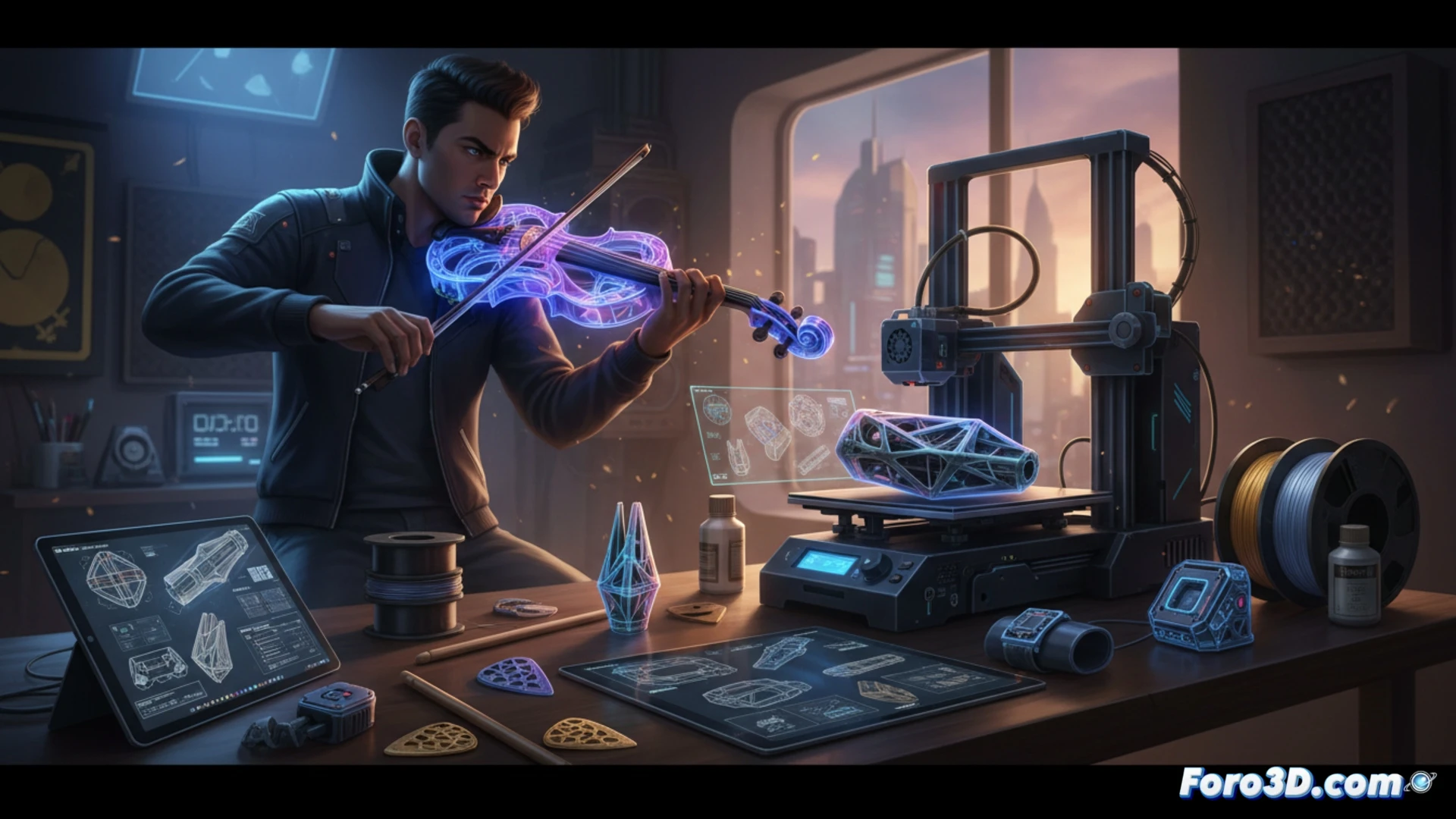
3D technology is transforming the craft of the music composer by allowing them to manufacture custom instruments and accessories. A clear example is the creation of picks, mouthpieces, or resonators with geometries impossible to achieve through traditional methods. Programs like Fusion 360 or Blender allow these pieces to be designed, which are then printed in filament or resin to alter the instrument's timbre or ergonomics.
Parametric modeling and controlled acoustics 🎵
The composer can use Grasshopper within Rhino to generate shapes that modify the resonance chamber of a wind instrument. By varying parameters such as wall thickness or inner diameter, specific harmonic frequencies are obtained without relying on a luthier. Audacity software is used to analyze the sound spectrum of the printed piece, adjusting the design until the desired tuning is achieved. This process eliminates manual trial and error.
When the composer becomes a handyman out of necessity 🛠️
Because, of course, nothing says I'm a serious artist like spending three hours calibrating the printer bed so a guitar pick comes out straight. Then it turns out the PLA deforms with concert sweat and the sound resembles a blender more than an arpeggio. But hey, at least you have an excuse for not turning in the score on time: the filament got jammed.