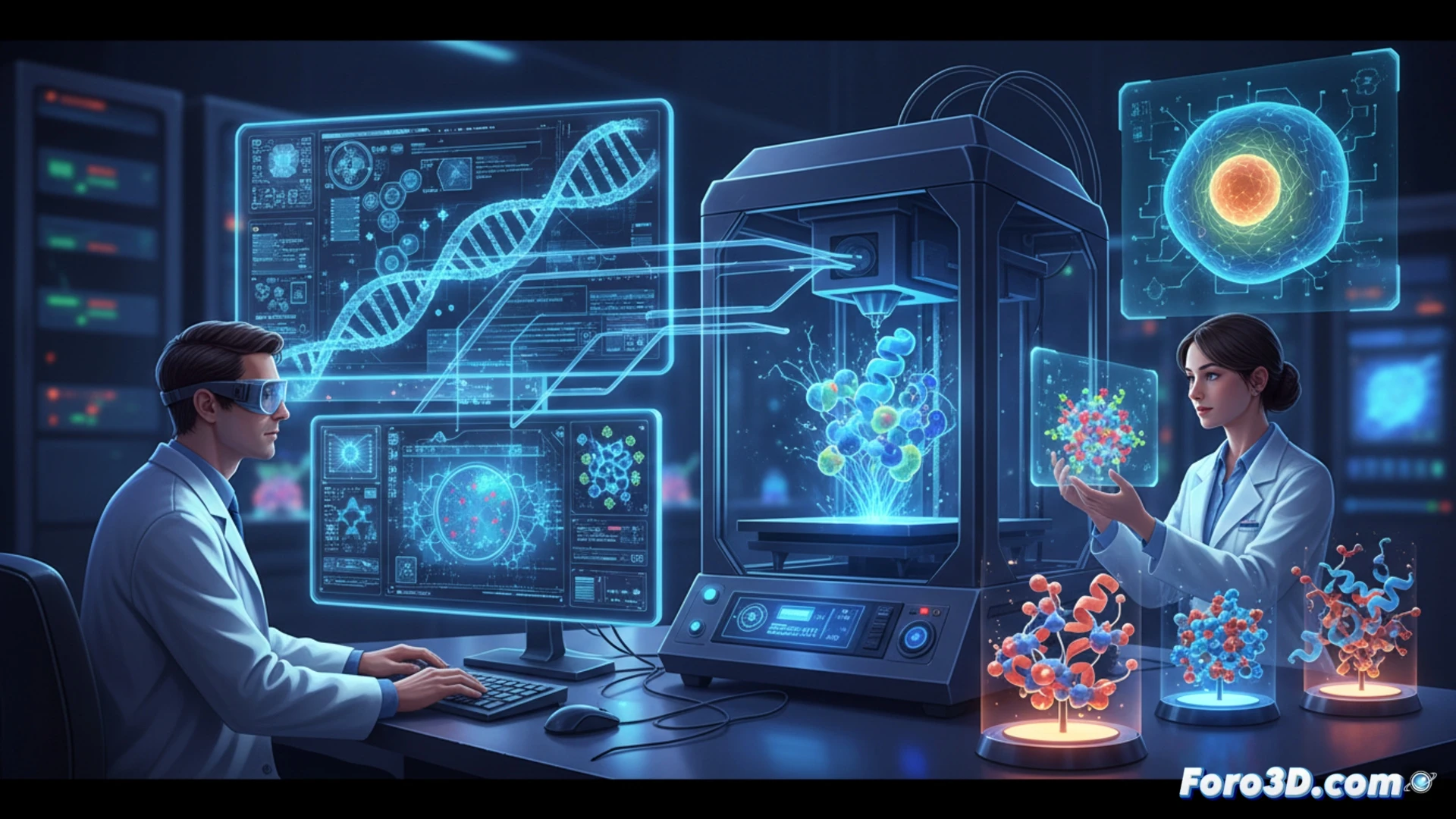
Bioinformatics processes genomic and proteomic data on a computer, but 3D technology allows these molecules to take physical shape. A bioinformatician can model a protein in 3D to understand its folding and then print it, facilitating the visualization of complex interactions that a screen cannot convey.
Molecular modeling and functional prototyping 🧬
To move from code to a tangible object, programs like PyMOL or ChimeraX are used to generate molecular models. Then, with Blender, the geometry is optimized for 3D printing. The resulting file is sent to slicing software like PrusaSlicer or Cura, which prepares the model for an FDM or SLA printer. The classic example is printing a protein receptor to observe how a candidate drug fits, accelerating the working hypothesis in the laboratory.
When your protein doesn't fit on the screen 🔬
Seeing a protein on a PC screen is like reading the fine print of a contract: you miss half of it. Printing it in 3D allows you to rotate it with your hands and point at it like an explorer. However, be careful not to leave the piece in the sun, because the plastic will deform and your desktop mutant protein will end up looking like a melted churro.