The role of a kitchen assistant involves repetitive tasks such as cutting vegetables, shaping doughs, or preparing garnishes. 3D technology can simplify these tasks by creating customized tools, precise molds, or cutting templates. It's not about replacing the cook, but about providing tools that save time and reduce errors in manual tasks.
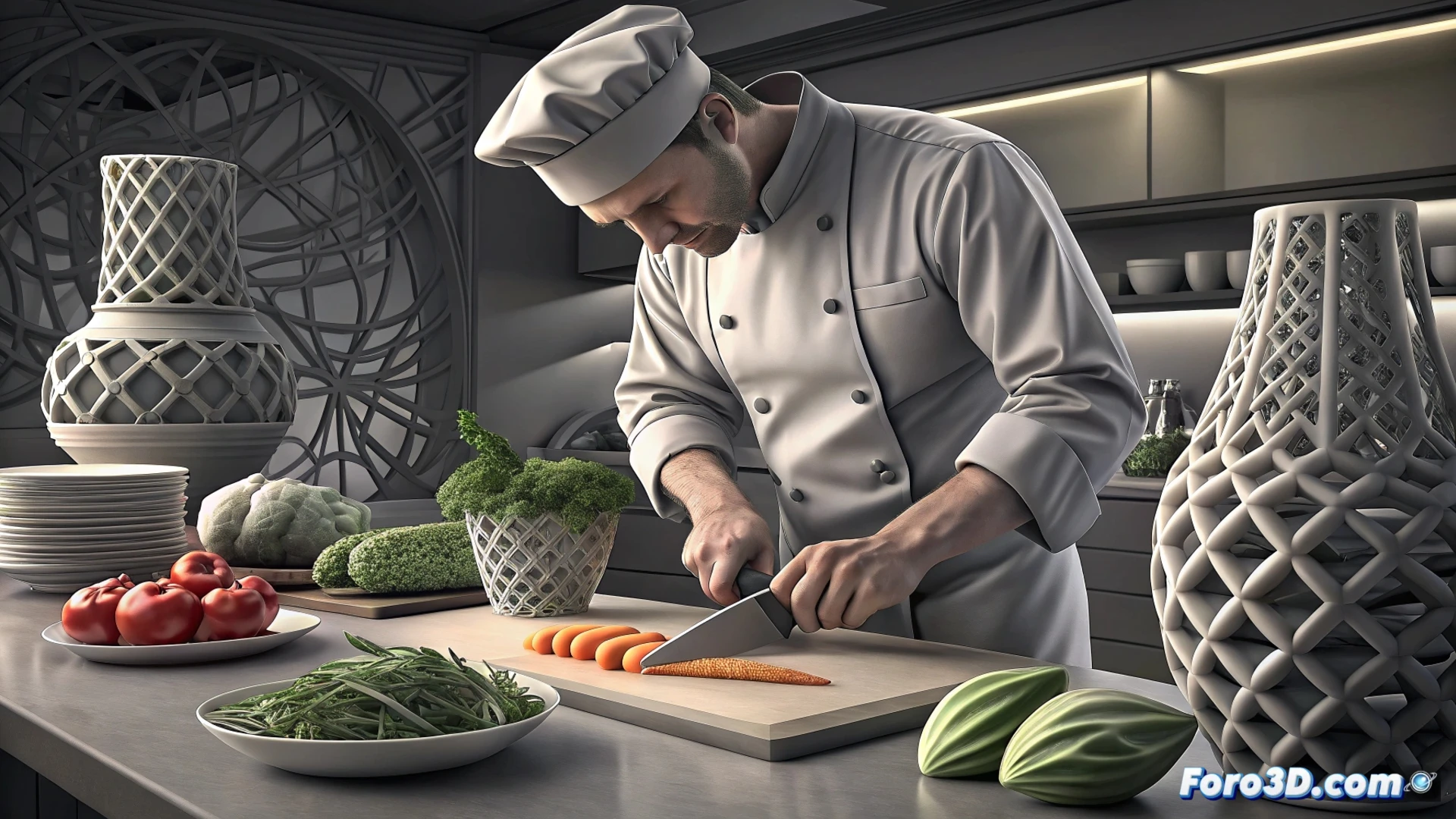
3D molds and templates for efficient mise en place 🍽️
A clear example is the use of 3D-printed molds for portioning doughs or vegetables. With a CAD design (like Fusion 360 or Tinkercad) and an FDM printer using food-grade PLA filament, cutters with specific shapes can be manufactured. The assistant places the dough on the mold and presses, obtaining identical portions without eyeballing measurements. This reduces waste and speeds up the preparation of dishes that require uniformity, such as ravioli or tartlet bases.
Goodbye to onion tears (and excuses) 🧅
Sure, you could buy a cheap plastic onion cutter, but where's the fun in not printing one shaped like a skull? 3D printing allows you to design utensils so specific that your head chef will think you're a genius or a geek. Just make sure the filament is food-safe, or your colleagues will end up eating microplastics with a side of irony.