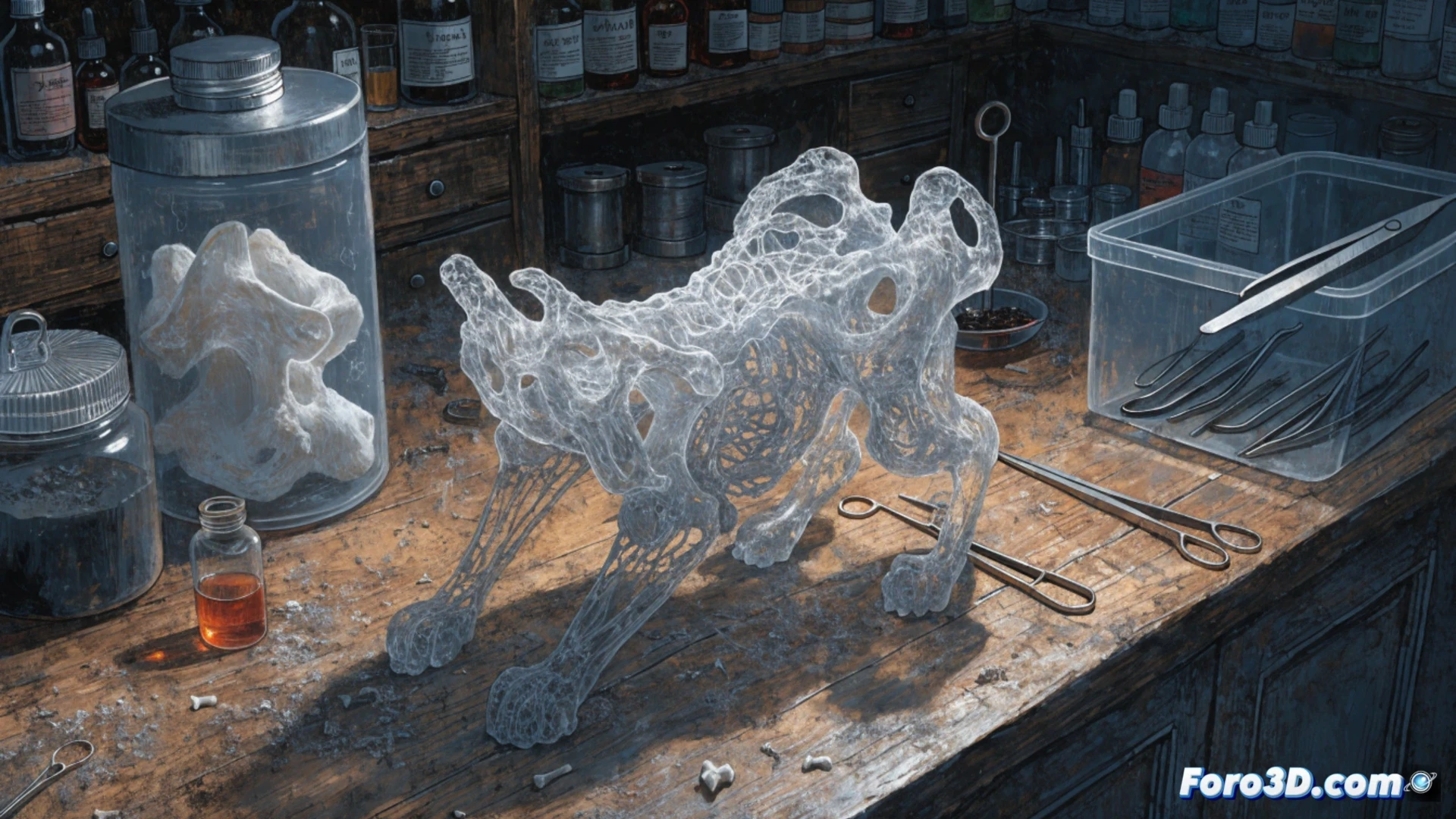
3D technology is transforming veterinary practice, offering tools that make the daily work of the veterinary assistant easier. From creating anatomical models to plan surgeries to manufacturing custom prosthetics and splints, the leap is remarkable. A clear example: a cat with a complex hip fracture can benefit from an exact replica of its pelvis printed in 3D, allowing the team to rehearse the procedure before touching the animal.
Programs and workflow for the technical assistant 🖥️
To integrate 3D printing into the clinic, modeling and segmentation programs are needed. The assistant can use software like 3D Slicer or InVesalius to process CT scans and extract precise bone models. Then, programs like Blender or Meshmixer are used to clean and adapt the design. Finally, a slicer like Ultimaker Cura or PrusaSlicer prepares the file for the FDM printer. No engineering degree is required, just patience to learn the basic sequence of import, edit, and export.
When the dog asks you for a custom splint (and not a bone) 🐶
Because yes, now besides cleaning cages and calming hysterical owners, the modern assistant must know about filament layers. Nothing beats the look on the client's face when you explain that their German Shepherd's leg won't be healed with a stick and duct tape, but with a parametric design you downloaded from the internet. That said, let no one be fooled: the dog will still bite the splint, but at least it will be a splint with millimeter tolerances. Technology doesn't take away the patient's stubbornness.