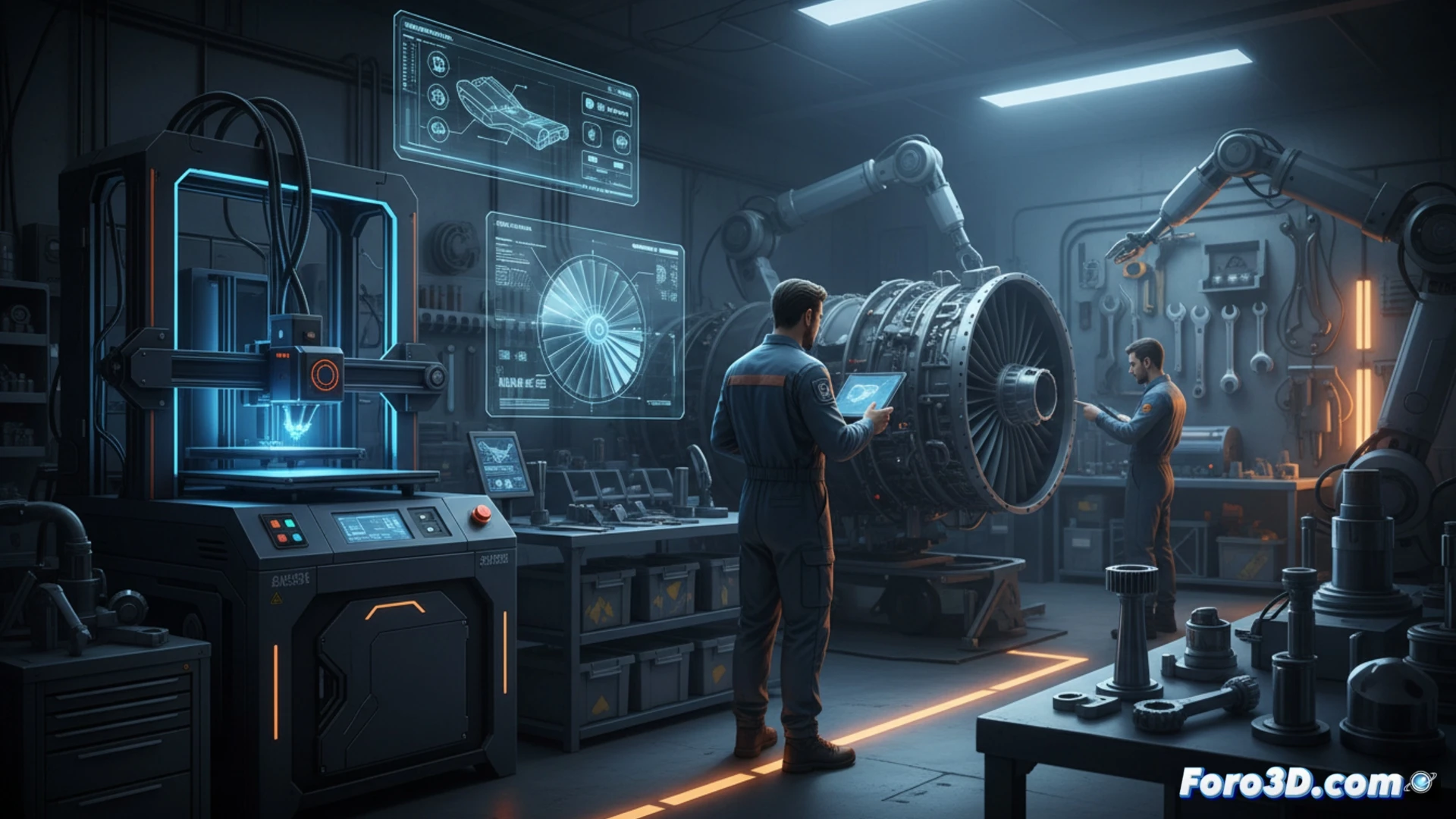
3D technology is transforming the aircraft mechanic's trade, enabling the manufacturing of spare parts on demand, creating specific tools, and visualizing complex components before touching them. It is no longer necessary to wait weeks for a plastic bracket or a panel housing. With a 3D scanner and a printer, the workshop becomes self-sufficient.
Scanning and modeling for precise repairs 🛠️
A practical example: an air duct connector breaks on a grounded aircraft. The mechanic scans the original part with a device like the Einscan Pro, models it in Fusion 360 or SolidWorks, and prints it in PETG or Nylon with an industrial printer like the Ultimaker S5. The result is a functional part, ready in hours. Programs like Blender or CATIA are also used to adapt geometries to aeronautical regulations.
Goodbye to searching for nuts in the dark hangar 🔦
The best part is that now you can print that cursed part that always gets lost at the back of the hangar. Before, you spent 20 minutes on your hands and knees with a flashlight, cursing the engineer who designed it. Today, you hit print, and while you have coffee, the machine spits out the spare. Of course, if you didn't level the bed properly, you'll have to peel the filament off the floor with a spatula. The trade has never been so elegant.