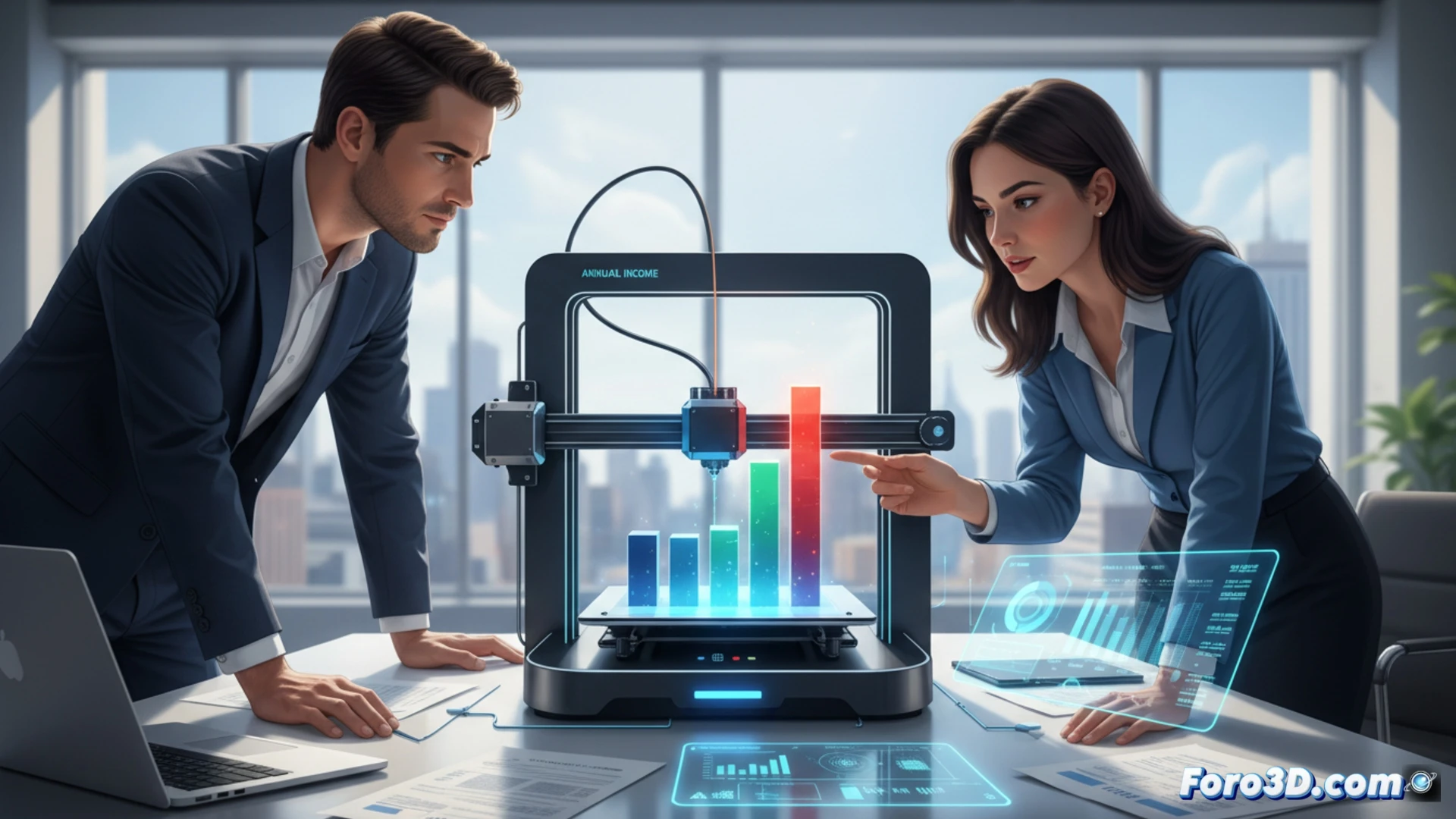
3D technology can transform the work of a tax advisor by allowing complex data to be visualized in three-dimensional models. For example, an advisor can print a 3D bar chart representing a client's income evolution over the year, making it easier to detect anomalies in tax returns. This saves time on manual reviews.
Software and Technical Workflow 🛠️
To implement this, modeling software like Blender is needed to create representations of data extracted from spreadsheets. Then, a program like PrusaSlicer prepares the file for FDM printers such as the Creality Ender 3. The advisor can design a 3D tax flowchart showing dependencies between income and deductions, using data from Excel exported to CSV. This allows for a tactile review of the information.
When Your Boss Asks for a 3D Flowchart 😅
Now imagine the advisor explaining to the client that their tax debt is represented by an orange plastic pyramid. The client, confused, asks if they can break it to pay less. The advisor replies no, but at least they can use the piece as a paperweight. The funny thing is that the 3D model takes longer to print than to calculate the quarterly VAT. Pure efficiency.