Orthodontics advances with 3D technology. Intraoral scanners replace plaster molds, and printers manufacture custom clear aligners. This reduces dentist visits and improves precision. A clear example is the use of personalized splints to correct the bite without metal brackets.
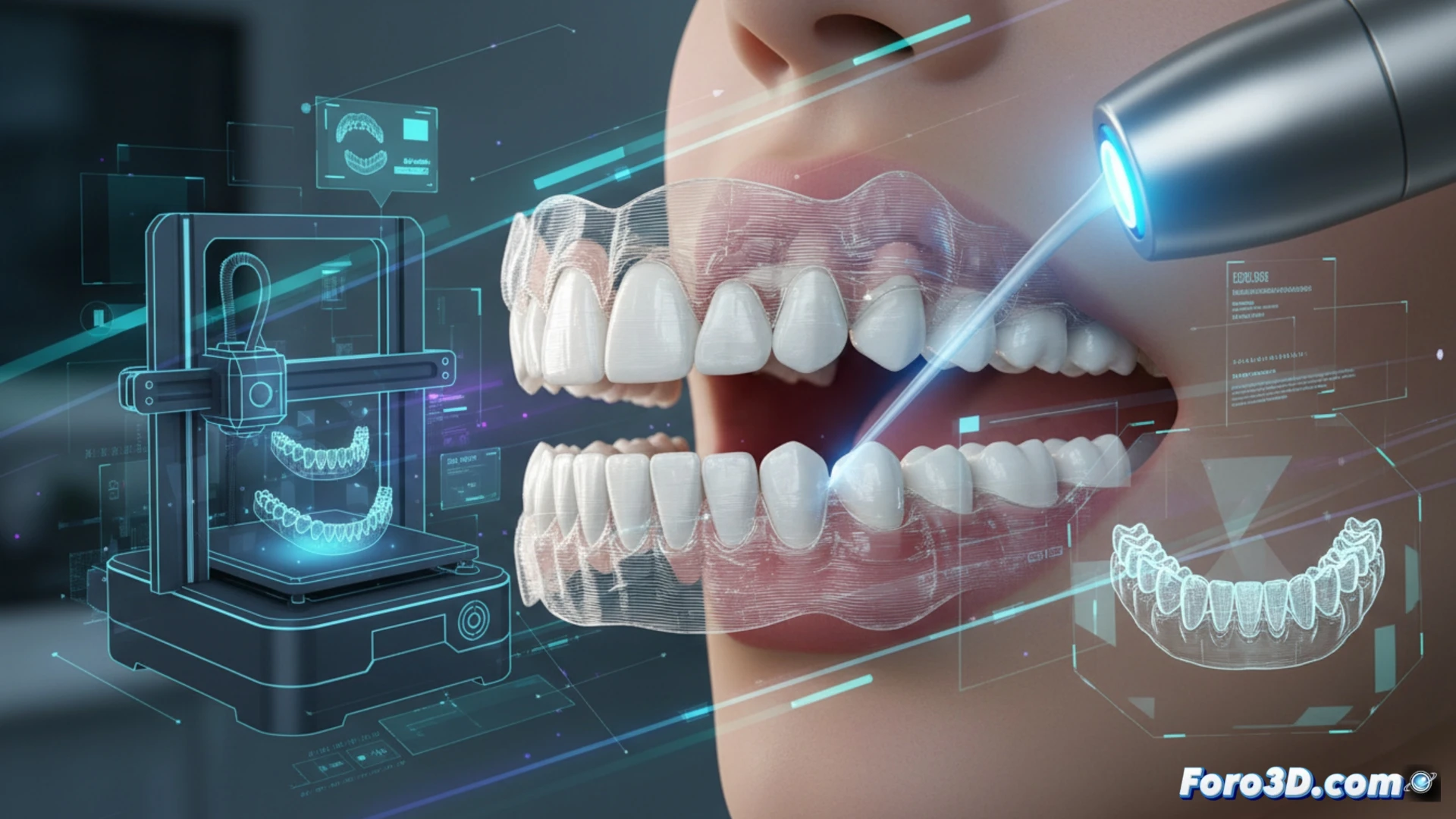
Scanning and modeling: the digital workflow 🖥️
The process begins with an intraoral scanner like the iTero or 3Shape TRIOS. The data is processed in software such as OrthoAnalyzer or uDesign. Then, a resin 3D printer (like Formlabs or SprintRay) manufactures the physical models. With these, the aligners are thermoformed. There are also simulation programs like ClinCheck that predict tooth movement step by step.
Goodbye to the wire: now the patient is their own technician 😎
Before, the orthodontist sweated adjusting metal arches. Today, the patient changes their aligners at home while watching Netflix. Of course, technology is unforgiving: if you lose a splint, you have to print another. And watch out, the intraoral scanner even records your fakest smile. Digital precision leaves no excuses for not wearing retainers.