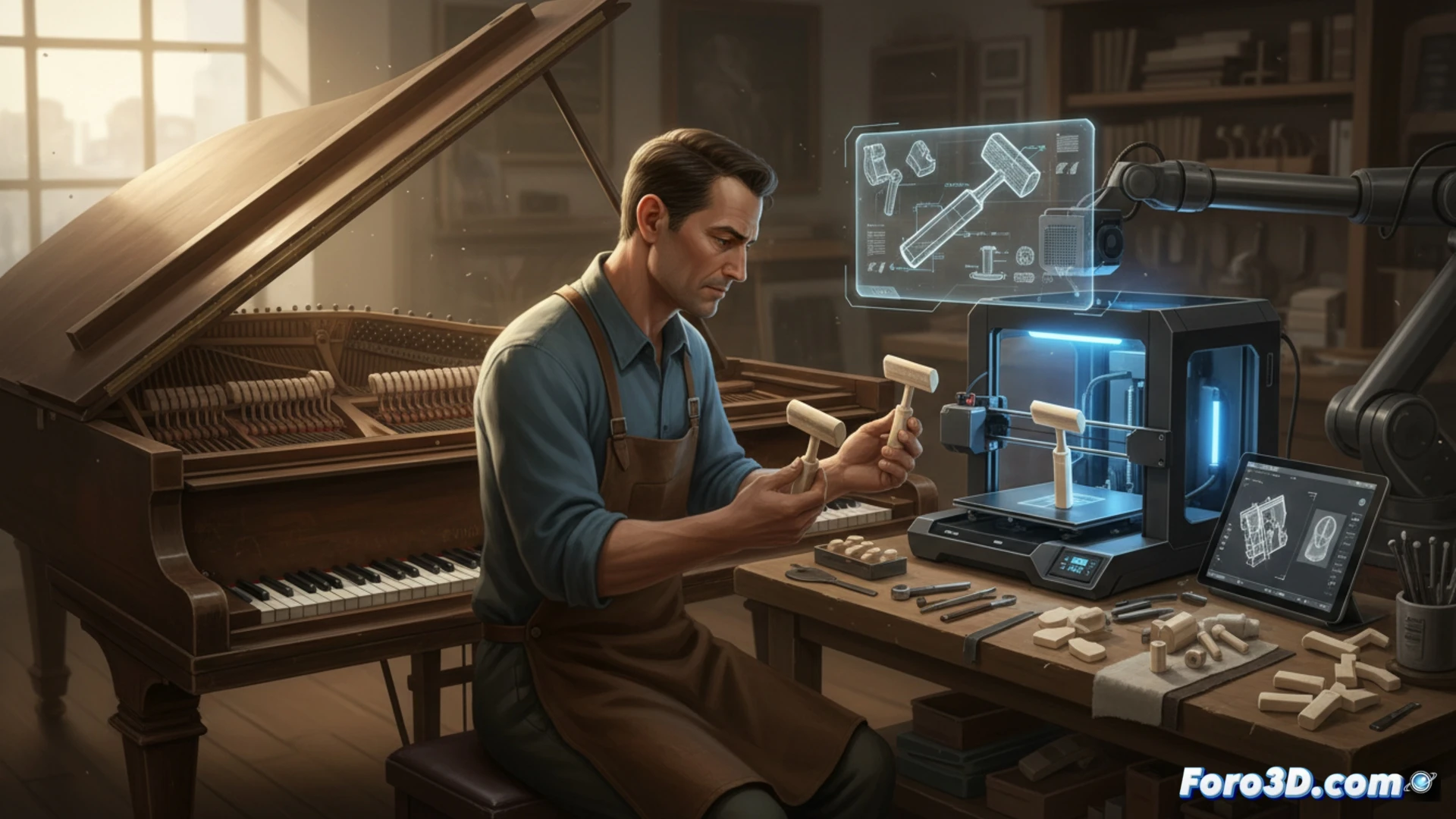
The piano tuner faces worn-out or discontinued parts from decades ago. 3D technology allows scanning, modeling, and manufacturing spare parts like hammers, axles, or stops with millimeter precision. This reduces waiting times and avoids dependence on suppliers who no longer manufacture certain components. A clear example: restoring a 1920s piano requires a specific rubber part; with a 3D scanner and a printer, it can be replicated in hours.
Scanner, modeling, and printing: the key tools 🛠️
To start, you need a handheld 3D scanner (like the Einscan SE) to capture the exact geometry of the original part. Then, modeling software like Fusion 360 or Blender allows you to adjust tolerances and create the STL file. The ideal printer is a resin type (like Anycubic Photon) for small, hard parts, or a filament type (Prusa i3) for larger components. Don't forget a digital caliper to verify measurements and a fine file for post-printing touch-ups.
Goodbye museum pieces, hello melted plastic 😂
The client looks at you with a panicked expression when you tell them their piano needs a part that hasn't been manufactured since their grandfather danced the Charleston. Now, instead of ordering an archaeological search through dusty warehouses, you tell them: don't worry, I'll print it this afternoon. Sure, then you spend half an hour explaining that no, you're not going to print the strings, and that PLA filament isn't suitable for making frame supports. But seeing their face when the part fits perfectly on the first try is priceless.