Generative artificial intelligence is here to stay, and with it, the ability to create texts, images, music, and videos just by asking. Tools like ChatGPT, Midjourney, or Suno make our lives easier, but they also open the door to serious problems: unintentional plagiarism, dubious copyrights, and content so generic that Google penalizes it mercilessly.
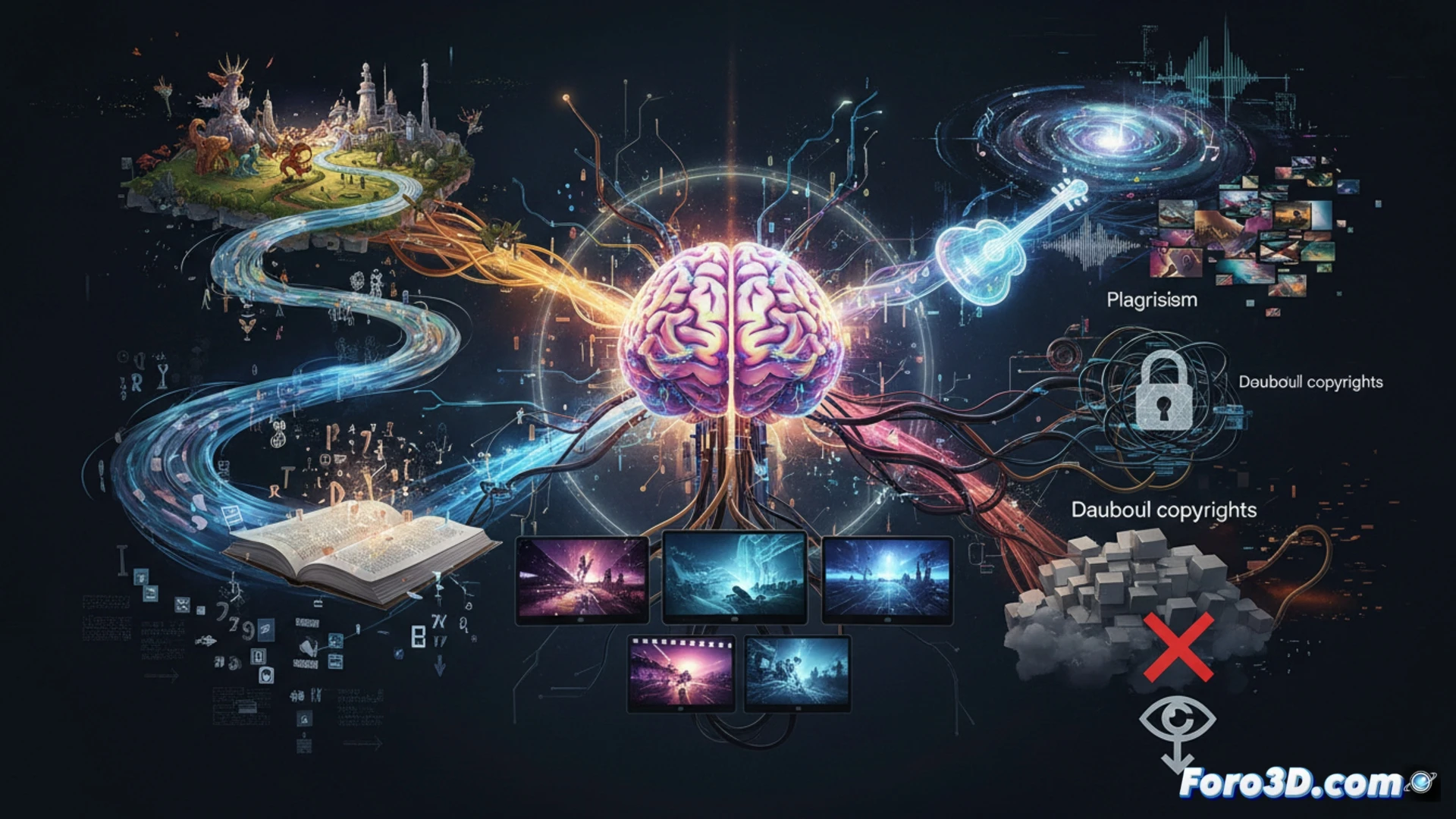
How AI works and why it repeats your ideas 🤖
Language models like GPT are trained on massive datasets, allowing them to predict words and generate coherent sentences. However, this process is not magical: lacking real understanding, they tend to regurgitate common patterns, producing texts that sound like instruction manuals. To avoid this, techniques like fine-tuning or temperature adjustment are used, but the result is still a mix of statistics and luck. If you don't feed the AI with original data, you get a rehash.
The art of asking AI not to sound like AI 🎭
You ask ChatGPT for an article on gardening, and it gives you a text that a bored robot could have signed. You tell it to be more human, and then it writes like a robot that has read too many self-help books. The irony is that, for AI not to sound like AI, you have to put in more effort than writing it yourself. And then, Google penalizes you for being generic. What a vicious circle of artificial creativity.