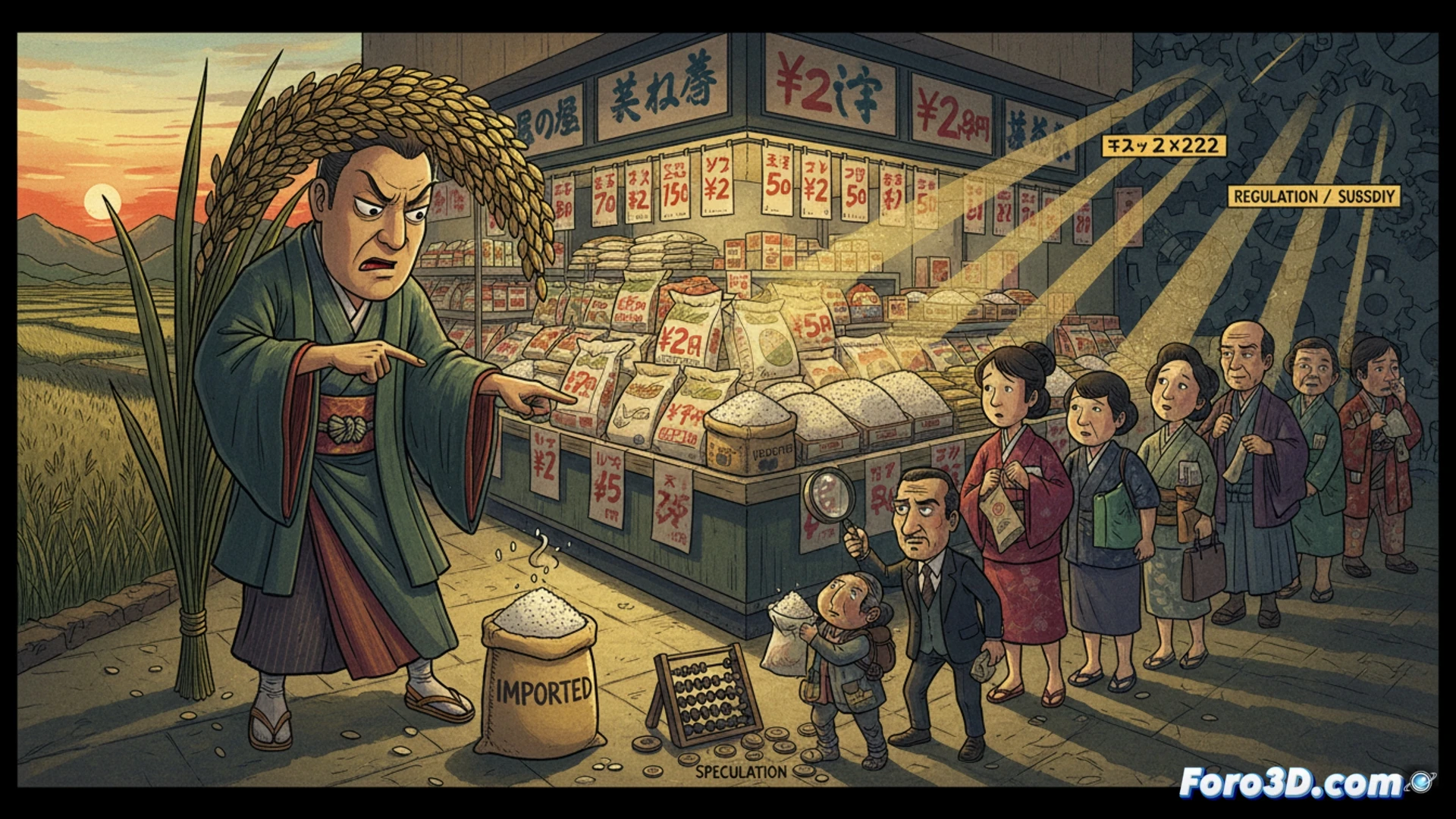
The Japanese government criticizes private rice imports while allowing its retail price to double, hitting families that depend on this staple food. This contradiction reveals a misguided priority: pursuing the small importer while internal speculation drives up costs. The solution lies in directly regulating prices or subsidizing purchases, protecting household economies against the rising cost of living.
Blockchain against rice speculation 🍚
A blockchain-based traceability system could track rice from producer to consumer, recording each transaction on an immutable chain of blocks. This would allow detecting hoarding and overpricing in real time, giving the state concrete data to intervene. Combined with smart contracts that automate direct subsidies for low-income families, speculation would be reduced and a fair price ensured without the need for inefficient manual controls.
Rice that is not eaten, but traded on the stock exchange 📈
While the government watches that you don't import a kilo of Thai rice, Japanese speculators store it in silos as if it were gold. The result: the price doubles, families eat noodles, and politicians wonder why their popularity is dropping. The next measure will be to ban imported rice cookers, because it's easier to blame the appliance than the market.