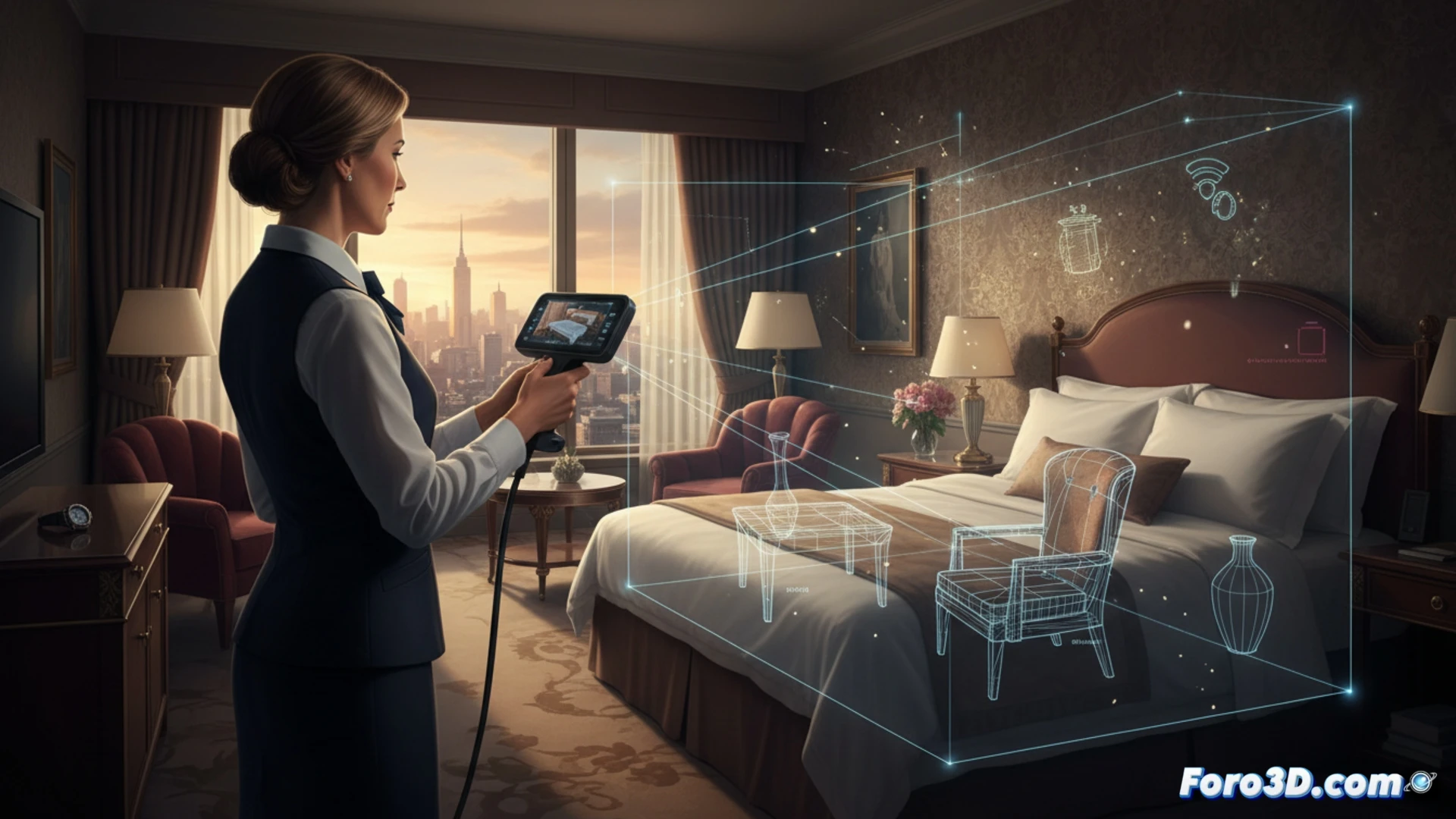
3D technology is not only used for designing cars or prosthetics. In a hotel, the housekeeper can use it to document the exact state of each room before and after cleaning. Scanning a suite with a depth sensor allows detecting damages, forgotten objects, or variations in furniture, avoiding conflicts with guests. A clear example: if a client says the lamp was already broken, the previous scan proves it without argument.
Software and hardware for room control 🛠️
To implement this system, a portable 3D scanner like the Matterport Pro2 or an iPhone with the Scaniverse app, which generates point clouds, is needed. Management software can be Autodesk ReCap for processing data or platforms like Arqspatial, which integrate 3D models with the cleaning report. There is also the option of using fixed LiDAR sensors on doors, which record the room when closed. The entry cost is around 500 euros for a basic mobile device.
Goodbye to the sweater-in-the-closet excuse 🧥
Finally, the housekeeper will be able to prove that that striped sweater the guest claims to have left in the closet was never there. The 3D scanner does not lie, even if the client swears they bought it in Milan. Of course, it will be necessary to explain to the front desk that the digital model does not include the smell of cheap perfume or the wine stain on the carpet. Technology advances, but the sense of humor of guests remains an unsolved mystery.