The Fuente Magna, a large stone bowl found near Lake Titicaca in Bolivia, features inscriptions that some researchers evoke Sumerian cuneiform writing. This object, shrouded in controversy over its authenticity and origin, represents an ideal challenge for digital archaeology. The use of non-invasive techniques allows its study from a rigorous and reproducible perspective.
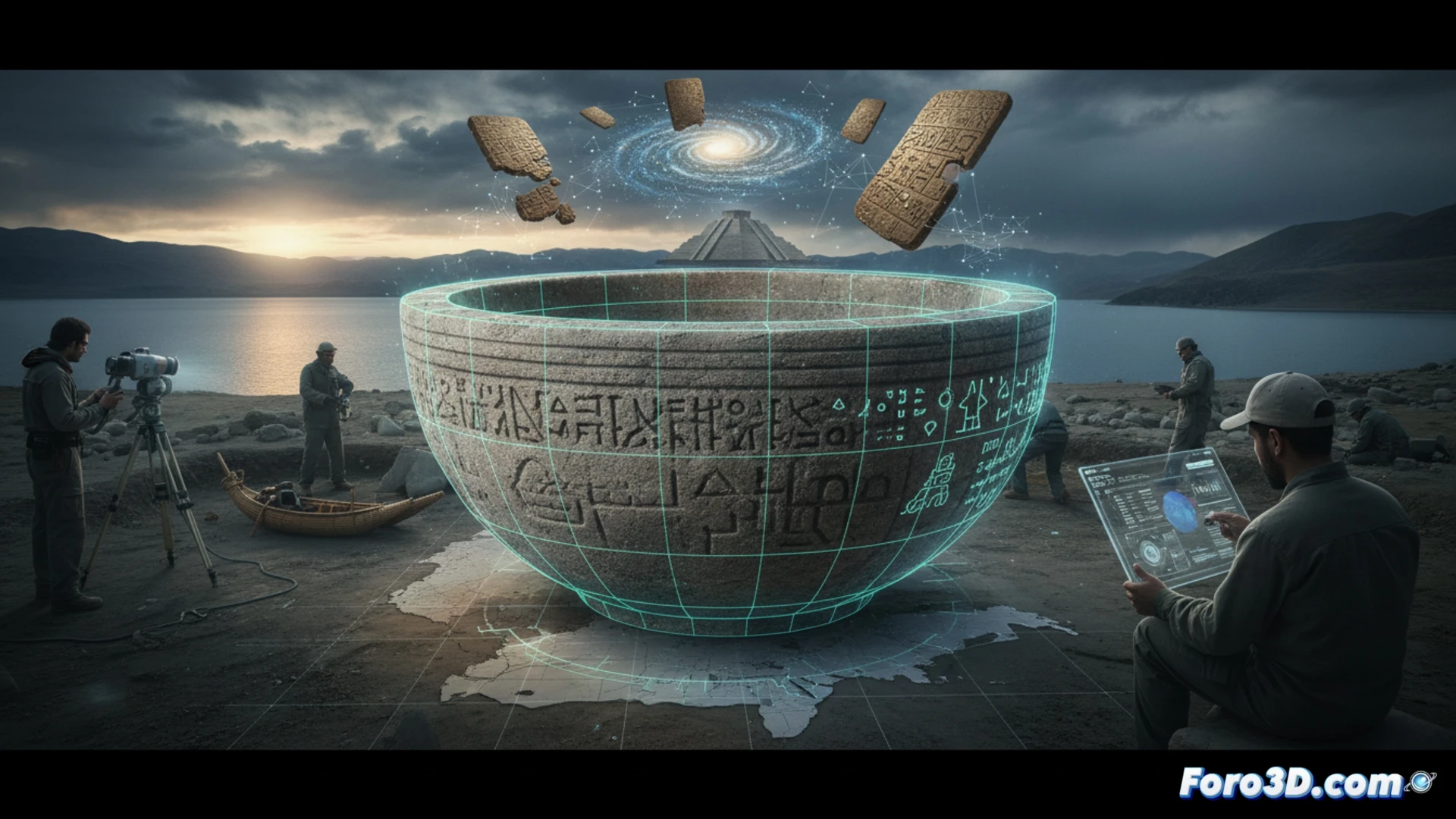
Photogrammetry and digital epigraphic analysis of the stone bowl 🏺
The application of close-range photogrammetry on the Fuente Magna would generate a high-resolution three-dimensional model. This digital twin would capture every relief and groove of the bowl, allowing epigraphers to examine the inscriptions with variable virtual lighting. Using surface analysis software, the signs could be compared with databases of proto-Sumerian writing, objectively evaluating morphological and statistical matches. This workflow avoids physical contact with the piece and preserves its current state for future research.
A digital bridge between cultures or an academic mirage 🔍
Digitization alone will not resolve the debate over whether the Fuente Magna is a pre-Columbian contact or a modern forgery. However, it democratizes access to the evidence. Any researcher with an internet connection can download the 3D model and subject the inscriptions to their own scrutiny. In a field where speculation abounds, the transparency offered by 3D modeling becomes the most valuable tool for separating science fiction from forensic science.
What specific technical challenges does the 3D digitization of the Fuente Magna present for preserving and analyzing its Sumerian inscriptions in an Andean context?
(PS: If you dig at a site and find a USB stick, don't plug it in: it could be Roman malware.)