The comparison between a grassroots activist and a cult follower is not an exaggeration. Both share a pattern of loyalty that overrides critical thinking. In politics, the militant repeats slogans without questioning them; in a cult, the leader is obeyed. The structure of emotional control and the repetition of dogmas are almost identical. The key difference is the packaging: one has a membership card, the other a robe.
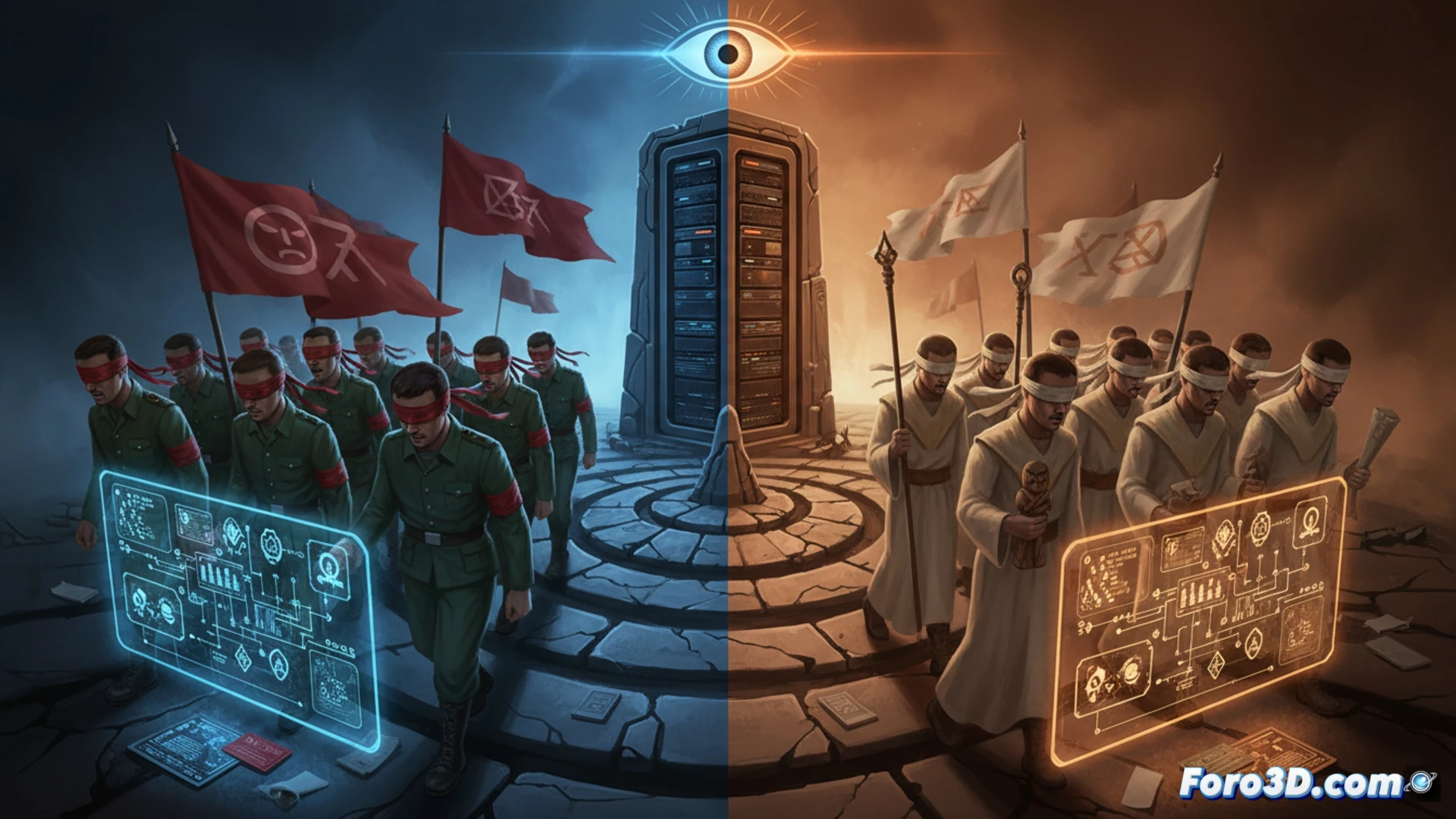
The source code of loyalty: patterns of social hardware 🧠
To understand this phenomenon, we can analyze it as a software system. The human brain runs a social validation loop: each interaction reinforces group identity. In militancy, the belonging algorithm is activated by events, rallies, and a common enemy. The reward system (status, belonging) is similar to that of an addictive social network. The difference is that here, engagement does not generate advertising revenue, but rather votes and unconditional adherence. The code is the same, the interface changes.
When the Kool-Aid tastes like ideology 🥤
The curious thing is that the militant believes their faith is rational, while that of the cult follower is irrational. Both drink from the same punch, but one calls it conviction and the other, revelation. If you rename the leader to general secretary and the mantra to campaign slogan, the operations manual is almost a carbon copy. In the end, the only thing that differentiates a fanatic from an activist is that the former cannot change the channel.