The Goddamned, by Jason Aaron and R.M. Guéra, immerses us in a pre-diluvian world where depravity and violence are the common language. It is not a simple biblical comic; it is a brutal exploration of hopelessness. The key to its impact lies in its dirty and detailed linework, which conveys the rot of a humanity abandoned by God. For a 3D technical writer, this work is not just narrative, but a manual for texturing and atmosphere in virtual environments.
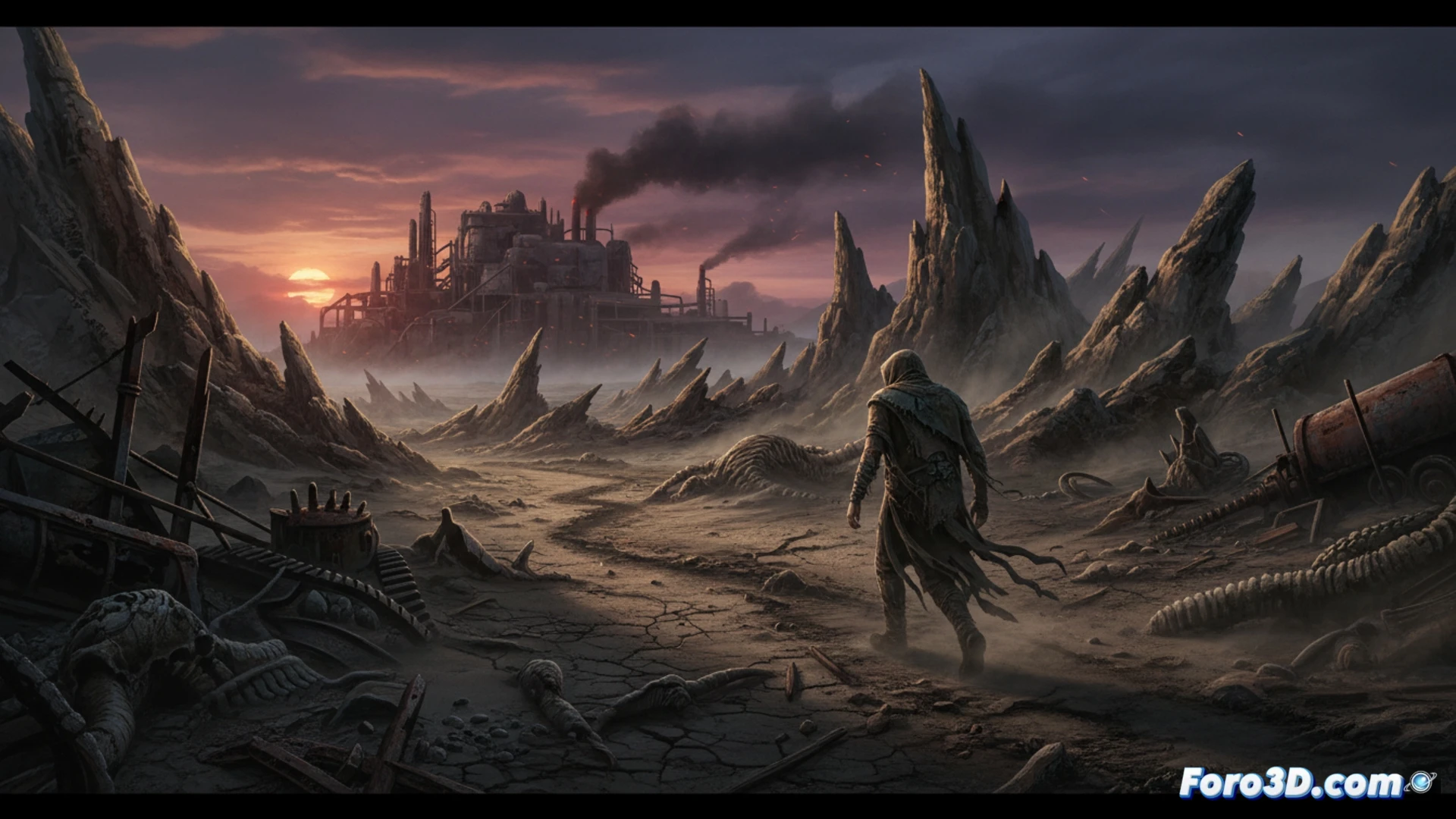
Modeling, lighting, and texturing for a condemned world 🎨
To capture the essence of The Goddamned in 3D, we must move away from clean rendering. Modeling should prioritize asymmetry and imperfection: deformed bodies, eroded landscapes, and grotesque architecture. Lighting is the primary weapon: hard lights and deep shadows that conceal as much as they reveal, mimicking a punishing sun or the gloom of a world without grace. Texturing must be organic, using maps of dirt, blood, and extreme wear. Techniques like photobashing with real texture images of rock and rusted metal are ideal for achieving that tactile feel of a decaying world. The goal is for the viewer to feel the dust and grime through the screen.
Digital activism: Violence as visual denunciation ⚡
Recreating this universe in 3D is not a trivial aesthetic exercise; it is an act of digital activism. By generating immersive environments that replicate the comic's depravity, we force the viewer to confront taboo subjects like systemic violence, the absence of redemption, and the weight of divine condemnation. We can use game engines to create interactive experiences where hopelessness is not a text, but an atmosphere. Visual rawness becomes a tool for denunciation, making human suffering visible through an artistic lens that unsettles and compels reflection on our own morality.
How would you translate this work into a virtual reality environment?