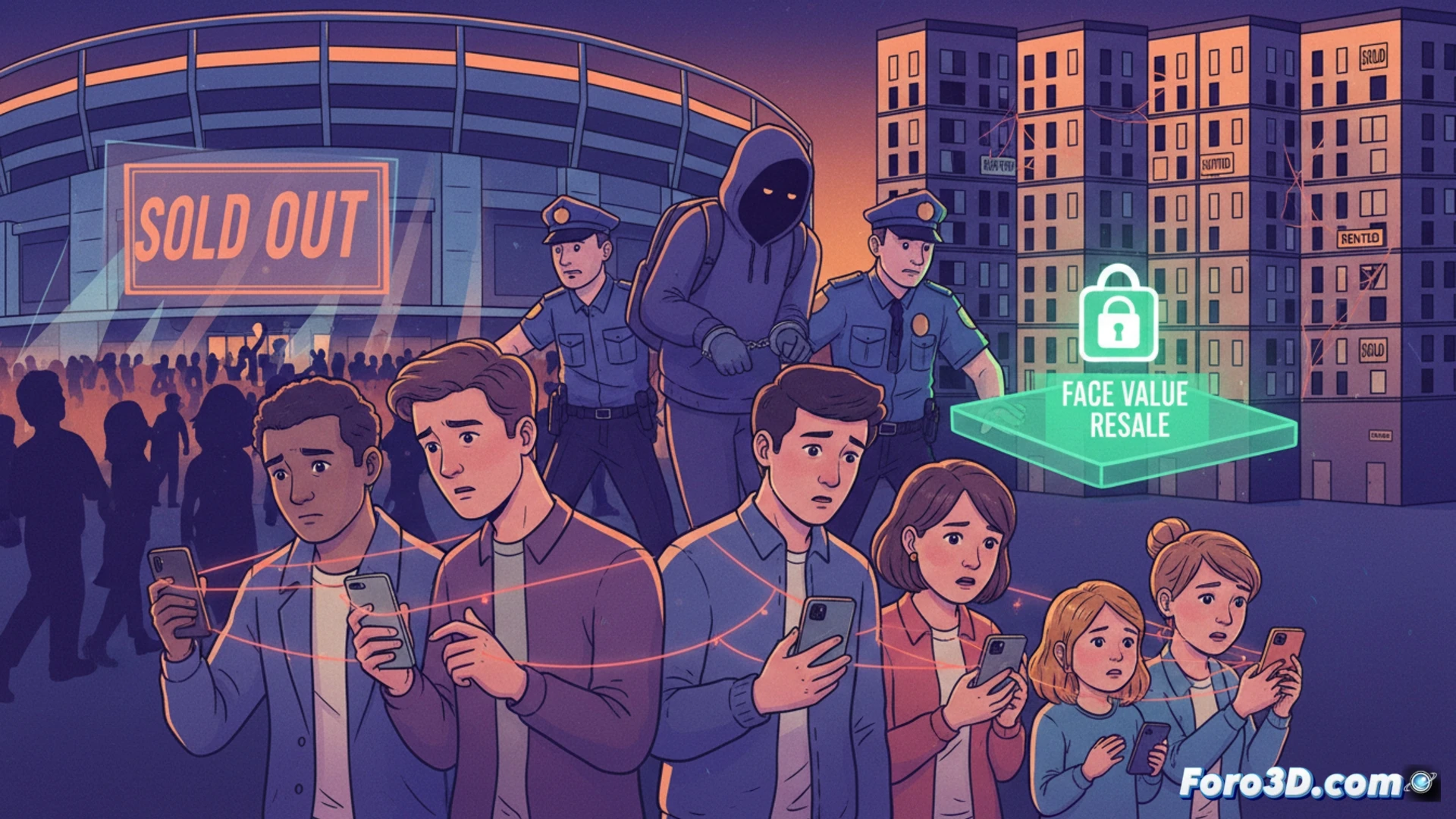
The digital resale of concert tickets has become a parallel business that exploits the dreams of thousands of young people and families. While some resellers are stopped, social hypocrisy tolerates similar practices in other sectors such as housing. The solution involves toughening penalties and creating official fixed-price resale platforms.
How Bots and APIs Break Equal Access 🎫
Resellers use automated scripts that bypass the security systems of ticketing platforms. These bots, programmed in Python or Node.js, send massive requests to sales APIs in milliseconds, hoarding hundreds of tickets before a human can complete a captcha. The platforms lack effective filters against non-human traffic, and two-step verification remains optional. Without mandatory biometric authentication at purchase, digital fraud will continue to be profitable.
The Business of Buying Your Own Dream at a Premium 💸
The curious thing is that we happily pay 200 euros for a ticket that cost 40, and then we applaud when someone with 500 tickets in a backpack is arrested. But if you ask an investment fund that buys apartments to resell them at triple the price, they'll tell you that's entrepreneurship. In the end, the problem isn't speculating: it's not having an algorithm that makes you look legal.