It's summer, and the water heater seems to have a mind of its own and a questionable sense of humor. You turn on the tap expecting a lukewarm flow and get an icy blast or a scalding jet of water. The thermal comfort zone has disappeared, leaving bathers in a game of Russian roulette with extreme sensations. The problem isn't the ambient temperature, but the erratic response of a system that should be stable.
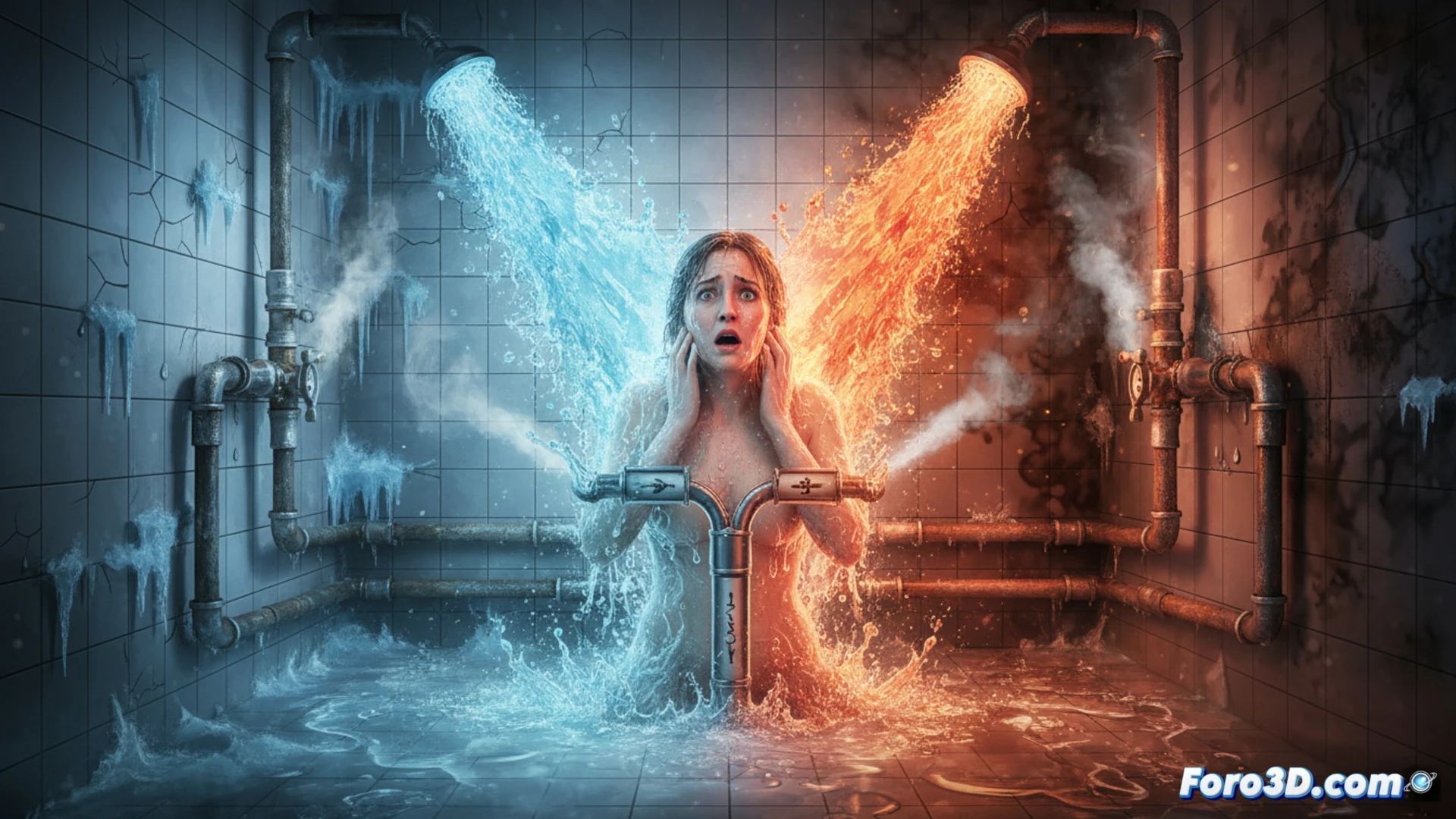
The technical mystery of the bipolar water heater 🔧
The technical explanation usually lies in limescale buildup on the heating elements or a worn-out thermostat that doesn't regulate properly. In summer, the incoming water is warmer, which tricks the sensor and causes the heater to shut off prematurely or overheat. Low pressure during peak hours also plays a role: as the flow rate decreases, the water spends more time over the heating element and comes out scalding. If there's no limescale, check the single-lever mixer, which loses precision with use.
Solutions from a philosopher plumber 🚿
The most practical option is to shower like a spy: turn on only the cold water and brace for the worst, or play the tightrope walker by turning the knob millimeter by millimeter. You could also install a thermostatic faucet, though that means admitting your water heater is a chaotic being. And if nothing works, there's always the bucket shower trick: fill a bucket with room-temperature water and dump it over yourself. It's not elegant, but at least you know what you're getting.