An international study involving the universities of Padua and Pisa has discovered that depression disconnects emotions from the brain's internal clock. This finding, published in Biological Psychiatry Global Open Science, explains why patients perceive that time stretches and hours do not pass. The relationship between emotional state and time perception is interrupted.
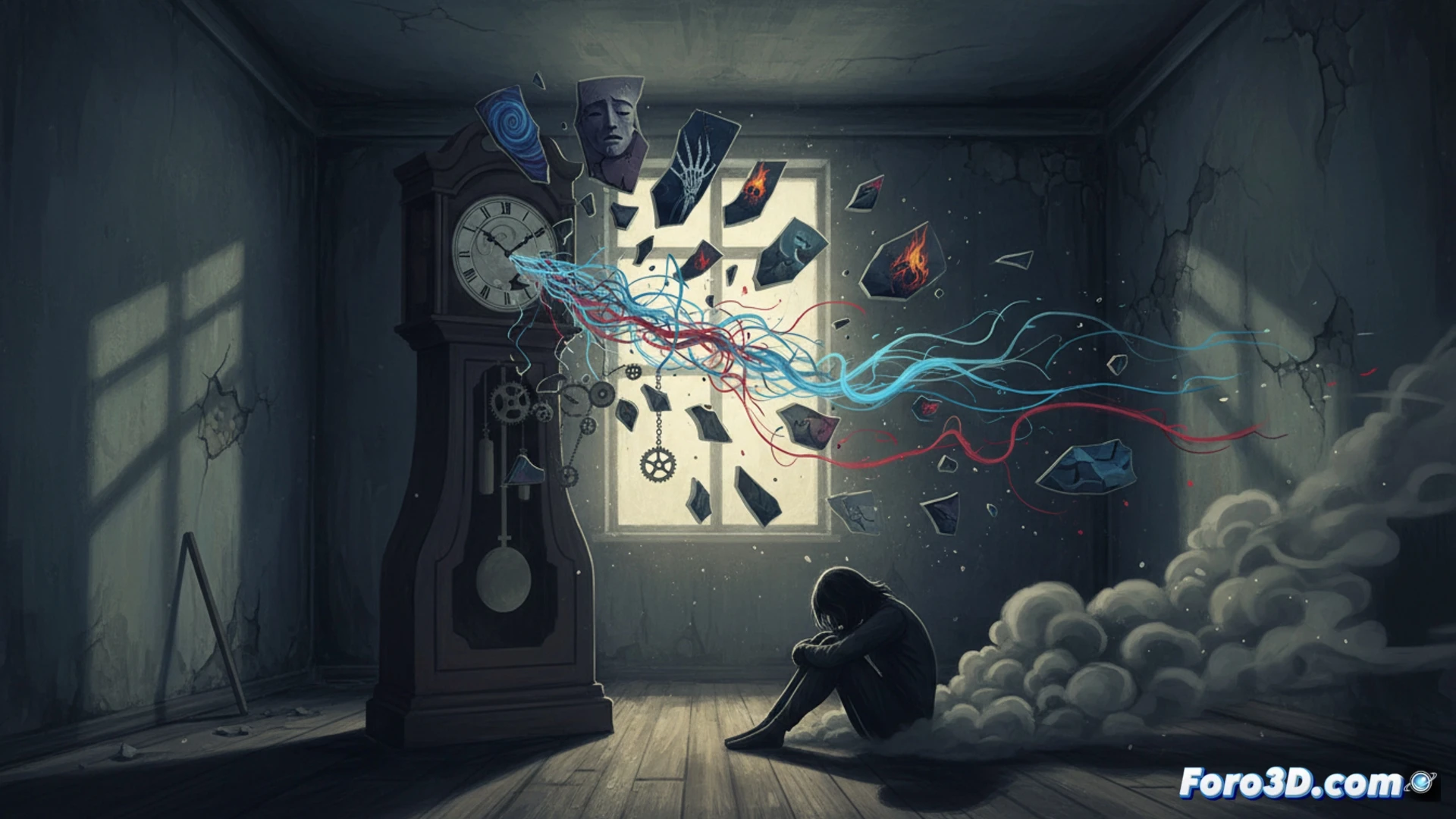
How the brain loses synchrony between emotions and time 🧠
The research used functional magnetic resonance imaging and time estimation tests in patients with major depression. The results show reduced activity in the insular cortex and striatum, key areas for integrating emotional signals with time measurement. Without this connection, the brain does not adjust the perception of the passage of time to the mood. The phenomenon, known as depressive time dilation, occurs due to this neural disconnection, not due to an alteration in the basic mechanisms of brain timing.
Time does not pass: the worst trick of the depressed brain ⏳
So, when your brain decides that Monday at three in the afternoon should last as long as a move, you know who to blame. Depression has stolen the emotional cable from the internal clock. As if that were not enough, the study does not offer a reset button or a shortcut for hours to return to their normal speed. It only confirms that, for those suffering from depression, time is not gold: it is molten lead.