The Lady of Elche, discovered in 1897, is one of the most emblematic pieces of Iberian art. Its discovery at the La Alcudia site immediately aroused suspicion due to its exquisite level of detail, attributed to the 4th century BC. Now, from the field of digital archaeology, we apply high-resolution photogrammetry techniques to unravel the secrets of its craftsmanship and original polychromy, shedding light on decades of controversy.
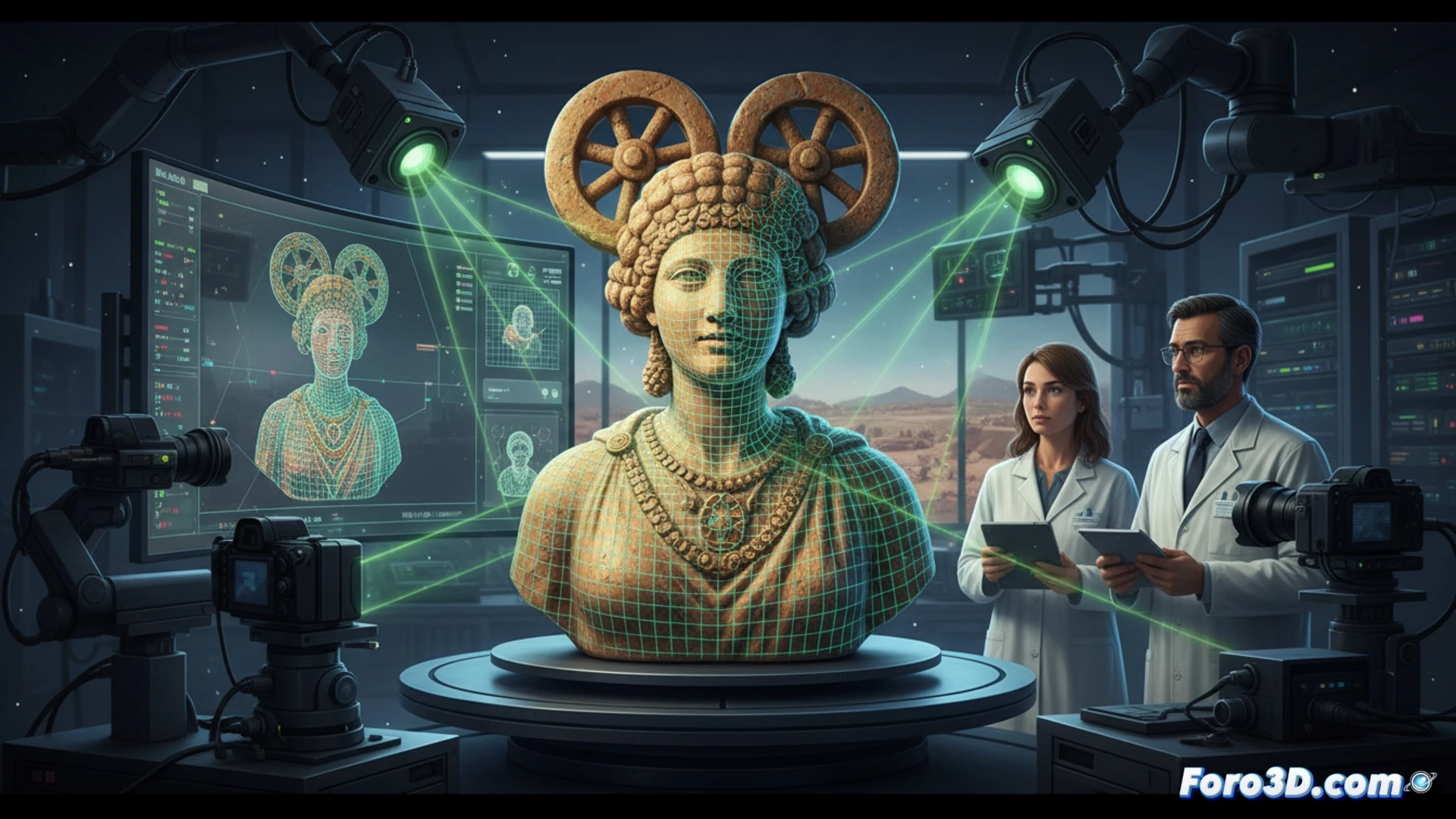
Photogrammetry and virtual reconstruction of the bust 🏛️
The process begins with capturing over 500 high-definition images of the bust, taken under controlled lighting conditions to eliminate reflections and shadows. Using photogrammetry software, we generate a dense point cloud that is transformed into a textured 3D model with submillimetric precision. This model allows us to analyze tool marks and facial symmetry, comparing them with other Iberian sculptures such as the Lady of Baza or the Lady of Guardamar. The virtual reconstruction of the polychromy, based on analysis of residual pigments using Raman spectroscopy, reveals a palette of reds, blues, and ochres that challenges the aesthetic conventions of the time, suggesting possible Punic or Greek influences.
Myth or reality? The digital debate 🔍
The data obtained reinforces the thesis of an authentic work, but with clear foreign influences. The carving technique and pigment composition match local materials, while the iconography shows parallels with Attic pottery. Digital archaeology does not solve the mystery, but it offers an objective record for future research. The Lady of Elche remains an enigma that, thanks to 3D modeling, we can study without touching it, preserving its integrity while exploring its origins.
How can the 3D scanning of the Lady of Elche resolve debates about its authenticity and reveal new enigmas about Iberian culture?
(PS: If you dig at a site and find a USB stick, don't plug it in: it could be Roman malware.)