In 1925, Howard Carter discovered an iron dagger alongside Tutankhamun's mummy. For decades, its origin was a mystery, as Bronze Age Egypt did not master iron smelting. Recent analyses confirmed that the metal comes from a meteorite, but the forging technique continues to surprise archaeologists. Today, digital archaeology allows the study of this piece without risk of damage.
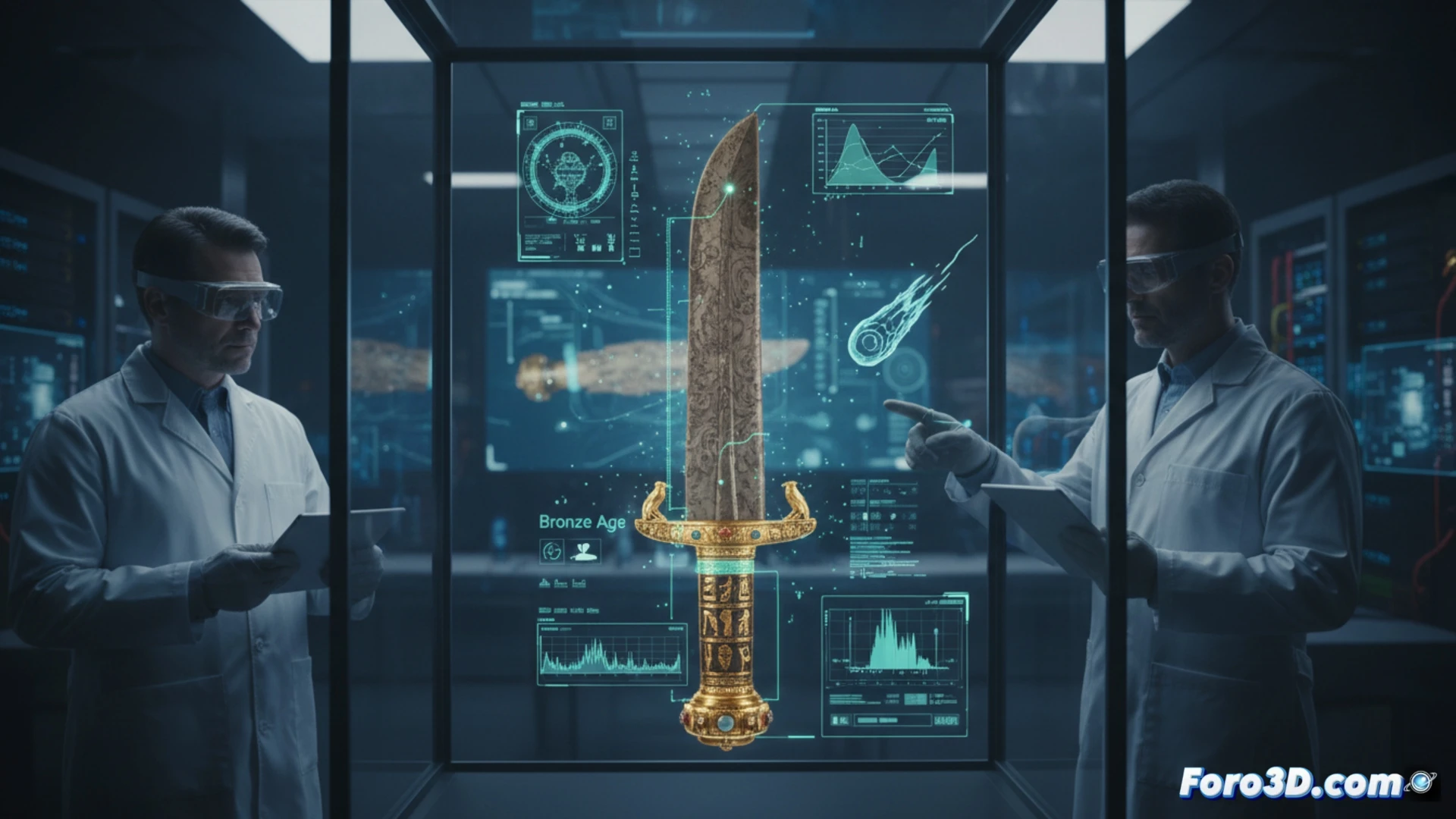
Photogrammetry and meteoric forging simulation 🔬
Using high-resolution photogrammetry, researchers generate an exact 3D model of the dagger. This model allows measuring microcracks, edge angles, and hammer marks without touching the artifact. With the data obtained, the manufacturing process is virtually recreated: heating the meteoric iron at low temperature and hammering it repeatedly. Digital simulations show that the Egyptians achieved exceptional hardness using techniques that until recently were considered impossible for their time.
Recreating the past with present-day data 🏺
The combination of archaeology and 3D modeling not only preserves heritage but reinterprets it. By simulating the forging of the dagger, experts can hypothesize about the lost metallurgical knowledge of ancient Egypt. Every digital detail, from material composition to wear marks, brings us closer to the mind of a craftsman who worked with a metal that fell from the sky over three thousand years ago.
How has digital analysis using computed tomography and X-ray fluorescence changed our understanding of the extraterrestrial origin of the iron in Tutankhamun's dagger?
(PS: If you dig at a site and find a USB stick, don't plug it in: it could be Roman malware.)