For decades, physics has attempted to explain the universe from the smallest to the largest scale. However, an emerging approach proposes inverting the equation: conscious experience would not be an accident of matter, but a fundamental component of reality. This paradigm shift suggests that consciousness could be more basic than quantum particles, offering a path to resolve the deepest mysteries of the cosmos.
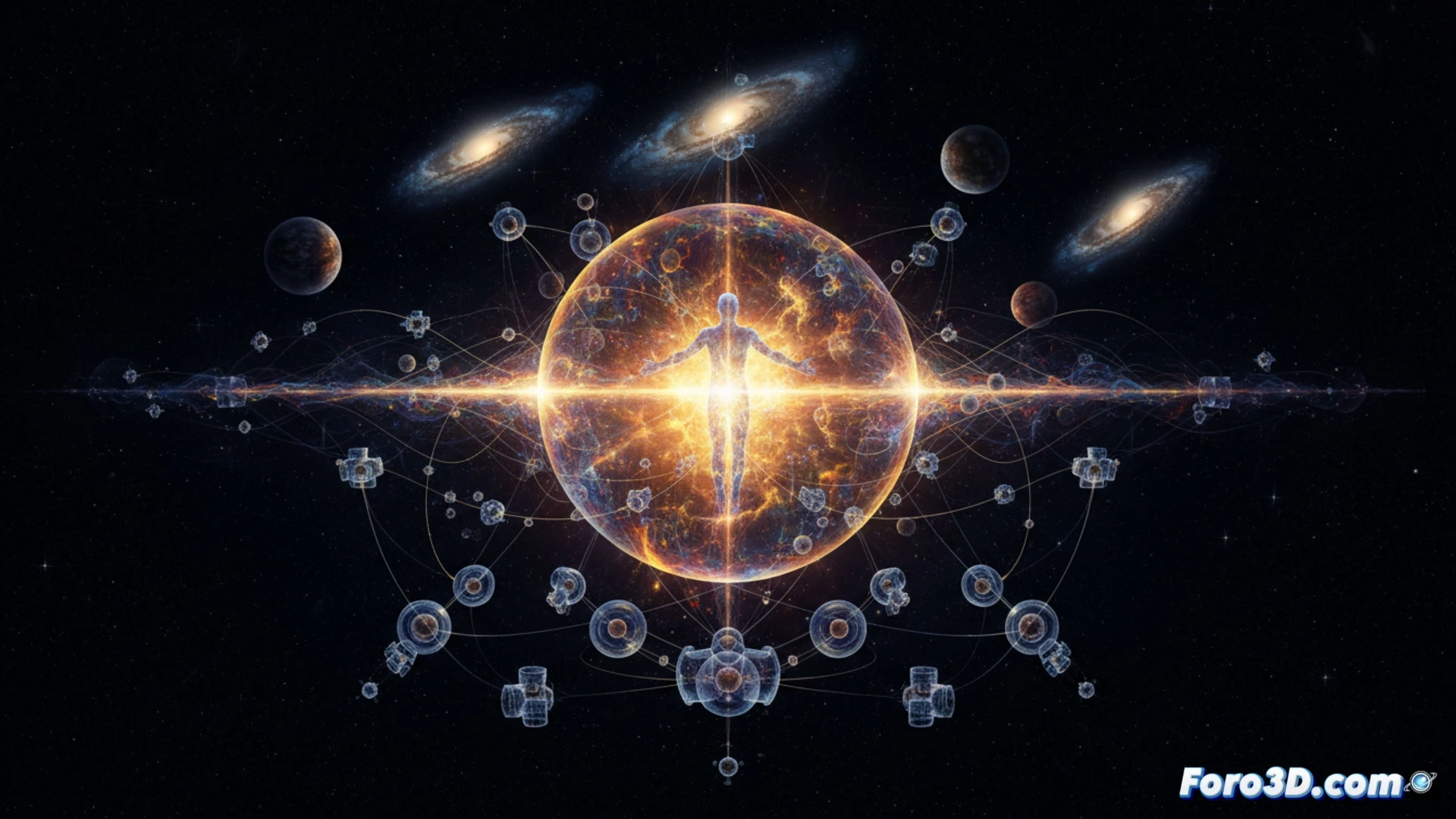
The quantum turn: hardware, software, and the necessary observer 🧠
In current technological development, the role of the observer is key. Quantum mechanics shows that measurement collapses the wave function, but no one clearly explains who or what performs that measurement. Models like Penrose's quantum consciousness suggest that processes such as objective reduction occur in neuronal structures. If consciousness is a fundamental state, future quantum computers might need to integrate a subjective component to process information stably. This would reshape the current architecture of hardware and software.
The universe realizes it exists and orders a coffee to think about it ☕
So it turns out the universe isn't just a bunch of boring particles bumping into each other. Now it appears that for everything to work, someone needs to look at it. I mean, Schrödinger's cat isn't dead or alive, but waiting for someone to open the box to decide. And meanwhile, physicists argue whether consciousness is fundamental or just a side effect of overthinking. Next thing you know, the universe will charge us for observing it.