Today's urban planning promises us efficiency: everything within a quarter of an hour, from work to leisure. But that neighborhood of proximity hides a trap: every square meter is measured by algorithms, every bench has a QR code, and every corner is designed for you to consume, not to inhabit. The labyrinth of the unforeseen becomes a corridor of consumption.
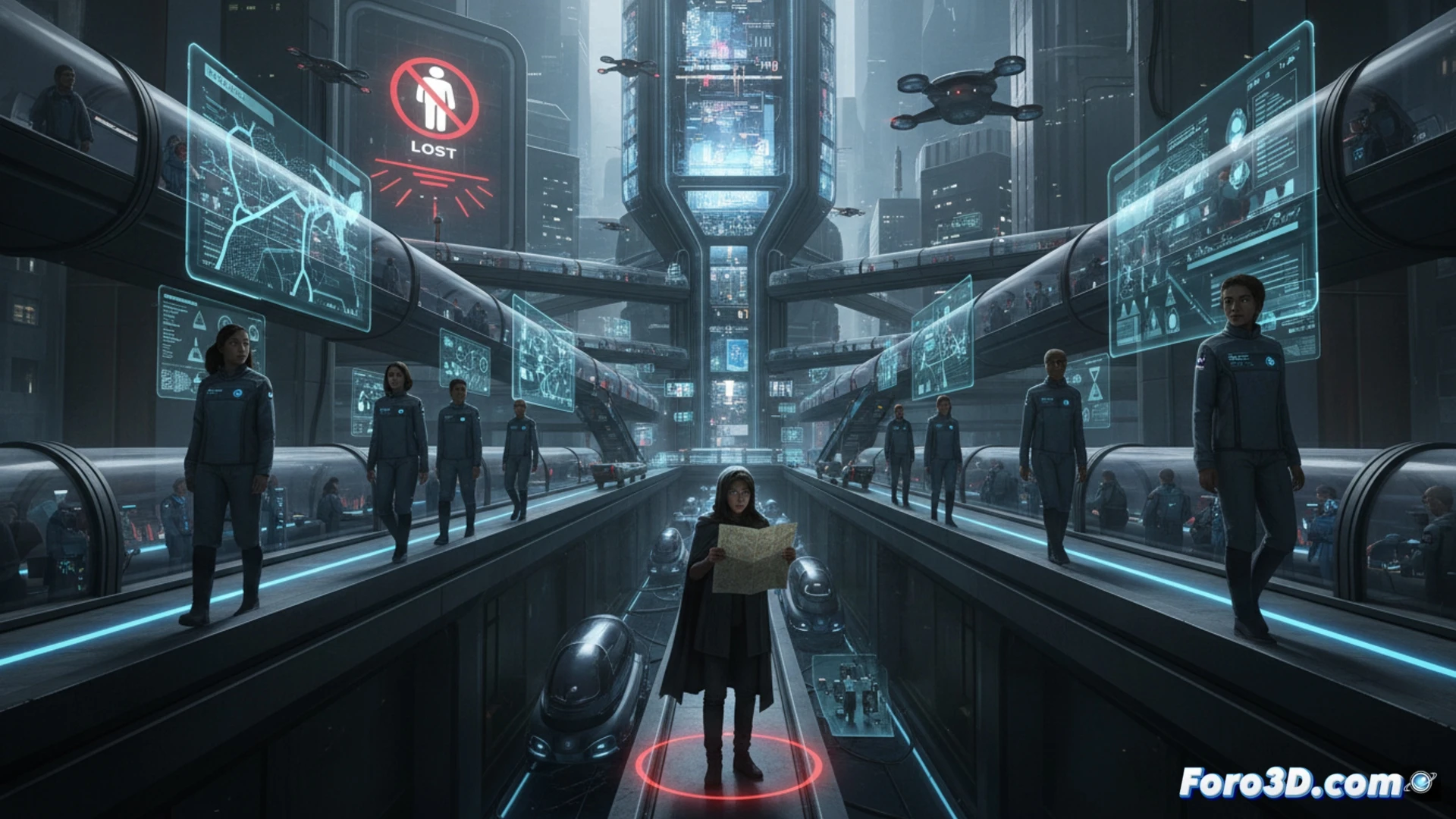
The neighborhood as a closed operating system 🏙️
Behind the friendly facade, an infrastructure of sensors, mobility apps, and delivery platforms unfolds. The square is no longer a meeting point but a logistics node where scooters, drones, and last-mile vans converge. The neighbor is a user profile with consumption data, and the street is optimized in real-time. The city becomes software where every action is planned, with no room for deviation or non-productive pauses.
The beggar's corner is now a loading zone for scooters 🛴
Before, you asked for a euro on the corner; now you order an electric scooter. The same spot, but with occupancy sensors and dynamic pricing. The wandering soul can no longer get lost because the GPS redirects it to the next sponsored point of interest. The 15-minute city is a loop: you leave home, work, consume, and return. The only labyrinth left is the bureaucracy to ask for permission to sit on a bench without scanning a code.