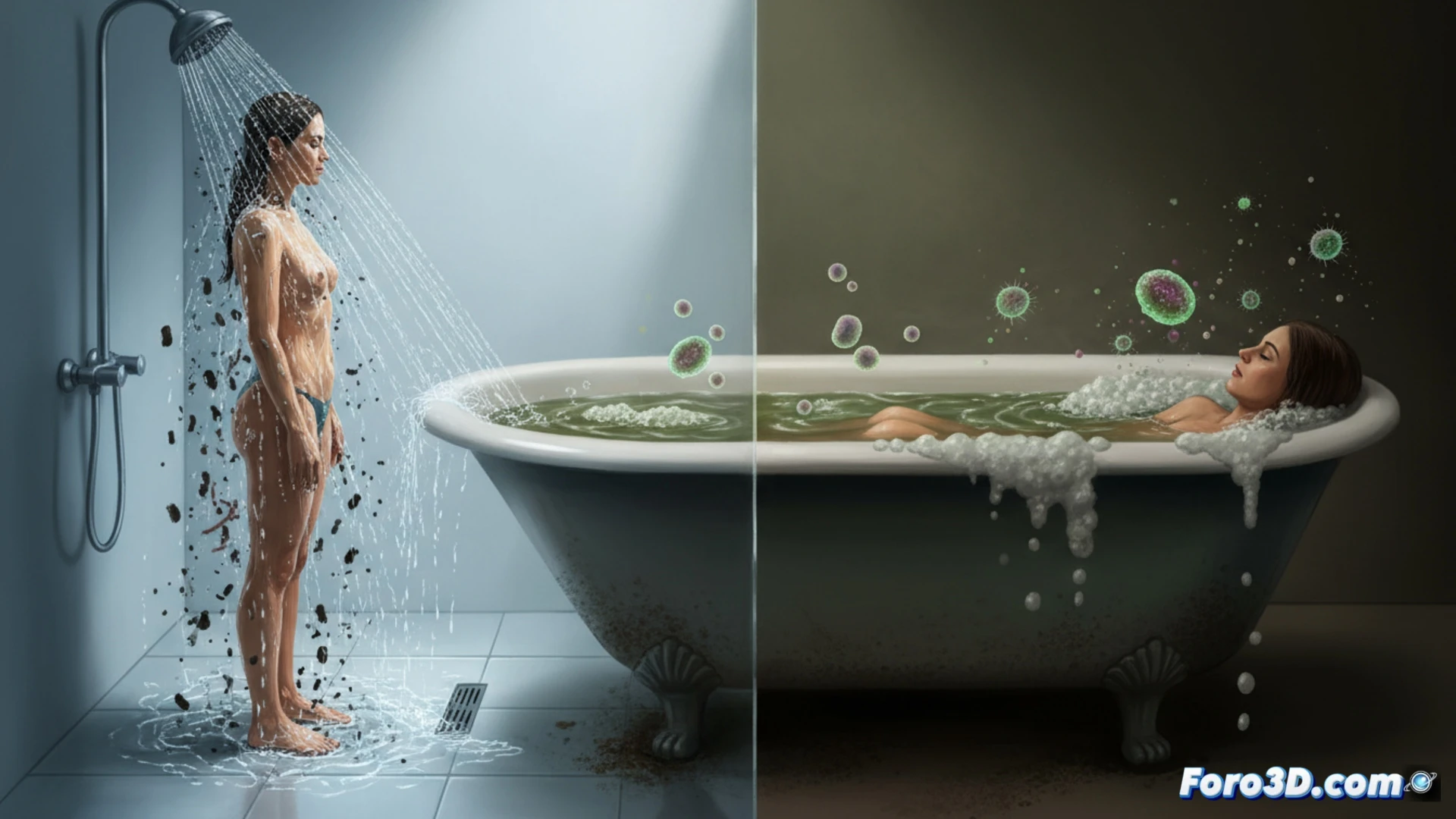
Scientist Laura Bowater from the University of East Anglia has focused on an everyday debate: is it cleaner to bathe or shower. Her studies indicate that showering wins by a landslide. Running water washes away bacteria and dirt without giving them a break, while the bathtub becomes a soup of germs, soap, and dead skin. A breeding ground that, according to Bowater, increases the risk of skin and urinary infections, especially during prolonged or shared baths.
Water engineering: smart showers versus stagnation 🚿
From a technical perspective, the shower optimizes the continuous flow of water, preventing the accumulation of microorganisms. Modern systems include showerheads with antimicrobial filters and sensors that regulate temperature and pressure, reducing bacterial growth. In contrast, a bathtub is a closed system where water stagnates, and after 10 minutes, the microbial load can skyrocket. For people with weak immune systems, this technical detail makes the difference between effective cleaning and a potential infection.
Bathing: the luxury of floating in your own germ soup 🛁
No offense intended, but according to science, soaking in the bathtub is like making a homemade broth with yourself as the main ingredient. Warm water, soap, dead cells, and if you share, the leftovers from the other diner. Everything settles while you float peacefully. The shower, on the other hand, doesn't even give you time to think: the water flows, the bacteria flee, and you come out clean, without having cooked anything. So, bathing looks nice on Instagram, but for hygiene, it's better to stand up.