The Amber Room, a sumptuous chamber decorated with amber panels, gold, and mirrors, was a gift from King Frederick William I of Prussia to Peter the Great in 1716. Considered the eighth wonder of the world, it was looted by the Nazis during World War II and vanished without a trace. Today, its whereabouts remain a mystery, but digital archaeology offers a path to recover its splendor.
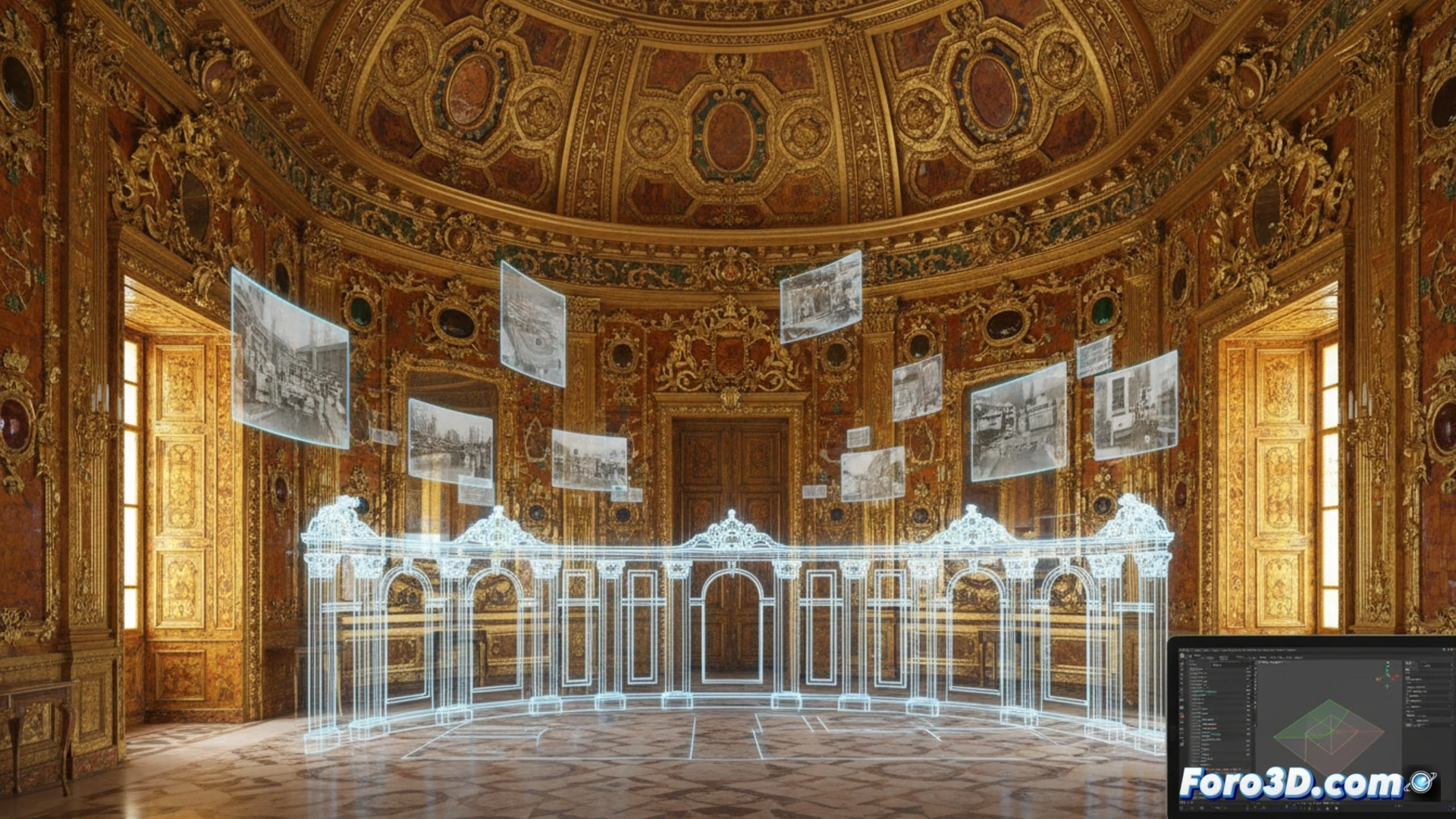
Historical photogrammetry and polygonal modeling of amber 🏛️
The absence of the original forces digital archaeologists to work with secondary sources. The process begins with digitizing black-and-white photographs from the 1930s and architectural plans of the Catherine Palace. Through archival photogrammetry, point clouds are extracted from the images to generate a base mesh. Then, 3D modeling applies PBR (physically based rendering) textures that simulate the translucency of Baltic amber and the shine of gold leaf. Tools like Blender or RealityCapture allow recreating the original 565 panels, adjusting global illumination to emulate the natural light that passed through the semi-precious stones.
Intangible heritage and immersive virtual reality 🎮
Projects like the reconstruction of the Temple of Bel in Palmyra or Notre-Dame Cathedral demonstrate that 3D modeling preserves not only geometry but also the sensory experience. For the Amber Room, a digital twin in Unreal Engine would allow users to virtually walk through the chamber, hearing the creak of the oak floor and observing the hand-carved reliefs. This technique does not solve the mystery of its physical location, but it ensures that the memory of the object is not lost to digital oblivion.
Would you export to Sketchfab or a custom viewer?