The clay at Roland Garros is not simple dirt; it is a five-layer engineering marvel that includes limestone and coal residue, topped with red brick dust. This unstable mixture shifts underfoot, forcing players to slide instead of run. Adapting to this surface is a requirement for survival in the tournament, where every step can be a calculated risk.
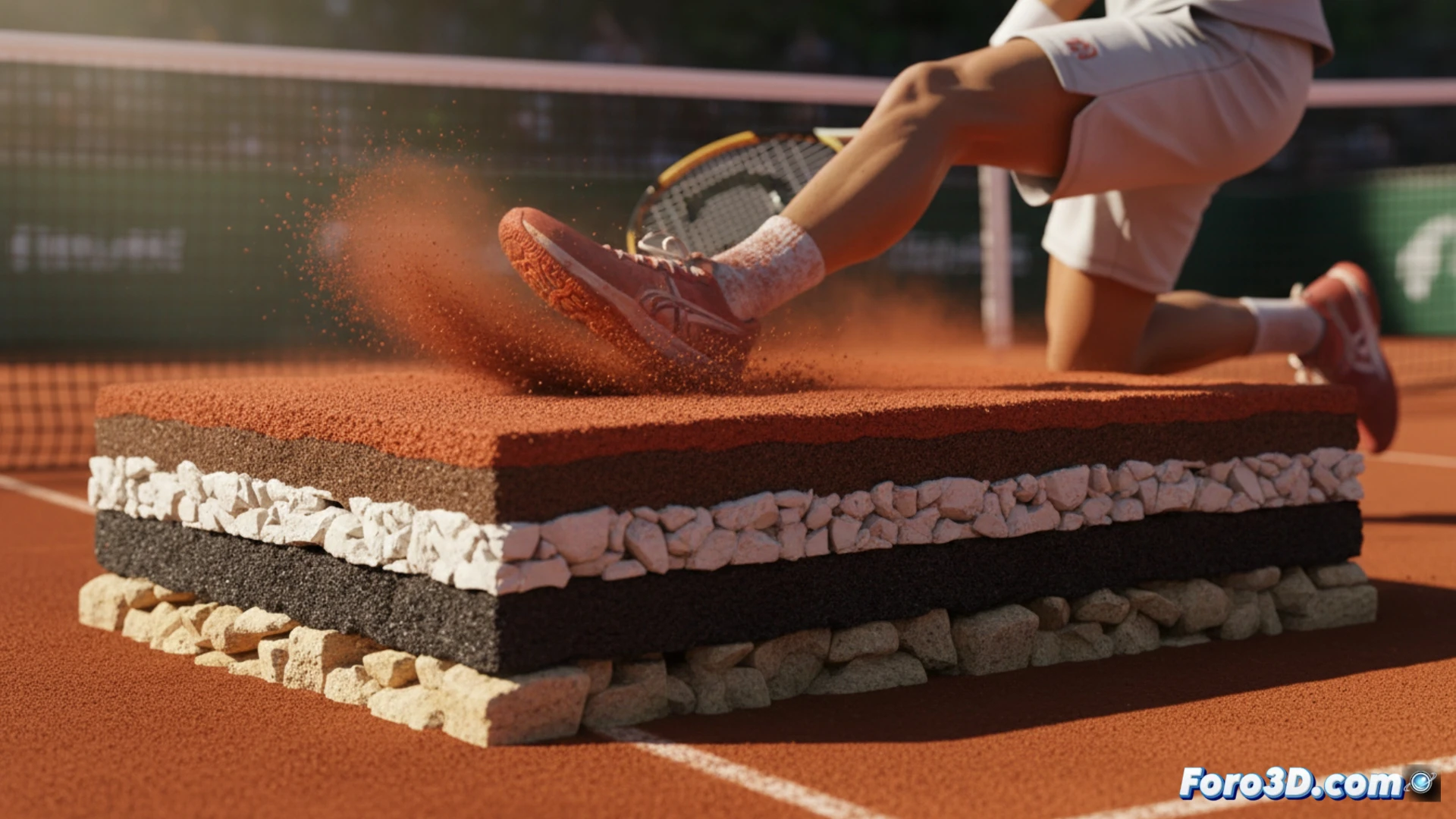
The hidden technology beneath the red dust 🎾
The court's composition seeks a balance between drainage and grip. The limestone base allows water to filter through, while coal residue provides structural stability. On top of this, a layer of volcanic slag and another of crushed brick create a surface that slows the ball and favors topspin effects. Players don't just hit; they must calculate how the ball will bite into the loose dust, a factor that changes with humidity and match wear.
How to pretend you master the clay (unsuccessfully) 😅
Watching a tennis player slide gracefully on clay is almost poetic. Watching an amateur try it on a club court is another story: it ends with their backside on the ground and sneakers full of red dust. Clay does not forgive novices, and at Roland Garros, even professionals have days where they look like out-of-control ice skaters. In the end, the strategy is simple: slide or fall.