Akira Ogata transports us to 19th-century Japan, where a Dutch doctor attempts to introduce Western surgery and anatomy to a country that trusts in herbs and needles. The film delicately portrays the clash between two worlds: European scientific rigor and Japanese healing traditions. A story about how science advanced through curiosity and patience, without fanfare or perfect heroes.
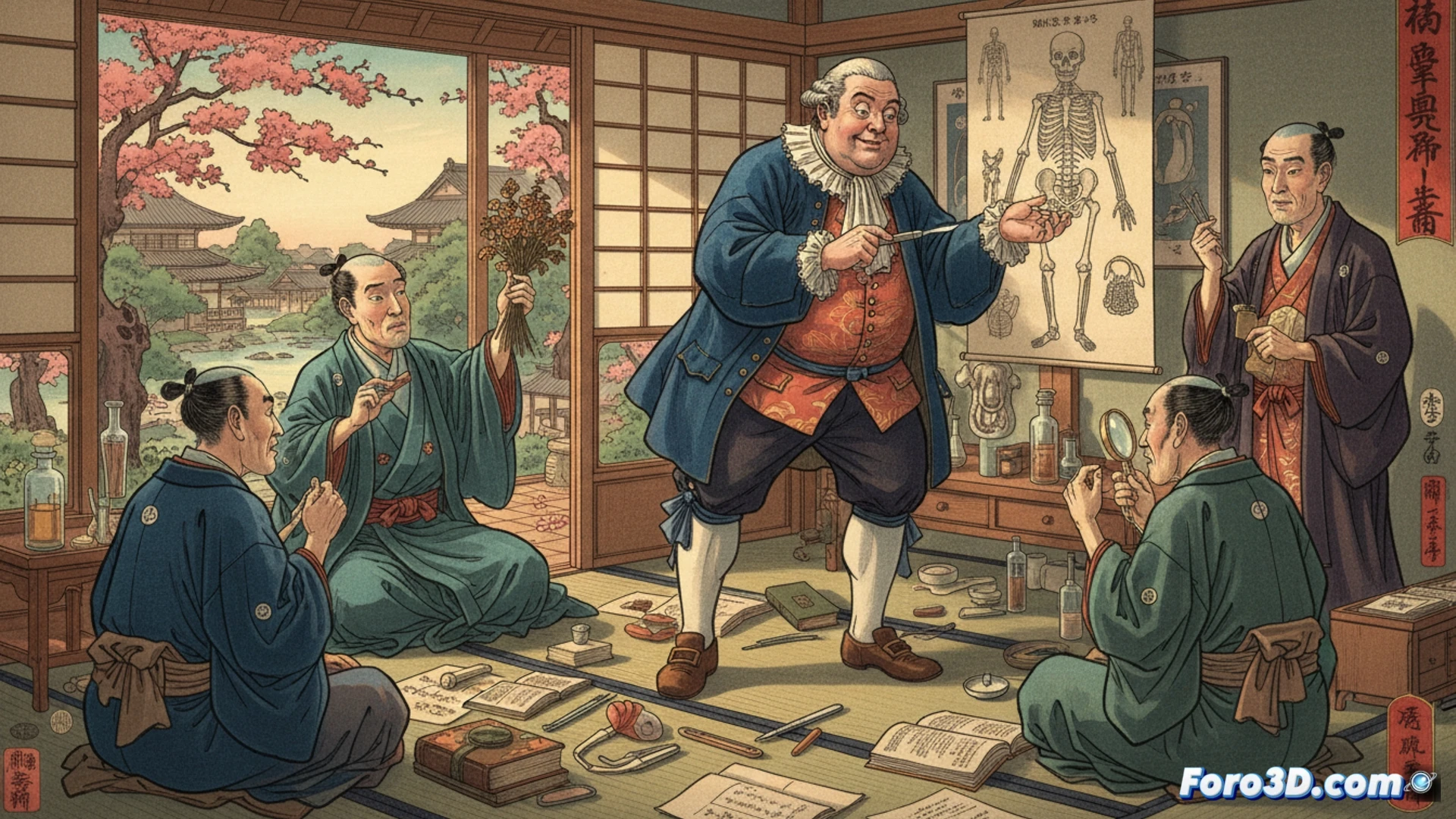
The Scalpel Meets Bamboo: Technology and Tradition in the Operating Room 🏥
Ogata does not idealize imported technology. It shows the first Japanese operating rooms as improvised spaces where a German steel scalpel coexists with local root ointments. The film details how Japanese doctors adopted antisepsis and anesthesia, but also adapted protocols to their climate and resources. There are no technical miracles: only trial, error, and the slow replacement of ancestral remedies with diagnoses based on direct observation.
Blood, Sweat, and… Ginger Tea? 🍵
The best part is seeing Japanese patients refusing to have their bellies opened because they prefer a monk to pray over them. The desperate Dutch doctor ends up accepting that before operating, sake must be served to the patient. The film suggests that modern medicine did not triumph because it was superior, but because doctors learned to say: this hurts less if we first have some tea. Ironies of progress.