The KV project, also known as Dinamis One, has been canceled. It was a 3D visual novel that sought to emulate the NPR shading of Blue Archive using Unity, Live2D, and Clip Studio Paint. Its cancellation is not just an artistic loss, but a valuable case study for independent developers. We analyze the technical and management errors that led to the abandonment of a project with an ambitious fusion of 2D and 3D techniques. 🎮
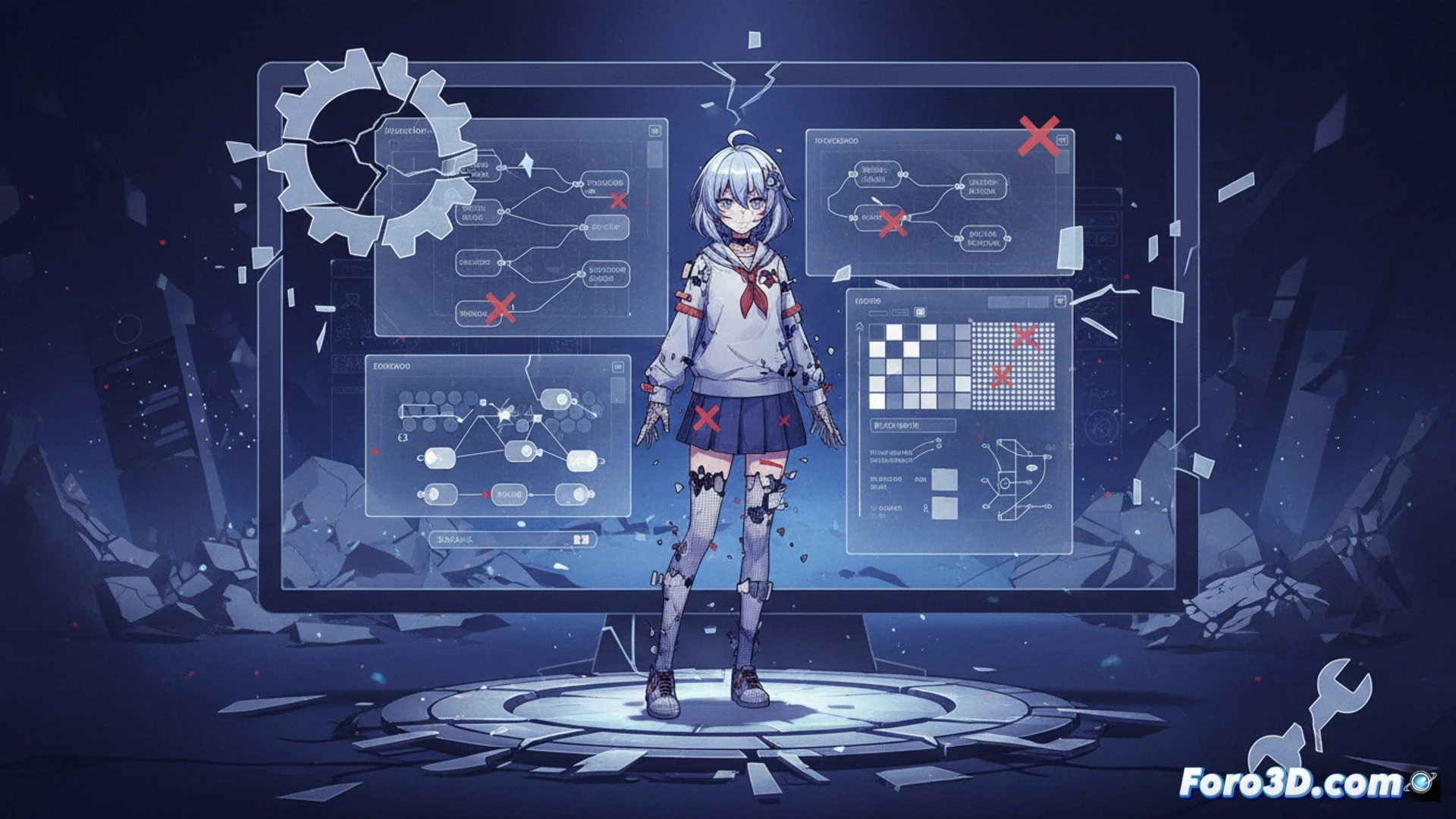
Unity, Live2D, and NPR: the technical triangle that failed 🎨
Integrating Live2D within a 3D pipeline in Unity presents rendering and animation challenges. NPR shading in the Blue Archive style requires precise control over diffuse lighting, silhouette edges, and color gradation, something that clashes with the 2D nature of Live2D sprites. To achieve visual consistency, the team should have implemented a custom post-processing system that unified both systems. The lack of a universal shader or an optimized workflow between Clip Studio Paint and Unity likely increased the workload, leading to delays and resource depletion. The cancellation suggests that the technical planning did not anticipate the cost of maintaining two parallel rendering systems.
Ambition without scope kills projects ⚠️
Beyond the technical complexity, the main error of Dinamis One was the lack of a defined scope. Merging a 3D visual novel with 2D animation and a demanding artistic style like NPR requires a multidisciplinary team and a realistic timeline. For independent developers, the lesson is clear: before implementing complex technologies, a functional prototype must be validated to demonstrate that the integration is viable. Projects like KV remind us that an attractive concept is not enough if the technical roadmap is not laid out with surgical precision.
Which 3D shading techniques for visual novels in Unity proved most problematic to implement and how did they affect the decision to cancel the KV project?
(PS: optimizing for mobile is like trying to fit an elephant into a Mini Cooper)