Kotaro Tamura has achieved what few have: moving from series like Noragami to films with the ease of a celluloid veteran. His secret lies not in frenetic animation, but in a composition that seems lifted from live-action cinema. Frames that breathe and a naturalistic light that turns every scene into an intimate moment, as he demonstrated in Josee, the Tiger and the Fish. A director who understands that drama is also simmered in depth of field.
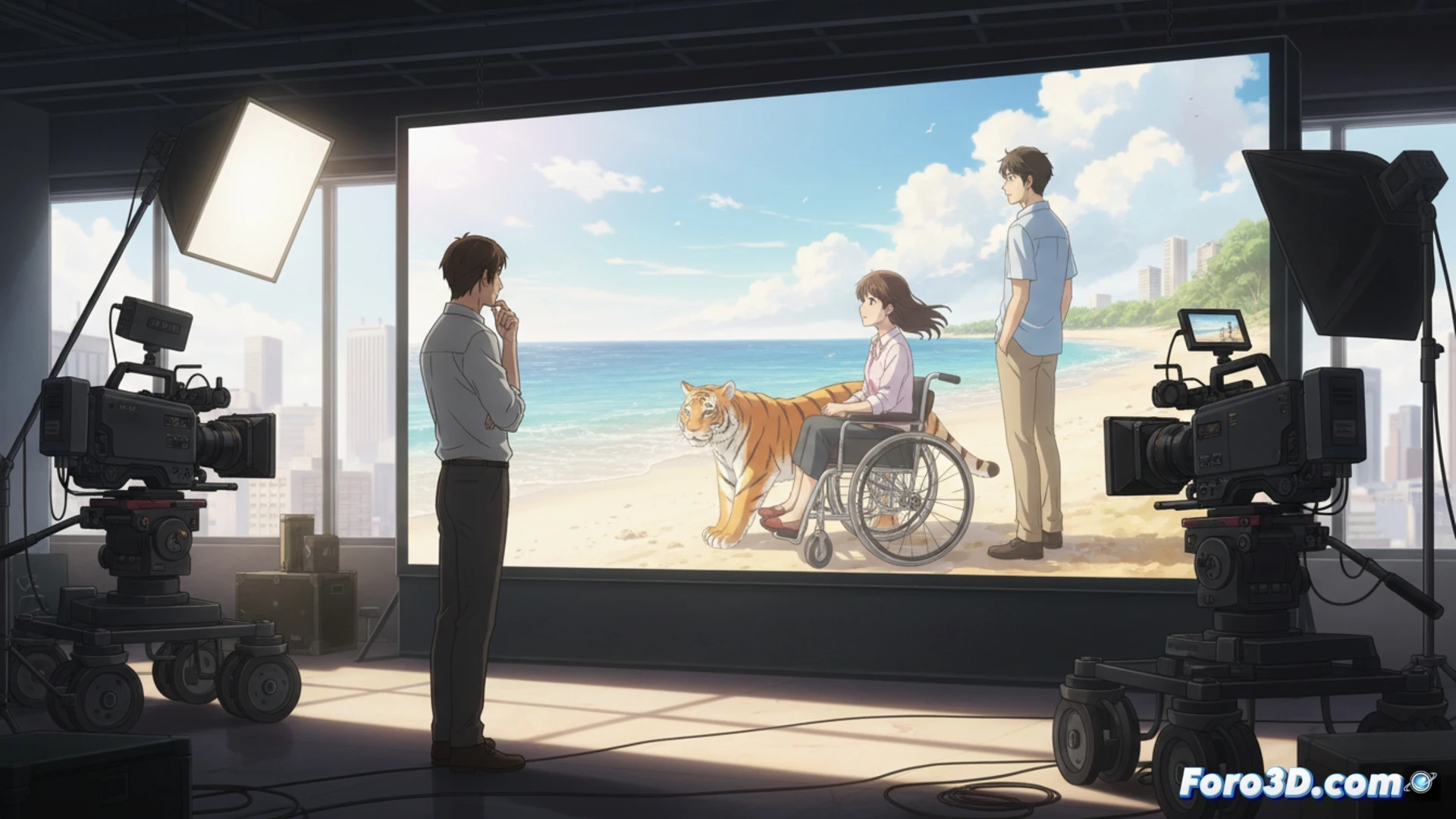
The trick is in the light and the camera: how Tamura builds his animated cinema 🎬
Tamura applies filming techniques typical of live-action. He prioritizes depth of field, blurring backgrounds to focus attention on the characters, and uses soft lighting that avoids the harsh contrasts of commercial anime. In Josee, the Tiger and the Fish, light enters through side windows like in a 90s Japanese drama, while camera movements mimic slow tracking shots. There are no gratuitous shots: every frame responds to a specific emotion. It is, basically, cinema with digital puppets.
Naturalistic lighting, but without paying the electricity bill 💡
The funny thing is that Tamura achieves that cinematic finish without needing a 12-week shoot or paying a cinematographer. He simply moves the virtual camera as if it were real and adjusts the lighting with the patience of a monk. While other anime directors get lost in explosions of color, he prefers a ray of sunlight coming through a blind to tell a story. He is the kind of director who could make a table lamp cry.