The character Komodo, whose real name is Melati Kusuma, represents a milestone in the representation of disability within mainstream comics. Created by Dan Slott and Stefano Caselli, this scientist uses Curt Connors' serum to regenerate her legs, gaining a reptilian appearance and an accelerated healing factor. Analyzing her 3D design allows us to explore how digital technology can convey messages of inclusion and empowerment, linking sequential art with activism for the rights of people with functional diversity.
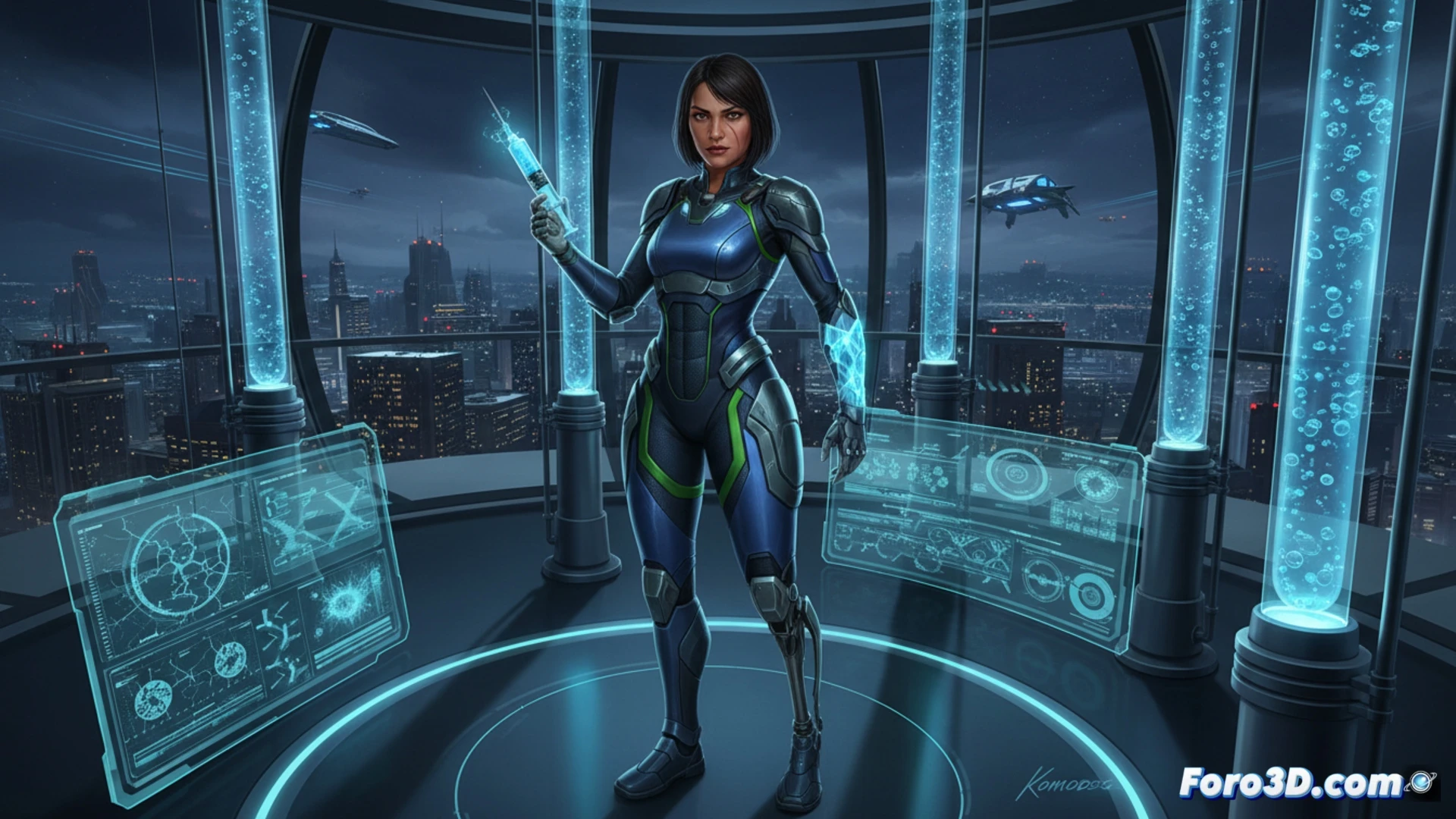
Digital modeling of the healing factor and reptilian morphology 🦎
Komodo's 3D design faces the challenge of representing a body transformation that is not a monstrous mutation, but a technological solution to a pre-existing physical condition. Modelers must balance the scaly textures and agile silhouette of a reptile with realistic human anatomy. The healing factor, a key element of her physiology, is visually translated into particle effects and scars in the process of regeneration. This technical approach allows disability not to be a stigma, but a catalyst for a new powerful visual identity, where biotechnological prosthetics are integrated into the character's rigging and animation.
From the printed page to the 3D model: a symbol of overcoming 🦾
The representation of Komodo in digital environments, whether in video games or cinematics, offers a unique opportunity for visual activism. Her design challenges the traditional narrative of disability as a lack, presenting it as an evolution. By precisely modeling her scales and upright posture, digital artists create an icon of resilience. The message is clear: technology, represented here by Connors' serum, does not erase a person's identity, but rather enhances it, turning Komodo into a benchmark for how 3D art can normalize and celebrate functional diversity in pop culture.
As a 3D designer, what modeling or texturing techniques did you consider key to authentically and non-stereotypically represent Komodo's wheelchair and biomechanical prosthetics, balancing functionality and superhero aesthetics.
(PS: at Foro3D we believe that all art is political, especially when the computer freezes)