Artificial intelligence has reached a new milestone in video generation with Kling AI, a model capable of producing long sequences in high definition that simulate real-world physics with astonishing precision. We are no longer talking about rough animations or erratic movements; this system understands gravity, collisions, and fluid dynamics, generating content that blurs the line between the real and the synthetic. This technical breakthrough, driven by the Chinese company Kuaishou, promises to transform entire industries, but also opens an urgent debate about the veracity of what we see.
Technical architecture: physical simulation in latent time 🧠
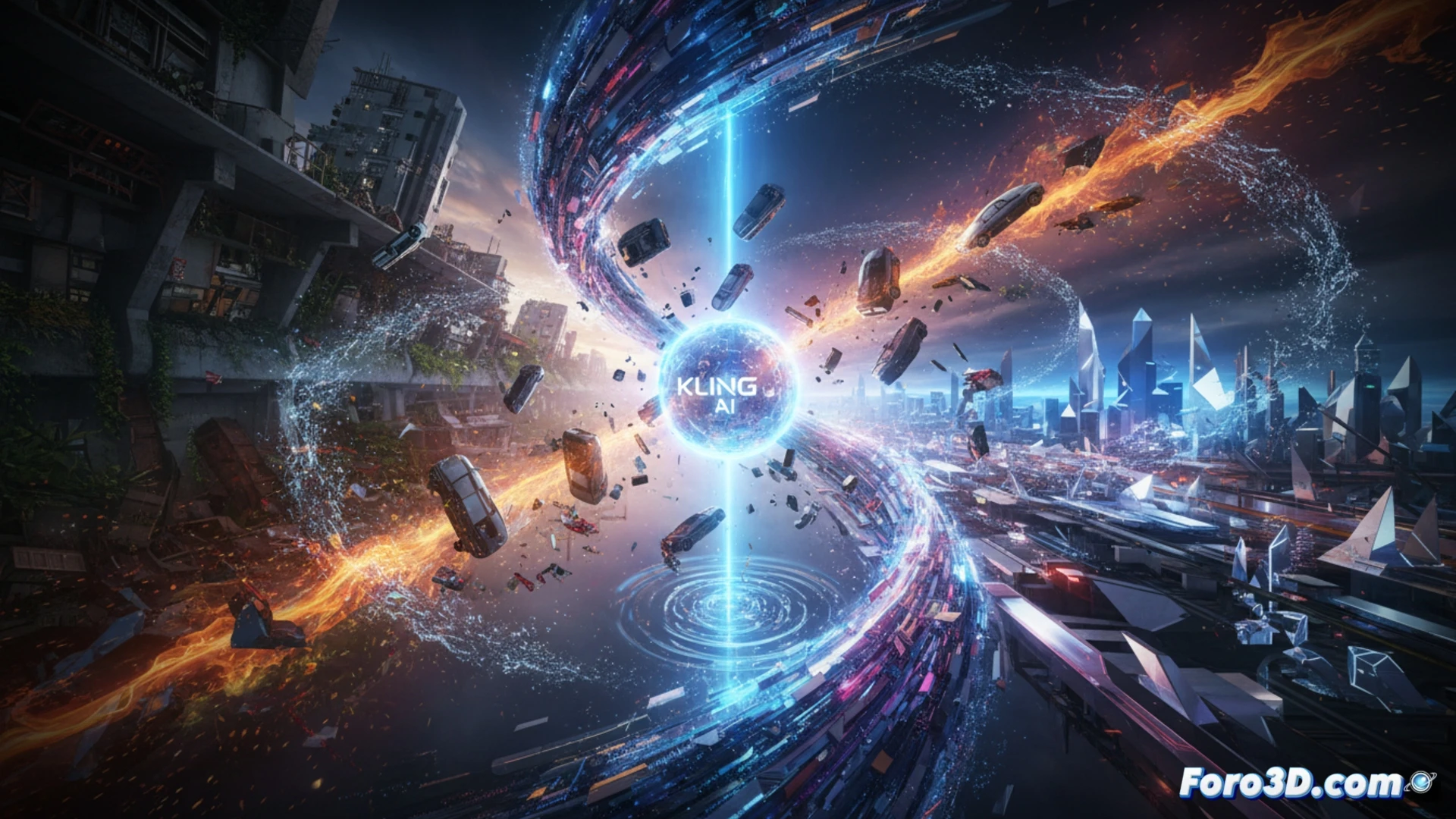
Kling AI distinguishes itself from its predecessors by its focus on spatiotemporal coherence. While models like OpenAI's Sora generate high-quality videos, Kling AI optimizes the simulation of complex physical interactions, such as hair movement in the wind, water splashing, or fabric deformation. It uses a 3D diffusion transformer that processes video in a latent space, allowing the AI to learn the laws of physics without the need for external engines. The result is clips of up to two minutes at 1080p with object and shadow consistency that eliminates the typical hallucination effect. For creators, this means unprecedented control over visual narrative, from cinematic long takes to detailed educational simulations.
The social paradox: augmented creativity versus erosion of trust ⚖️
Kling AI's ability to generate hyperrealistic videos places society before a paradox. On one hand, it democratizes audiovisual production, allowing small film studios or educators to create high-quality material without million-dollar budgets. On the other hand, it amplifies the risks of misinformation; a fake but physically perfect video of a politician or a natural disaster can go viral in minutes, eroding public trust in any visual evidence. The creative industry will have to adapt, not by competing against the machine, but by redefining the value of human authorship. The key question is no longer whether we can create fictional worlds, but whether we will be able to distinguish them from our own.
If Kling AI can generate hyperrealistic videos indistinguishable from reality, how will it change our perception of visual truth in the digital society, and what implications will it have for trust in the media?
(PS: tech nicknames are like children: you name them, but the community decides what to call them) 🎬