Toshio Suzuki, president of Studio Ghibli, has clarified the meaning of the ending of Kiki’s Delivery Service. The scene where the teenage witch stops understanding her cat Jiji is neither a script error nor a whim. According to Suzuki, Jiji represents Kiki's internal dialogue, her feline alter ego. By losing communication with him, the protagonist reaches maturity and no longer needs that inner voice to navigate Koriko on her own.
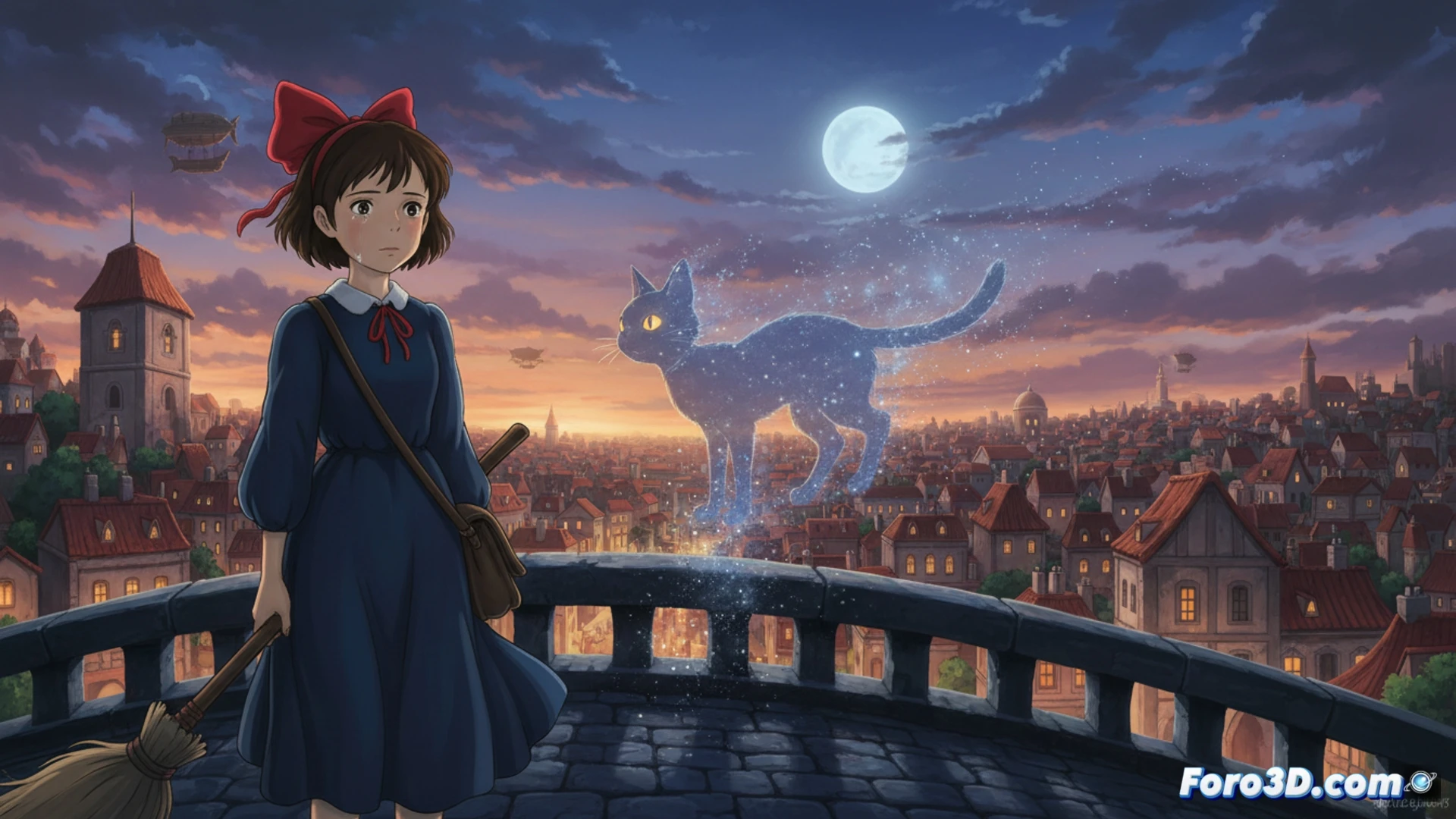
The alter ego as an internal operating system 🖥️
From a technical perspective, Jiji functions like a built-in voice assistant in Kiki's cognitive system. Initially, this internal dialogue is essential for processing the environment and making decisions. But when the character gains experience, her internal software updates. The loss of communication with Jiji is not a temporary bug like magic, but a permanent feature: the system no longer requires an external interface. Suzuki confirms that this silence is permanent, indicating that the dependence on the alter ego is deactivated upon completing personal development.
Goodbye, Jiji: the end of conversations with oneself 🐱
So, Kiki grows up and her cat stops being her confidant. It's like when you become an adult and your 15-year-old self stops giving you advice because you've already learned to mess up on your own. The funny thing is that no one talks about how Jiji feels about it: going from being a feline oracle to a simple cat that meows and asks for tuna. A considerable loss of status. But hey, that's life: you mature, you lose magic, and on top of that, your pet stops talking to you.