If you're looking for a director who blends rusty mechas, trench coat-wearing detectives, and cities that never see the sun, Kazuyoshi Katayama is your man. With a strong influence from Western film noir and 1980s aesthetics, this creator has left his mark with works like The Big O, where the past and future collide in a melancholic dystopia. His visual style, with muted colors and heavy industrial design, defines a unique universe that few have managed to replicate.
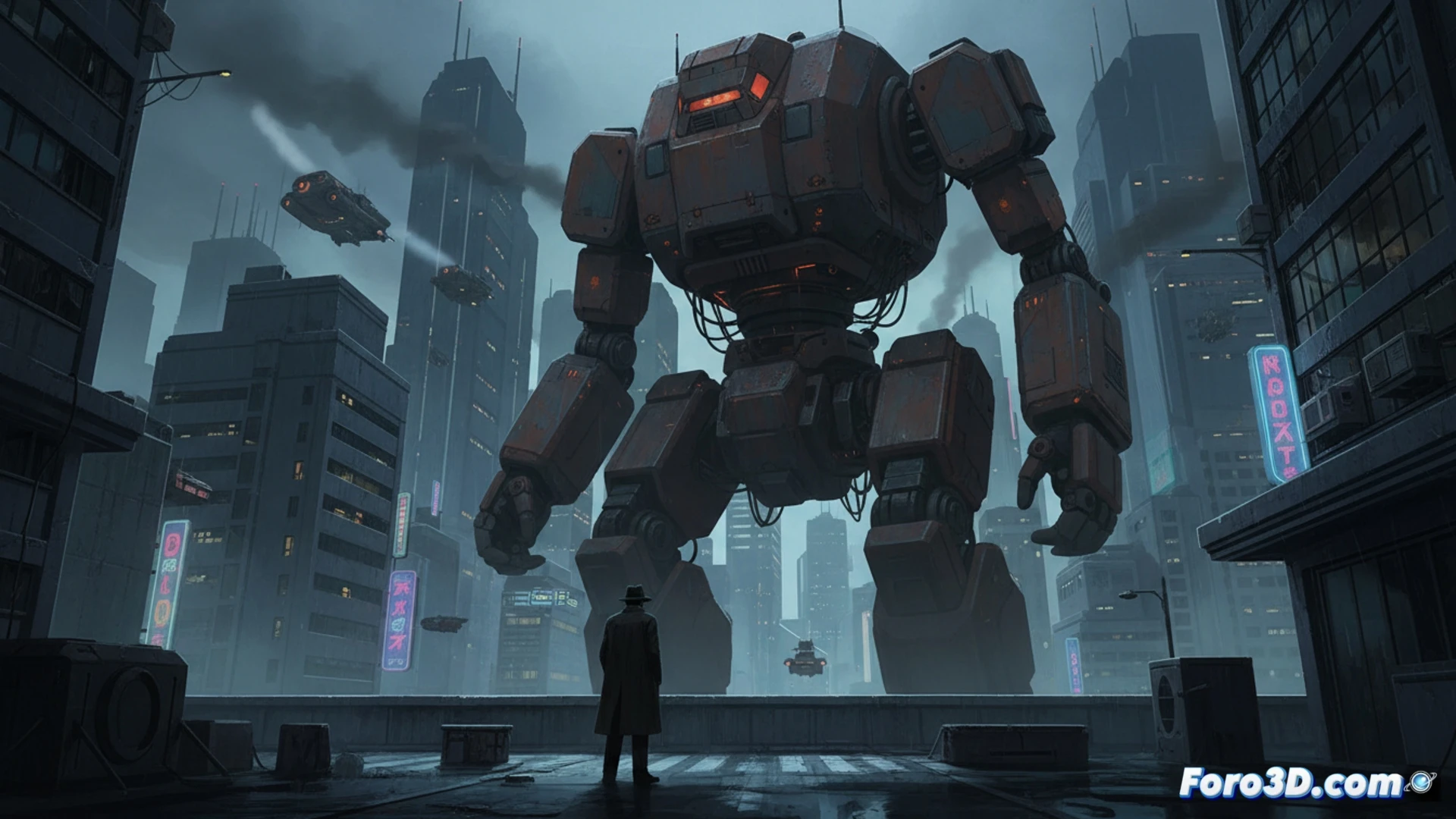
The Technical Engine of Melancholy: Mecha and Environment Design 🎨
Katayama doesn't just draw robots; he builds them like pieces of an industrial puzzle. In The Big O, the mechas have a weight and texture reminiscent of real steel, with visible joints and a matte finish that avoids the shine of conventional science fiction. The cities, for their part, are labyrinths of shadows and broken neon signs, direct heirs to 1940s film noir. This retro-futuristic aesthetic relies on a limited color palette, where grays and dark blues dominate the scene. The result is a world that feels inhabited, yet always on the brink of collapse, with an atmosphere as heavy as the metal giants themselves.
When the Future Feels Like a Gloomy Sunday with No Plans 🌧️
Watching a work by Katayama is like walking through an industrial city on a rainy Monday: you know something bad is going to happen, but at least the mechas have style. In The Big O, the protagonist is a negotiator who solves problems with robot punches, because, of course, talking is overrated. And in King of Thorn, things get so serious that even nightmares have nightmares. That said, if you're looking for happy endings, you'd better go watch a romantic comedy; here, melancholy is the main course, and there's no dessert.