Kazuhiro Furuhashi is one of those directors who have been pulling the strings of Japanese animation for decades without making too much noise. He started in the eighties with cel animation and today masters the digital realm. His hallmark: cinematic framing, weighty historical drama, and action that feels real. He can just as easily direct Kenshin's emotional journey as the Forger family's entanglements.
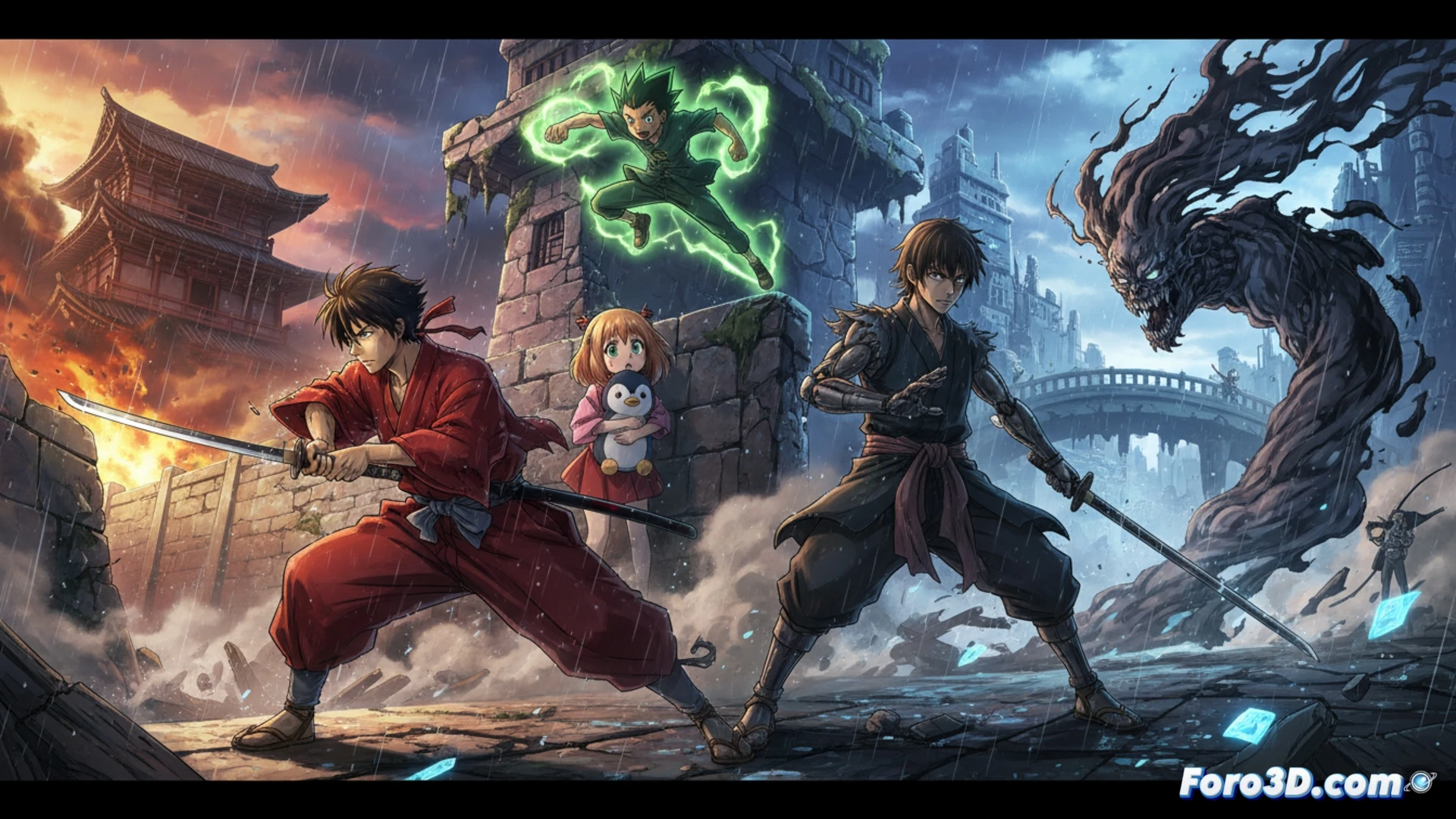
From Hand-Drawn Lines to Digital Control: How He Adapts His Visual Narrative 🎬
Furuhashi doesn't rest on his past laurels. In Dororo (2019), he used digital backgrounds to expand the field of view without losing the gritty texture of feudal Japan. For the fights in Hunter x Hunter (1999), he designed storyboards with sequence shots that were later translated into limited animation. His trick: maintaining the emotional rhythm even on a tight budget. Every blow, every pause, has a clear narrative purpose.
When Historical Drama Collides with a Spy and a Telepathic Girl 🎭
Watching Furuhashi go from blood-soaked samurai to Anya Forger making funny faces is like watching your history teacher give a comedy class. But it works. In Spy x Family, he applies the same precision: every visual gag is timed to the frame, and Loid's action sequences have the same realistic choreography as Kenshin's. The guy can make a punch and a little girl's gesture carry the same dramatic weight.