Katsuhiro Otomo didn't just draw a story; he built a world. With Akira, both the manga and the film, he proved that anime could be a vehicle for narrating political decay, urban chaos, and the fragility of the human body. His obsession with technical detail and cities as living entities made him an undisputed reference. If you watch anime in the West today, Otomo likely deserves some of the credit.
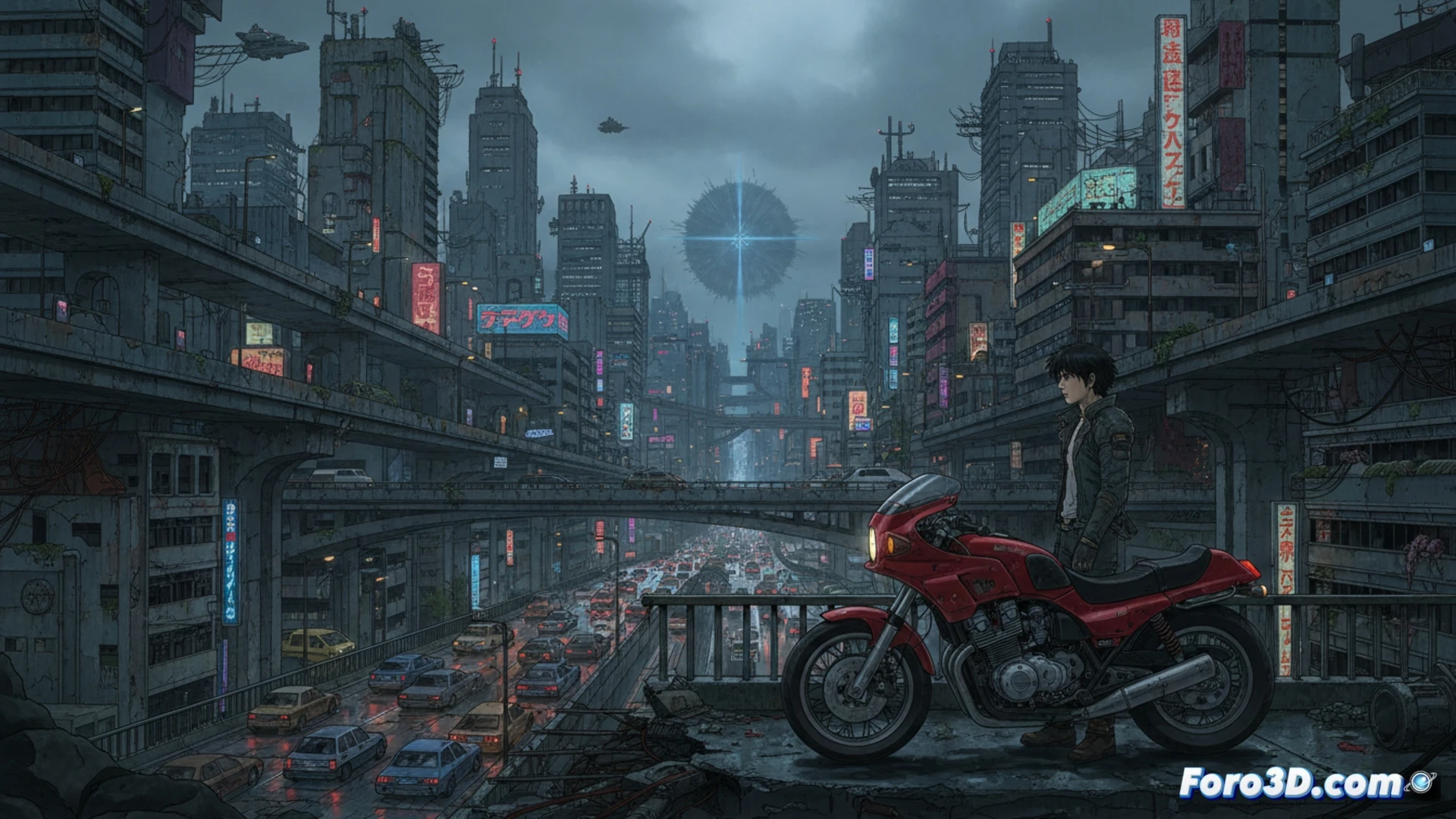
The rendering of ruin: how Otomo digitized Neo-Tokyo 🏙️
For Akira, Otomo and his team resorted to animation techniques bordering on madness: frames with up to 24 layers of cels, manually calculated lighting to simulate reflections in puddles and metal, and a color palette that anticipated digital filters. Every explosion, every twisted pipe, was drawn with almost architectural precision. Steamboy took that obsession to the extreme, with Victorian sets that looked like CAD renders but were handcrafted. His method was artisanal, but his vision was pure code.
The day Otomo made us hate pipes (and love them) 🔧
Watching Akira makes you realize that Neo-Tokyo has more pipes than inhabitants. Every corner is a tribute to industrial plumbing. If you've ever felt watched by a rusty pipe, blame Otomo. The guy managed to make a steam conduit look more menacing than a military tank. And in Steamboy, it gets worse: gears, valves, and steam everywhere. His message is clear: technical progress is beautiful, but it always ends up blowing up in your face.