Japanese cuisine gives us the katsu sando, a sandwich that plays with two opposing textures: the crispy breading of the pork cutlet and the softness of milk bread. This combination, simple in appearance, is an example of gastronomic balance. It doesn't seek to surprise with exotic ingredients, but with precision in the execution of each layer.
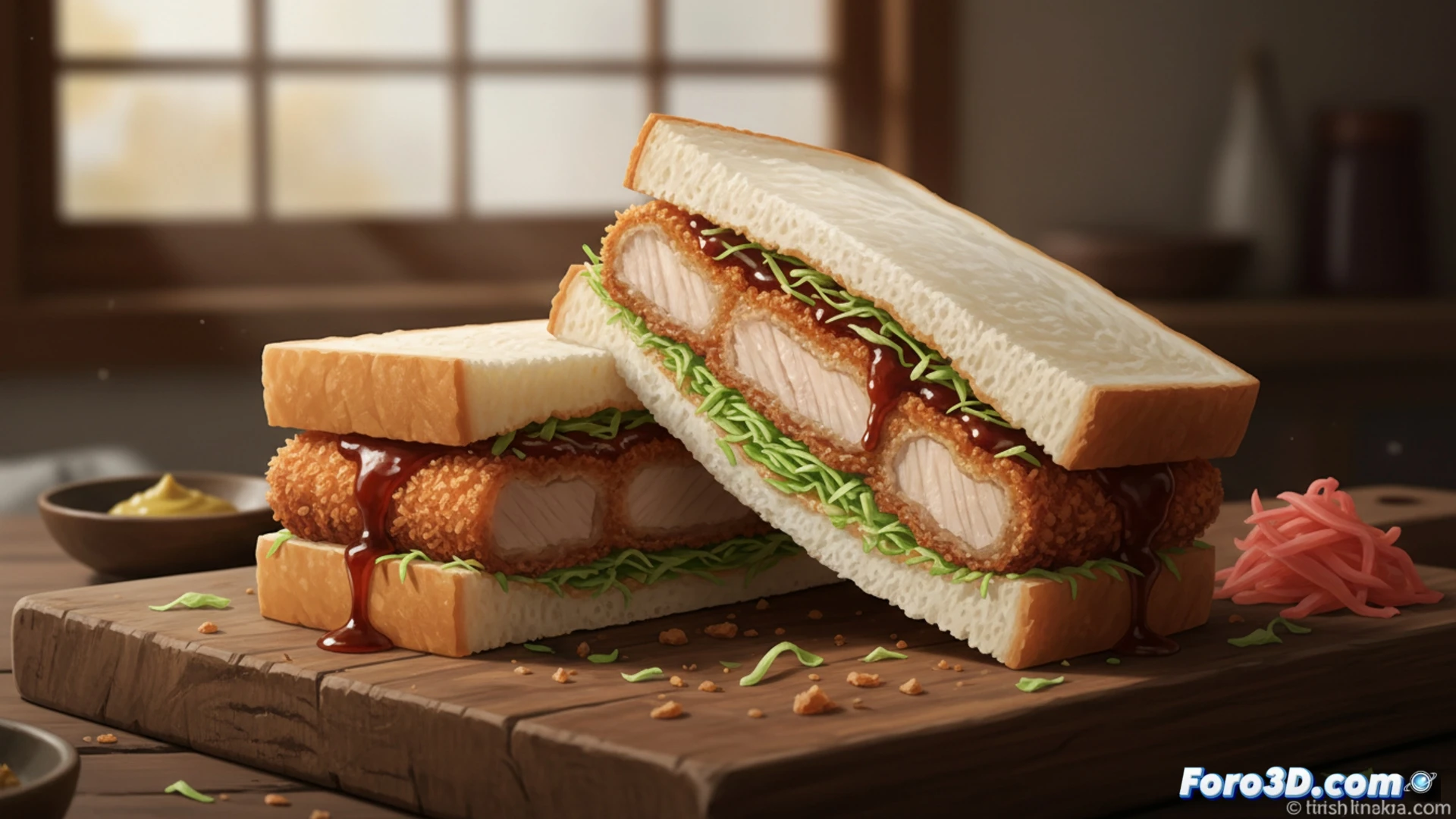
The engineering behind milk bread and frying 🍞
The technical development of the katsu sando lies in temperature and humidity control. Milk bread, with a fine crumb and high hydration, is lightly toasted to create a barrier that prevents oil absorption. The meat, for its part, is breaded with panko, a coarse-grained breadcrumb that, when fried at 180°C, forms an airy crust. Resting on a wire rack is key to maintaining that crispy texture without steam softening it.
What happens when the bread surrenders to the croquette 🥪
Any attempt to replicate a katsu sando with regular sandwich bread usually ends in a textile disaster. The bread gets soggy, the meat slides off, and you end up with a sandwich that looks like a culinary traffic accident. But when everything goes right, the first bite is so clean that even the bread applauds. The katsu sando is proof that happiness fits between two slices, as long as they aren't from the supermarket.